
Shadows and Resolve: The Story Behind Sheikh Hasina’s Journey
Some leaders rise quietly, shaped by loss, patience, and a determination that does not fade even when the world around them shifts.

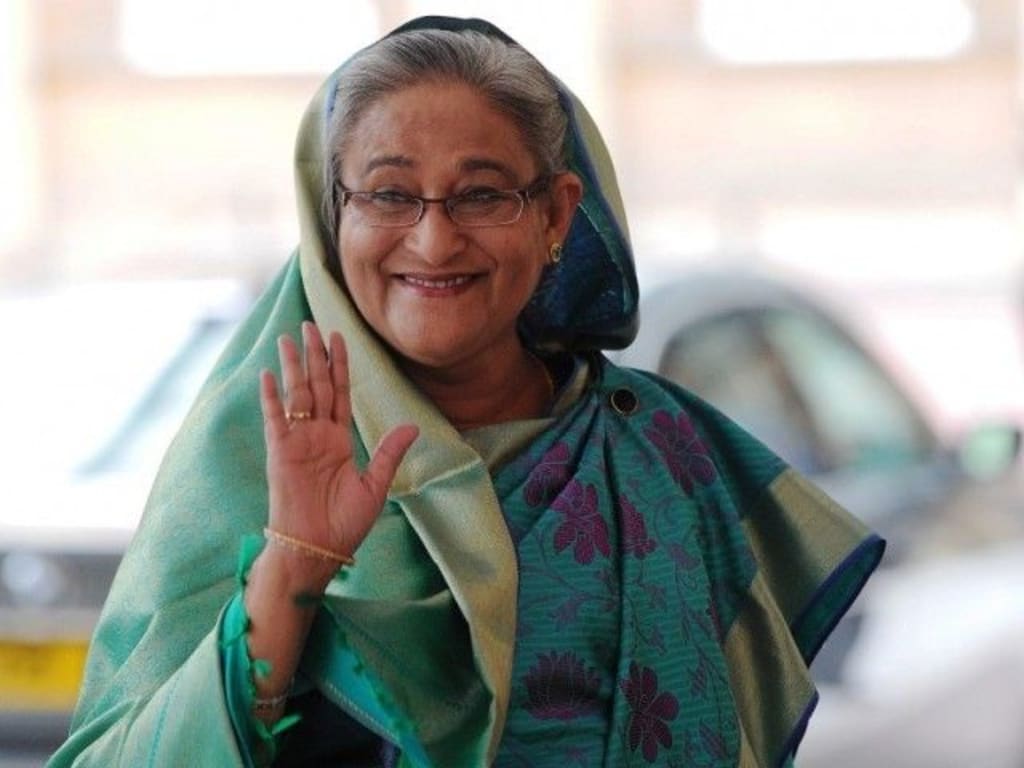
Some leaders rise quietly, shaped by loss, patience, and a determination that does not fade even when the world around them shifts. The story of Sheikh Hasina is one of those rare journeys that force people to look deeper, beyond headlines and political moments, into the places where human endurance is tested the most. Her path has carried grief, exile, return, conflict, and grit experiences that leave lasting marks on a person’s heart. People often discuss leaders in distant terms, but her life reminds us that behind every public figure is someone who has weathered storms most of us could hardly imagine.
A Childhood Marked by a Nation’s Birth
To understand Sheikh Hasina, you have to return to the beginning long before speeches, elections, or crowds chanting her name. She grew up during a time when the land around her was fighting to define itself, a time filled with uncertainty and rising tension.
Her father, Sheikh Mujibur Rahman, carried the hopes of millions. That meant the family did not live a quiet life. Their home was often filled with people searching for guidance. Even as a child, she watched the strain on her family’s shoulders.
Those early years planted a kind of seriousness in her. She learned early that leadership is not a privilege; it is a burden that can change a person’s entire world.
The Darkness That Changed Everything
Some tragedies are too heavy to put into words. The turning point in her life came with the heartbreaking loss of almost her entire family. The event carved a permanent scar into her identity, leaving her with grief that would follow her for decades.
During that moment, she was far from home, carrying fear, confusion, and guilt that many survivors feel. Returning was impossible. She had to grieve from a distance, holding memories that felt painful even to touch.
It is in these moments that a person either breaks forever or builds a new strength out of the fragments left behind. Her path would become the latter, though it took time she would never fully recover.
Life in Exile
Exile is a strange kind of loneliness. You are alive, but removed from everything that makes you feel like yourself. You wake up each day in a place where the air does not smell familiar, where no one knows the version of you that once belonged somewhere else.
For years, Sheikh Hasina lived inside that quiet ache. She stayed politically active, but inside, she remained someone trying to understand how to carry a loss that felt too large. She built strength bit by bit, through uncertainty and isolation.
The world often forgets this part of her story, yet it shaped her more than any title she later earned.
A Return Heavy With Memory
When she returned home, it was not a triumphant reunion. It was emotional, filled with reminders of everything she had lost. Walking through the streets must have felt like stepping through the past, facing echoes of a life that no longer existed.
But people who had once followed her father looked to her for guidance. They hoped she would continue what he started. That placed enormous weight on her shoulders weight she had not asked for but could not ignore.
Returning meant stepping back into the heart of conflict. It meant facing rivalries, distrust, and political battles that grew sharper every day.
Yet she stayed.
Rising in a Divided Political Landscape
Politics in her homeland has never been gentle. It has been unpredictable, emotional, and often dangerous. When she stepped into leadership, she did not enter a stable system. She entered a storm.
Meetings turned into confrontations. Rallies turned into clashes. Every decision she made created waves. She was not only carrying her own identity but the legacy of her father, which added pressure to every step she took.
Still, she found support among people who saw her as a symbol of continuity. She promised stability during times when everything felt uncertain.
The Leader the Nation Needed:Even When She Was Questioned
Every leader faces criticism, and Sheikh Hasina was no exception. Some admired her resilience. Others doubted her decisions. The truth, as always, lived somewhere in the middle.
But even with disagreements swirling around her, she became someone the nation looked toward. The country faced natural disasters, unrest, economic challenges, and political struggles, yet she remained a steady figure. Her leadership was shaped less by ambition and more by survival her own and her nation’s.
Her story is not simple, but no leader’s story ever is.
The Weight of Responsibility
Carrying a nation on your shoulders is not just about holding a title. It is about living with the quiet fear that every choice could bring consequences far beyond your control.
For Sheikh Hasina, this weight became a constant part of her life. Days were long, filled with decisions that could shift the future of millions. Nights brought little rest. Leadership rarely offers peace.
Navigating Crisis After Crisis
From political hostility to economic turmoil to global challenges, she faced storms that could have broken weaker leaders. But she learned to move through these challenges with a certain calmness, even when the world around her felt unstable.
Each crisis demanded a different version of her sometimes firm, sometimes patient, sometimes cautious, sometimes unyielding.
The Loneliness of Leadership
Public figures often appear surrounded by people, but leadership can be deeply isolating. It separates you from normal life. It forces you to live behind layers of caution and responsibility.
Despite the crowds, Sheikh Hasina lived much of her life at a distance from ordinary comforts. Family celebrations were overshadowed by security concerns. Routine moments became rare.
A Legacy Written in Determination
Every leader leaves a legacy, whether they intend to or not. Some build it through vision. Others through endurance. In her case, endurance played the defining role.
A Nation Steadied by Persistence
Her years in leadership created periods of stability that many had not experienced before. Whether someone agreed with her or disagreed, her presence became intertwined with the nation’s identity.
Policies, development projects, and diplomatic decisions all carried her signature. She guided the country through changes that touched daily life, rural communities, and the structure of the economy.
Controversy and Criticism Along the Way
No leader who stays in power for a long time escapes controversy. Sheikh Hasina faced tensions rooted in political rivalry, public frustration, and questions about fairness.
These criticisms became part of her legacy as well. Leadership is rarely clean, and long-term governance brings both stability and friction.
Her critics’ voices shaped the national conversation just as much as her supporters’ praise.
The Humanity Behind a Political Figure
It is easy to forget that leaders are human beings. They bleed, they fear, they grieve, and they hope just like everyone else. Beneath the political identity of Sheikh Hasina, there is a person shaped by deep loss, long exile, and decades of responsibility.
The Grief That Never Faded
The tragedy of losing her family never fully left her. It influenced her decisions, her outlook, and her sense of duty. It created a resolve that could look firm or unyielding depending on who was watching.
But that grief also gave her insight into suffering, into the quiet pain that many in her nation carried. This shaped her connection to the people she governed.
Quiet Strength Built Over Years
Strength does not always appear in loud moments. Often, it forms in the silent ones early mornings before urgent meetings, late nights after tough decisions, the small pauses where a leader sits alone with their thoughts.
Her quiet strength helped carry the nation through unrest and uncertainty. It gave her followers confidence, even when the future felt unclear.
Stepping Down: The End of an Era
No leader stays forever, and her departure marked the closing of a chapter that lasted longer than many expected. The transition left the nation in a reflective mood some relieved, some saddened, all aware that a major shift had taken place.
A Departure Surrounded by Tension
Her exit did not come peacefully. It came during a period of competing voices, rising frustration, and political unrest. Some felt her time had run its course. Others feared instability in her absence.
This tension highlighted how deeply she had shaped the country’s political identity.
What Happens After a Long Tenure Ends
When such a significant figure leaves, the country must redefine itself. Every system she influenced now faces questions:
Who will guide things next?
Will policies change?
Will chaos fill the gaps?
Transitions can be unsettling. The shadow of her leadership still stretches across the political landscape.
The Future of Her Story
The story of Sheikh Hasina does not end with her departure from power. Legacy is not fixed it continues to change as years pass and new events reshape how people remember her.
How History Might View Her
Historians will argue about her achievements and her flaws. They will examine her decisions, her failures, her resilience, and her struggles. Some will call her a force that brought stability. Others will focus on the controversies that marked her later years.
But no one will deny the impact she had.
The Emotional Lessons Her Life Leaves Behind
Beyond politics, her story teaches something universal:
Loss does not always break you.
Exile does not erase your identity.
Responsibility can shape you in unexpected ways.
And strength built from grief can create a lifetime of purpose.
These lessons reach far beyond national boundaries.
Conclusion: A Journey Written in Shadows and Resolve
The life of Sheikh Hasina is not a simple narrative of wins and losses. It is a profound story of survival of a woman who walked through grief, exile, hostility, and constant pressure, yet found a way to keep moving.
Whether people praise her or challenge her, her presence changed the course of her homeland. She carried the weight of her past while shaping the future of millions.
Her story reminds us that leaders are not symbols. They are people marked by experiences that most of us will never face. And when we look at her journey from the tragedies of her early life to the complexities of her leadership we see a portrait of resilience shaped by shadows and resolve.
About the Creator
Muqadas khan
Hi! Welcome to my Vocal page. I’ll be sharing fresh articles every day covering stories, ideas, and a bit of inspiration to brighten your feed. Thanks for reading and supporting daily writing! 📖💫
Keep reading
More stories from Muqadas khan and writers in Journal and other communities.
Shedeur Sanders and the Quiet Fire Driving His Rise
Some athletes rise with noise surrounding them, while others carry a quieter fire, the kind that burns from a place deeper than spotlight or praise. When people talk about shedeur sanders, they often mention numbers, games, talent, or the family legacy he carries on his shoulders. But behind all of that is a young man navigating pressure that most of us will never experience.
By Muqadas khan4 months ago in Journal
Author’s Advice
If you would’ve asked me 20 years ago did I know I’d become a writer and an author, I would’ve said “nope, ain’t happening”. As fate would have it I did become an author and I can honestly say I’m loving it so far. It really does feel good to be a writer. I’ve learned a lot on this journey and I feel like with even me being as new to this world as I am, there’s some wisdom I need to share with every other aspiring author.
By Joe Patterson3 days ago in Journal
Alopecia Isn't Just Hair Loss...
I don't know whether I've said this in passing comment before on my reviews, but I'm pretty sure it's somewhere: for the past few years I've suffered with alopecia and it has increased in its charge against the system in the last 18 months for reasons I'm not willing to discuss right now. But in the last 18 months alone I have had seven blood tests, two dermatological scans and most recently, you guessed it, another blood test. So, we all know that alopecia is all about hair loss and as you can imagine, I have lost an awful lot of hair. In my first struggle with alopecia it was clumps of my hair that came out, but more recently it was a more 'drop everything' approach where I would more than often wake up with less and less hair every day until finally - yes, I have no hair. It's all wigs.
By Annie Kapur3 days ago in Journal
My First Time Skiing and I Got Lost, Alone, in the French Alps
Looking back, I can trace some of my life’s biggest adventures to a simple action from my sister. She’d introduced me to Tommy (a very long time ago), a colleague of hers, who had overshared his penchant for Italian-looking women, and I ticked that box.
By Chantal Christie Weissa day ago in Humans




Comments
There are no comments for this story
Be the first to respond and start the conversation.