
Seed to Scale: Startup Growth Lessons from Kris Gopalakrishnan
Practical playbooks from the Infosys co-founder and Axilor Ventures chair—hiring, governance, capital, and culture that compound from day one


If you’re building in India (or building for the world from India), you’ve heard the name Kris Gopalakrishnan. As Infosys co-founder and now Chairman of Axilor Ventures, his track record spans hyper-scaling services, mentoring early-stage founders, and shaping ecosystems. In this guide, we distill Kris Gopalakrishnan startup lessons into an actionable playbook you can apply this quarter—from seed to scale. Expect crisp takeaways on hiring, governance, board composition, culture, product discipline, and capital strategy, supported by examples from Axilor’s portfolio and Kris’s public remarks.
You’ll learn what to do in your first 12 weeks, how to structure your metrics and meetings, and how to avoid the failure modes that stall promising companies.
Who is Kris Gopalakrishnan and why his lessons matter
Senapathy “Kris” Gopalakrishnan co-founded Infosys in 1981, later serving as CEO & MD (2007–2011) and Vice Chairman (2011–2014). After retiring from executive duties, he shifted his energy to mentoring founders and strengthening India’s early-stage pipeline as Chairman, Axilor Ventures. His vantage point is rare: scaling one of the world’s most respected IT companies and then coaching scores of seed-stage teams through Axilor’s accelerator and seed funds.
Axilor’s thesis is simple: improve the odds of early founders by combining catalytic capital, a structured 100-day accelerator, and deep mentorship. The program emphasizes customer validation, GTM design, and investor readiness—practical work that compresses learning curves many teams otherwise spend years discovering the hard way.
The Seed-to-Scale Playbook: What founders should copy
1) Hire for speed, then build for scale
- Bias for velocity early. In the first 18 months, your advantage is cycle time. Recruit builders who can ship weekly, talk to customers daily, and instrument everything.
- Upgrade the bar as you scale. Kris has spoken about the discipline of hiring and appreciation at scale (popularly referenced as an “80:20” approach—focus your time on the top performers while coaching the middle to rise). The principle: protect the bar and the culture as headcount grows.
- Action: Define role scorecards; run structured interviews; enforce a 30-60-90 onboarding with measurable outcomes.
2) Governance from day one (not after Series B)
- Weekly operating rhythm: Founder metrics review (MRR, retention, CAC/LTV, burn, runway); risks & mitigations; top 3 priorities.
- Monthly advisor check-ins: One page, one hour. Ask for direct critiques on GTM, hiring, and runway.
- Quarterly “board-lite.” Even before you have a formal board, run a disciplined review with mentors/investors. Treat it like a board meeting: pre-reads, KPIs, decisions, owners, deadlines. This builds the muscle for later formal governance—long a hallmark of Infosys and a consistent theme in Kris Gopalakrishnan’s governance philosophy.
3) Founder-market fit beats idea novelty
The fastest-growing Axilor portfolio stories pair insider founders with relentless customer discovery. The signal Kris looks for: evidence of repeated customer pain and a team capable of “closing the loop” from feedback to code to outcomes.
4) Capital as a catalyst, not a crutch
- Raise to prove a thesis, not to extend runway. Axilor’s seed checks are deliberately catalytic enough to get to product-market proof points and unlock the next round.
- Pre-wire your next raise. Keep a rolling list of 10–15 relevant funds, share quarterly updates, and invite them to product reviews two months before you open.
5) Culture is a system you design
- Explicit principles. Write down how you make decisions, the data you require, and how you handle failures. Infosys’s longevity rests on such clarity ethics and process outlive any single leader.
- Ritualize learning. Hold weekly “Wins & Warts” meetings; publish a short write-up with what you’ll change next week.
From accelerator to outcomes
Scapic (AR/VR for commerce) → Acquired by Flipkart
Scapic built a no-code 3D/AR stack for e-commerce, improving product visualization and conversion. After early product traction and enterprise integrations, Flipkart acquired Scapic—a strong example of a team translating frontier tech into business value with the help of ecosystem support.
Seed-to-scale lesson: Deep tech becomes inevitable when it measurably improves a core metric (in this case: conversions and engagement).
NIRAMAI (AI for breast-cancer screening) → Institutional backing and regulatory progress
NIRAMAI’s thermal imaging + AI approach aimed to make screening more accessible and affordable. The company raised seed and Series A involving multiple investors (including Axilor in the seed mix) and pursued clinical validation and approvals—showing how defensible IP, validation, and careful regulatory navigation can attract capital.
Seed-to-scale lesson: For healthtech, build a regulatory and clinical roadmap into the seed plan—trials, endpoints, and evidence.
UrbanPiper (Commerce infra for F&B) → Category leadership through integrations
UrbanPiper consolidated fragmented restaurant tech by integrating POS and marketplaces (e.g., Zomato, Swiggy). An Axilor-backed seed round and later a Zoho-led pre-Series A helped the company expand footprint and functionality. This is a textbook case of infrastructure plays scaling via integrations and partner credibility.
Seed-to-scale lesson: If you’re an infra layer, win by becoming the easiest system to integrate—documented APIs, reliability SLAs, and data portability.
The Axilor method: What to emulate
Axilor’s 100-day accelerator has long emphasized customer validation, MVP discipline, and investor readiness, with founders coached by operators and sector experts. Even as Axilor has grown its seed funds, this programmatic, mentor-heavy approach remains a core differentiator.
What you can copy without joining any program:
- Tempo: Weekly product releases tied to an explicit hypothesis.
- Customer Hours: 5–10 discovery or success calls every week.
- Investor Hygiene: One-page monthly updates with consistent KPI definitions.
- Mentor Ops: Ask mentors for specific help (intro to a design partner, feedback on pricing, a key hire), not generic advice.
A 12-Week Seed-to-Scale Execution Plan
Use this to replace “busywork” with compounding progress.
Weeks 1–2: Clarity Sprint
- Define the job-to-be-done; commit to 3 must-have user outcomes.
- Ship a measurement-ready MVP; instrument activation, Day-7/Day-30 retention, and a single north-star metric (NSM).
- Draft your operating cadence (weekly metrics, monthly advisor check-ins, quarterly board-lite).
Weeks 3–4: Design-Partner Pipeline
- Build a list of 30 target customers; secure 5 design partners with signed LoIs.
- Create a pilot success plan (time-boxed, with agreed KPIs).
- Publish a one-pager and a 5-minute product demo deck.
Weeks 5–6: GTM Foundations
- Choose one wedge: ICP, buyer, use case. Kill all else for now.
- Commit to one channel (outbound, founder-led sales, or community) and one pricing test (land-and-expand or usage-based).
- Add reference-worthy documentation: quickstart, API overview, security note.
Weeks 7–8: Proof of Value
- Hit minimum pilot targets (e.g., +20–30% on the customer’s primary KPI or −30% cost/time on a critical workflow).
- Collect before/after baselines, written testimonials, and willingness-to-pay signals.
- Recruit your first 2 advisors with clear scopes (e.g., “10 customer intros in manufacturing ops”).
Weeks 9–10: Team & Governance
- Fill the two most blocking roles (often senior ICs in product/engineering or a full-stack GTM generalist).
- Run your first board-lite meeting; document decisions, owners, due dates.
Weeks 11–12: Capital & Scale Prep
- Build a tight seed/bridge memo: problem, team, traction, economics, roadmap.
- Pre-wire 10 funds; host 2–3 “live product reviews.”
- Confirm next 90-day OKRs tied to growth drivers (activation, retention, payback).
Metrics that matter (and those that mostly don’t)
Do sweat:
- Retention & expansion: D30/D90 retention, NRR >100% for B2B, DAU/WAU for B2C.
- Sales efficiency: Payback <12 months (B2B), blended CAC trends.
- Product truth: P-scores (superhuman survey), time-to-value, feature adoption curves.
- Capital health: Burn multiple, runway, quality of pipeline.
Don’t over-optimize yet:
- Vanity sign-ups without activation.
- PR before reference customers.
- Over-hiring management before repeatability.
Building your board from seed
- Start with a “board-lite.” Two founders + one independent + one investor/mentor.
- Mix skills, not titles. Seek domain, product/GTM, and finance/governance experience.
- Codify how the board works. Pre-reads 72 hours in advance; decisions logged with owners; a running risk register (people, product, finance, compliance).
- Refresh annually. As the company changes, your board should too.
Good governance is part of the “Infosys DNA” process, transparency, and stakeholder trust a frame Kris repeatedly embodies across roles.
Culture that compounds
- Write it down early. Three cultural commitments only; example: “Customer truth, Default to shipping, Be kind and candid.”
- Ritualize it. Weekly “Wins & Warts,” monthly “Customer in the room,” quarterly “Kill/Keep/Start.”
- Signal through structure. Promotions/ESOPs tied to outcomes and behaviors, not tenure. Recognition habits (Kris emphasizes appreciation) keep teams motivated through ambiguity.
Common failure modes and how to avoid them
- Too many bets, no wedge: Pick one ICP/use case. Kill the rest for 90 days.
- Research without revenue: Pair your technical roadmap with design partners who sign paid pilots.
- Hiring managers too early: Senior ICs > managers until repeatability.
- Investor theater: Build a truthful KPI narrative; share misses and fixes.
Policy & ecosystem: What India needs more of
Kris has long been active in ecosystem building—mentoring founders, funding scientific research, and supporting accelerators/seed funds. Programs like Axilor show the multiplier of structured mentorship + capital + networks. Replicating this nationally requires:
- University–startup bridges: Grants that fund proof-of-concepts with industry mentors (the lab-to-market gap).
- Procurement sandboxes: Government/PSU pilots with clear data-sharing and outcome-based payments.
- Talent pipelines: Apprenticeships and co-op programs that convert top graduates into startup builders.
Axilor’s model—short cycles, mentor depth, catalytic checks—is a useful template for state and university accelerators.
Founder checklist:
- One ICP, one use case, one channel for the next 90 days
- Six design-partner calls/week; 2 active pilots
- Ship weekly; tie every release to a falsifiable hypothesis
- Monthly one-pager to advisors/investors (same KPIs, same definitions)
- First two critical hires onboarded with 30-60-90s
- Board-lite calendar and decision log live
- Documented culture: 3 principles, 3 rituals
- Runway >12 months or pre-wired raise in progress
FAQs
Q1. What makes Kris Gopalakrishnan’s playbook unique?
His vantage point spans hyper-scale operations at Infosys and hands-on seed work via Axilor. That combination produces advice grounded in governance rigor and early-stage speed—a rare pairing.
Q2. How important is an accelerator?
Not mandatory, but a structured, mentor-heavy program can compress years of trial-and-error into months—if you show up with focus and do the work. Axilor’s 100-day approach is emblematic.
Q3. Any proof that this model works?
Look at outcomes like Scapic’s acquisition by Flipkart, NIRAMAI’s venture backing, and UrbanPiper’s Axilor-backed growth. Different sectors, same pattern: customer truth + disciplined execution + credible backers.
Q4. How soon should I set up a board?
Immediately run a board-lite cadence. The habit of pre-reads, decisions, and accountability is worth more than the formality early on.
Q5. What KPIs should I report monthly?
By stage:
- Pre-PMF: Activation, retention, time-to-value, NPS.
- Early GTM: Pipeline, conversion, payback, NRR.
- Scale: Cohort-based retention, CAC by channel, burn multiple, gross margin trend.
Make compounding progress your culture
Kris Gopalakrishnan seed to scale principles are gloriously unglamorous: ship weekly, talk to customers, measure what matters, write down how you work, and surround yourself with mentors who tell you the truth. Pair that with governance habits from day one and catalytic capital used to validate not just extend runway—and you’ll stack the odds in your favor.
About the Creator
Chinmaya Singh
Chinmaya Singh is a professional blogger with 6+ years of experience, writing on entrepreneurship, business, and industry, helping readers gain insights into success and growth strategies.
Keep reading
More stories from Chinmaya Singh and writers in Journal and other communities.
Kris Gopalakrishnan on India’s Knowledge Economy: Transforming Research into Market Success
“Knowledge economy” isn’t a slogan—it’s a system. And few Indian leaders have stitched that system together as coherently as Kris Gopalakrishnan (Infosys co-founder, Axilor Ventures chair, and a force behind multiple science and startup institutions). This article maps the practical pipeline Kris Gopalakrishnan knowledge economy advocates—basic research → translational labs → startups → scale-ups—and offers a step-by-step playbook to shorten the distance from Kris Gopalakrishnan research to market outcomes. Along the way, we’ll examine why institutional memory matters (through the itihaasa project), how brain science funding strengthens India’s innovation capacity, what translational programs at IITs teach us, and how early-stage capital plus mentorship de-risks commercialization.
By Chinmaya Singh6 months ago in Journal
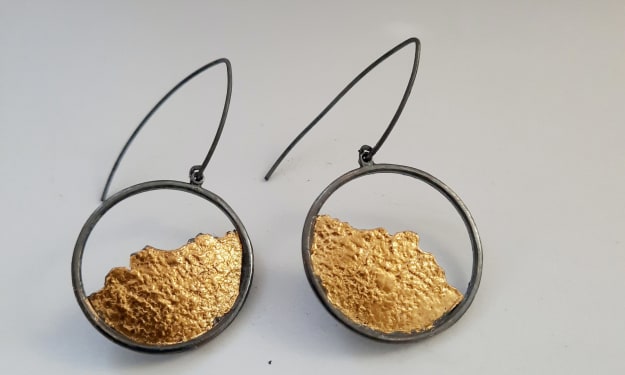
Keum-boo: The Ancient Korean Gold-Bonding Technique That Makes Silver Glow
If you’ve ever seen a piece of silver jewelry that seems to “catch fire” in certain spots, warm gold flashing against cool gray metal, you may have been looking at keum-boo. Keum-boo is an old Korean technique where ultra-thin, high-purity gold is bonded to silver using heat and pressure, creating a permanent two-tone surface without solder or adhesives. Instead of “sticking” metal on top, you’re encouraging a microscopic bond at the boundary where gold and silver meet, which is why well-done keum-boo can look clean, intentional, and remarkably durable.
By Md Mehedi Hasan Rifad6 days ago in Journal



Comments
There are no comments for this story
Be the first to respond and start the conversation.