
Sealed for Safety: How Medical Flexible Packaging Market Is Reshaping Healthcare
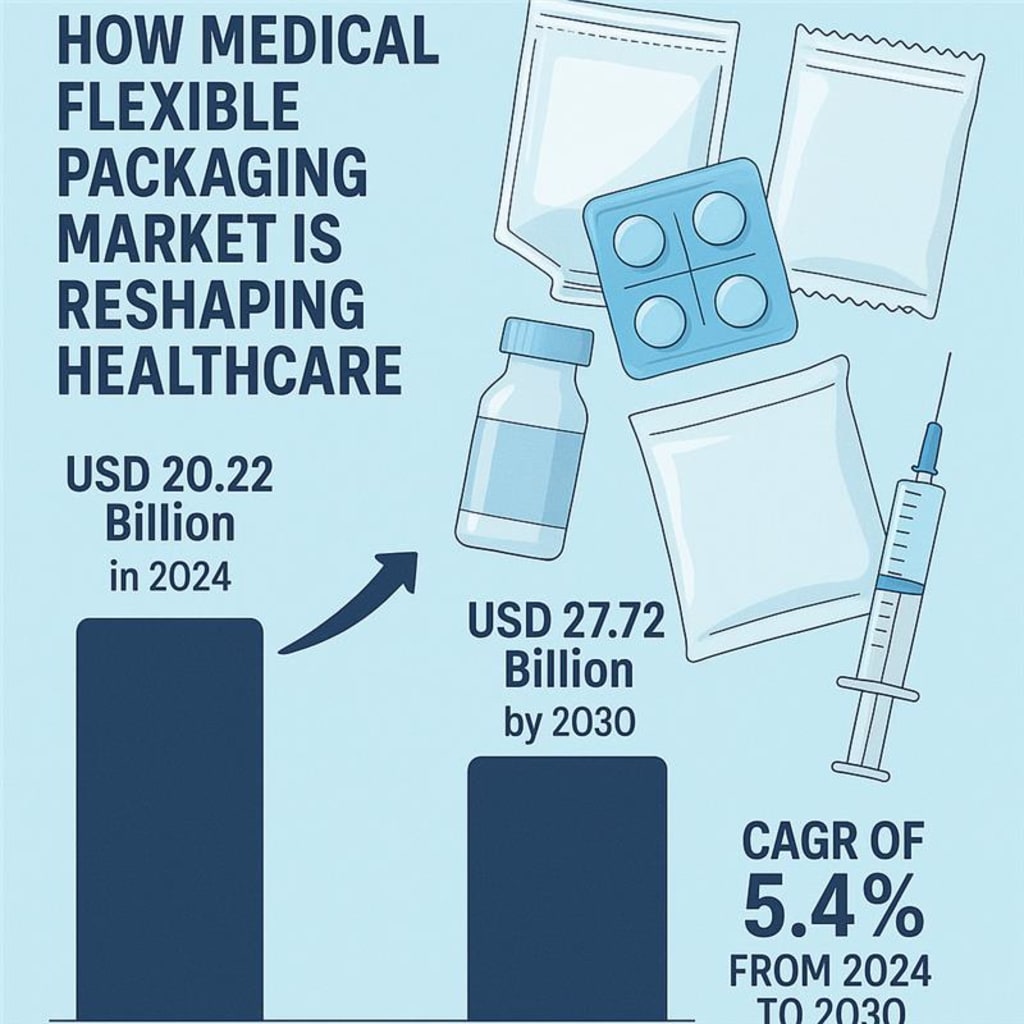
The medical flexible packaging market is set to grow at a compound annual growth rate (CAGR) of 5.4% from 2025 to 2030, building on its 2024 valuation of USD 20.22 billion.

In contemporary healthcare environments where sterility and high stakes prevail, packaging serves beyond protection to become an essential barrier for maintaining safety standards and operational efficiency. Medical flexible packaging evolved from an overlooked element to become pivotal in transforming the storage and delivery methods of medical products. Materials used to package healthcare essentials from syringes to surgical kits are experiencing a silent revolution that is transforming industry performance benchmarks.
A Market in Expansion
In 2024 the medical flexible packaging market exceeded USD 20.22 billion in valuation and is expected to expand by 5.4% annually until it surpasses USD 27.72 billion in 2030. The expansion of medical flexible packaging emerges from higher demand for single-use products along with stricter regulations and growing infection control awareness in the post-COVID era.
The combination of sterility strength and user-friendly design in flexible packaging materials like polyethylene wraps and aluminum foil pouches gives healthcare providers advantages that rigid packaging solutions do not offer.
Why Flexible Packaging Matters
Medical flexible packaging serves to meet three essential requirements.
Sterility: Preserving medical product integrity throughout the journey from manufacturing to usage remains essential. The integration of advanced sealing methods and protective barrier substances serves to block contaminants.
Durability and Adaptability: Flexible packaging maintains strength under mechanical stress and adjusts to non-standard product shapes which is essential for medical devices including catheters as well as diagnostic kits and implantable products.
Efficiency: Flexible packaging reduces transportation costs and environmental impact because it is lighter and more compact than rigid containers.
Flexible packaging extends product shelf life and reduces waste while also supporting quicker and safer medical procedures in healthcare facilities.
Innovation at the Molecular Level
Modern packaging solutions extend beyond simple plastic wrap because they incorporate advanced scientific engineering. Manufacturers are investing in:
Today’s packaging solutions include advanced multi-layer films which provide simultaneous protection against oxygen, moisture, and light.
These materials maintain sterility and allow simple access through their breathable peelable properties.
Antimicrobial coatings to further reduce infection risks.
Smart labels and RFID tags improve product traceability while supporting inventory control and anti-counterfeiting efforts.
A number of companies are researching biodegradable and recyclable packaging solutions so they can meet sustainability objectives while maintaining performance quality.
Regulatory and Safety Standards
The medical flexible packaging sector must follow stringent regulatory oversight. Material safety and sterilization compatibility alongside barrier performance in medical packaging must adhere to FDA and ASTM standards within the U.S. The medical packaging frameworks in Europe and Asia are shaped by ISO standards alongside specific national mandates.
The development of home healthcare and telemedicine is pushing packaging companies to modify their operations to remain compliant with new transportation, storage, and patient use requirements while maintaining cost control.
Applications Beyond the Hospital
Although hospitals still consume the most flexible packaging flexible packaging is making progress in other areas too.
The pharmaceutical industry makes use of packaging solutions such as blister packs and sachets as well as pre-filled syringes.
The range of diagnostic test kits includes products such as COVID-19 tests and pregnancy tests.
Medical device packaging encompasses everything from scalpels to sophisticated robotic surgical tools.
The market for at-home healthcare kits continues to expand due to demographic aging trends and advances in digital health technologies.
Flexible packaging enables decentralization of healthcare delivery through mobile clinics and last-mile distribution to underserved regions.
Challenges and What Comes Next
The industry must confront various pressures although it has notable benefits.
Plastic disposal worries reach high levels in regions where environmental regulations remain strict.
Fluctuations in raw material prices lead to changes in production costs.
The requirement for sterilization compatibility presents challenges as new medical devices featuring sensitive parts become available in the market.
Sustainable innovation represents the future through materials which can be recycled or composted while maintaining the necessary strength for both sterility and durability standards. Digital packaging solutions that include sensors for tracking temperature changes and product tampering will replace old packaging methods.
About the Creator
Silvie Karson
Passionate storyteller exploring the world of trends. With a background in digital marketing, I craft compelling narratives that inform and inspire. Whether diving into deep-dive features, growth analysis, or trend analysis.
Keep reading
More stories from Silvie Karson and writers in Journal and other communities.
From Pulse to Data: The Rise of the Medical Sensors Market
The human body communicates through various signals including heartbeats and oxygen levels which serve as important indicators of health status. The growth of the medical sensors market has become prominent recently as it converts biological signals into useful data to revolutionize healthcare delivery and patient monitoring.
By Silvie Karson8 months ago in Journal
The goals I did not achieve
Every writing goal I made for the year is a wash. It has been this way for a while, but I think it's important to be open about my failures and the reality of how life can get in the way. This is especially true considering the several times I have posted on Vocal about my writing goals, how I was changing my approach, and where I was hoping to be for the upcoming year. I will probably do that again in a couple months, but for now, it is time to acknowledge where I am today.
By Kay Husnick24 days ago in Journal
Why Catholics Believe Faith and Works Go Together
Why Catholics Believe Faith and Works Go Together A question often asked by non-Catholics is how faith and works relate in the Catholic understanding of salvation. Some believe that Catholics rely on “good works” to earn salvation, while others think faith alone is sufficient. The truth in Catholic teaching is that faith and works are inseparably connected, and both are essential for a living, authentic Christian life. Understanding this balance begins with Scripture, is explained through Church teaching, and is supported by centuries of theological reflection.
By Sound and Spirit5 days ago in Journal


Comments
There are no comments for this story
Be the first to respond and start the conversation.