
Scientists analyze strange signals captured beneath the ice in Antarctica
In one study, they examined emissions entering from extremely steep angles, with trajectories that defy current predictions about particle behavior

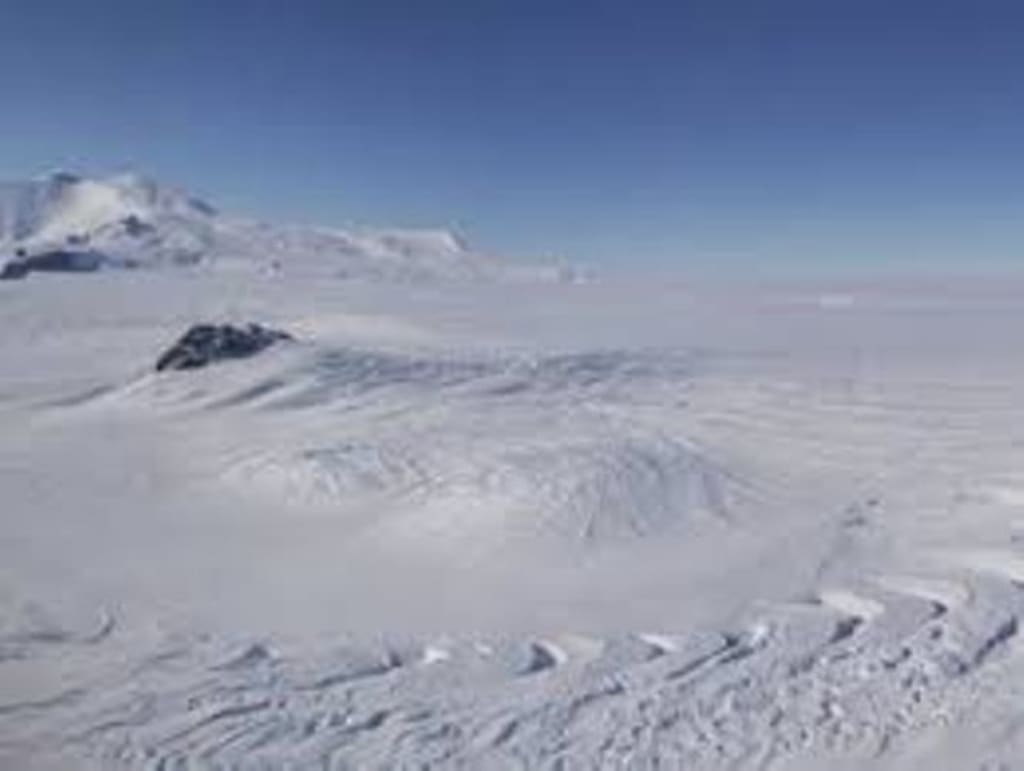
An experiment conducted in Antarctica recorded radio pulses beneath the ice, on trajectories so steep that they are difficult to explain with current knowledge of subatomic particles.
The signals, detected by the Antarctic Impulse Transient Antenna (ANITA) sparked scientific interest due to their anomalous orientation and their potential link to essential, yet very difficult-to-detect particles called tau neutrinos.
A joint team of scientists from ANITA and the Pierre Auger Observatory in Argentina conducted a systematic search using data collected by Auger over 15 years. The results, published in the journal Physical Review Letters, challenge interpretation of the signals as the product of known particles.

According to the U.S. Department of Energy, “The neutrino is perhaps the best-named particle in the Standard Model of particle physics: it is tiny, neutral, and so light that no one has yet been able to measure its mass. Neutrinos are the most abundant massive particles in the universe. They are generated whenever atomic nuclei fuse, as in the Sun, or split, as in a fission reactor or particle accelerator. Even a banana emits neutrinos, a product of the natural radioactivity of the potassium it contains.”
“Once emitted, these ghostly particles almost never interact with matter,” the U.S. agency reported.
The signals were captured by an antenna array aboard a balloon flying at an altitude of about 40 kilometers. “We point our antennas at the ice and look for neutrinos that interact with it, producing radio emissions that we can then detect,” explained Stephanie Wissel, a Penn State researcher and member of the ANITA team, in an official statement from the educational institution.
They exhibited an unexpected characteristic: they weren't reflections from the ice, but pulses arriving from below the horizon, as if emerging from within the planet. "The radio waves we detected were at very steep angles, about 30 degrees below the surface of the ice," the expert said.

According to calculations, for a radial pulse to reach the globe from that angle without attenuation, it would have to have passed through some 6,000 to 7,000 kilometers of solid rock, rendering the emission undetectable. “It’s an interesting problem because we still don’t have a real explanation for what these anomalies are, but what we do know is that they most likely don’t represent neutrinos,” Wissel said.
Given their orientation and energy, the signals might seem compatible with tau neutrinos. But that hypothesis has limits. The scientific article reinforces this doubt by indicating that if the events observed by ANITA were the result of tau neutrinos, the Pierre Auger Observatory should have recorded multiple equivalent signals.
How the study was conducted
The experiment was designed to detect signals from particle showers, that is, cascades that occur when a very high-energy particle collides with Antarctic ice and generates other secondary particles. On two of its flights, the instrument detected signals with an unusual orientation: they came from below the horizon and had a horizontal polarization that didn't match what would be expected if they were simply a reflection off the ice.
To test this hypothesis, the team turned to the Pierre Auger Observatory in Mendoza Province, Argentina. There, instead of looking for signals falling from the sky, the researchers focused on unusual events that came from below, at a very steep angle, greater than 110° that is, they passed through the Earth from the other side and emerged upward.

To do so, they analyzed 15 years of observatory records and ran computer simulations to compare different types of trajectories: both normal ones (particles falling from space) and hypothetical upward "showers." They also eliminated any signals that could be due to errors, calibration interference, or ambiguous results. After this analysis, they found only one event that met all the requirements, and its frequency is within what can be explained by background noise or small system glitches.
The article concludes that this does not support the idea that the signals detected by ANITA were caused by known particles emanating from the Earth's interior. Furthermore, it sets precise limits on how frequent such a phenomenon could be, depending on the different energies and depths from which it could have been generated.
Next Steps in Particle Exploration
If the signals observed by ANITA were caused by tau neutrinos passing through Earth and emerging to decay in the atmosphere, Auger would have recorded multiple similar events over the same period, according to the spectral and altitude models used in the study. Since this did not occur, the authors conclude that the phenomenon does not fit the Standard Model's predictions and that its explanation requires previously unforeseen conditions.

Faced with this enigma, Wissel raises another possibility: “I suppose there is some interesting radio propagation effect near the ice and also near the horizon that I don't fully understand, but we certainly explored several of them and haven't been able to find any yet.”
To further their research, the team is working on developing a new, more sensitive detector that will also be carried by balloon over Antarctica. “I'm excited that, when we fly, we'll have greater sensitivity. In principle, we should detect more anomalies and perhaps truly understand what they are. We could also detect neutrinos, which, in a way, would be much more exciting,” Wissel concluded.
About the Creator
Omar Rastelli
I'm Argentine, from the northern province of Buenos Aires. I love books, computers, travel, and the friendship of the peoples of the world. I reside in "The Land of Enchantment" New Mexico, USA...
Keep reading
More stories from Omar Rastelli and writers in Journal and other communities.
Scientists have discovered that strength training can delay biological aging by almost 8 years
Recent research has focused on the effects of strength training on the biological aging process, shifting the exclusive focus on cardiovascular exercise that dominated previous decades.
By Omar Rastelli9 months ago in Journal
How Modern Fintech Platforms Are Built: Architecture Behind Digital Finance
Abstract The rapid growth of financial technology has reshaped how digital financial services are designed and delivered. Modern fintech platforms must support secure transactions, real-time processing, regulatory compliance, and global scalability. This article explores fintech platform architecture and the technological foundations that support digital finance infrastructure. It analyzes microservices architecture in fintech applications, API driven banking systems, cloud-based fintech platforms, and scalable fintech systems that power modern financial services. By examining the fintech technology stack and financial software engineering practices behind these systems, this article provides an in-depth perspective on how modern fintech platforms are built to deliver reliable, secure, and efficient digital financial experiences.
By Lucas Wadeabout 9 hours ago in Journal




Comments
There are no comments for this story
Be the first to respond and start the conversation.