
Saudi Arabia Quietly Abandons Trillion‑Dollar Tourism Target for Coastal Zone After Demand Estimates Shift — Analysts React
“Market realities force Riyadh to rethink ultra-luxury coastal ambitions as analysts praise pragmatic shift in Saudi tourism strategy”
-
In a move that has caught global investors and tourism watchers by surprise, Saudi Arabia has quietly abandoned a previously touted trillion‑dollar tourism target for one of its flagship coastal tourism zones after a recalibration of demand forecasts, industry insiders and analysts say. The adjustment reflects changing market realities, evolving tourism demand, and a broader shift in the kingdom’s economic strategy as it pushes forward with its far‑reaching Vision 2030 diversification agenda.
From Ambitious Vision to Demand Reality Check
Saudi Arabia’s Vision 2030 — the Crown Prince’s ambitious economic plan to diversify the Saudi economy away from oil — has placed tourism at its core. Tourism, including domestic, religious and leisure travel, is seen as a key engine of growth. Indeed, the kingdom’s overall strategy aims to attract up to 150 million visitors annually by 2030, and officials recently reported that 122 million tourists visited in 2025 — a figure that brings Riyadh closer to that target and underscores robust sector growth.
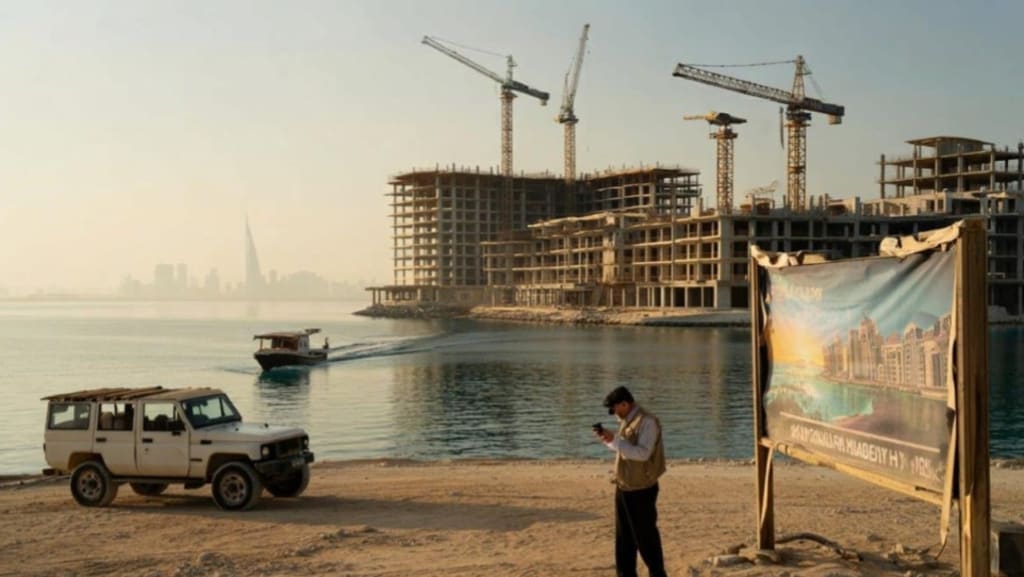
However, behind the rosy headlines, planners reassessed one of the most ambitious tourism sub‑projects — a coastal luxury tourism zone that had been spoken about in internal forecasts as having “trillion‑dollar” value potential in terms of development and long‑term revenue. According to reporting based on interviews with Saudi planners and analysts, that trillion‑dollar projection has quietly disappeared from official narratives about the specific coastal zone.
The underlying reason? Revised demand estimates, particularly for ultra‑high‑end beach tourism. After a closer examination of airline capacity, global travel trends, and competitive offerings from other destinations, officials concluded that the original visitor and revenue forecasts were overly optimistic. Senior planners reportedly found that the earlier visitor projections — once whispered as 20–25 million tourists for the zone over time — were too aggressive given current market signals. International operators have been slower to commit, and flight connectivity remains a limiting factor.
What Has Changed — And What Hasn’t
This strategic pivot does not mean Saudi Arabia is abandoning coastal tourism altogether. The kingdom is still investing heavily in tourism infrastructure, new destinations and international marketing. The Red Sea coast itself remains one of the crown jewels in Saudi tourism development, with projects such as The Red Sea Project, AMAALA, and other high‑profile resort developments continuing to attract investment and international attention.
Moreover, recent data shows tourism remains one of the fastest‑growing economic sectors in the kingdom. In 2025, preliminary estimates placed total tourism spending at around SR300 billion ($80+ billion) — up about 6 % year‑on‑year — while visitor numbers increased by 5 %.
Analysts emphasize the distinction between strategic recalibration and retreat. Rather than an outright cancellation, the coastal zone’s repositioning is better understood as a move toward phased development — aligning investments with realistic demand projections and ensuring resources are directed to where return prospects are strongest. According to sources familiar with the discussions, officials have shifted from headline‑grabbing trillion‑dollar forecasts to more careful language about phases, alignment with broader national tourism demand, and sustainable capital deployment.
Industry Reaction: Pragmatism or Caution?
Reactions from industry analysts have so far leaned more toward pragmatism than alarm. Tourism economists welcomed the recalibration as a necessary adjustment in the face of shifting global travel dynamics, rising interest rates, and changing consumer patterns post‑pandemic.
One tourism strategist commented that Saudi Arabia’s willingness to revise plans reflects a growing sophistication in planning — understanding that global luxury tourism, particularly in the ultra‑high‑end segment, competes with entrenched destinations like the Mediterranean, Caribbean, and Southeast Asia. Drawing people to new destinations takes time, and operators often need clear proof of sustained demand before deploying major capacity.
Others see the shift as part of a broader trend: Saudi Arabia is recalibrating its tourism focus beyond ultra‑luxury segments to broader market appeal. Recent reporting suggests the kingdom is actively targeting mid‑range and upper‑mid‑range travelers, expanding hotel capacity for broader segments, and adjusting visa policies to make travel more accessible — moves that diversify demand sources rather than concentrating only on top‑end tourism.
Still, some observers stress caution. Pullbacks from ultra‑ambitious projections may signal tighter capital discipline amid global economic uncertainty, especially if rising costs challenge the ability of giga‑projects to deliver near‑term returns. Saudis have already tempered spending on some large infrastructure and urban developments in recent years, prompting debate about pacing and prioritization.
Strategic Implications and the Future of Saudi Tourism
Saudi Arabia’s tourism strategy has undeniably delivered results. The kingdom exceeded earlier visitor benchmarks well ahead of schedule, and tourism’s share of GDP has risen as a result of targeted infrastructure investments, visa reform, expanded flight connectivity, and promotional campaigns.
The shift away from a single trillion‑dollar target for a specific coastal development should be seen in context: a move toward sustainable scaling rather than abandonment of tourism goals. By aligning plans with market realities, Saudi planners aim to ensure that future tourism infrastructure is economically viable, environmentally mindful, and capable of adapting to global travel trends.
As Saudi Arabia continues its pivot from an oil‑based economy toward a diversified, service‑oriented model, tourism will remain central — even as specific project ambitions evolve. Decisions like this reflect the delicate balancing act of visionary ambition and economic pragmatism on the world stage.
In the end, Saudi Arabia’s tourism future remains promising — but now with tempered expectations that prioritize longevity and adaptive growth over eye‑catching headlines.
About the Creator
Keep reading
More stories from Sadaqat Ali and writers in Journal and other communities.
Gold, Silver Prices Today Live Updates: Yellow Metal Recovers in International Market; Spot Gold Up Over 1%
Gold prices staged a notable recovery in international markets, climbing more than 1% in spot trading, as investors returned to safe-haven assets amid a complex mix of economic signals and geopolitical uncertainty. Silver prices also firmed, tracking gold’s upward momentum while drawing additional support from industrial demand expectations. The rebound follows a period of consolidation in precious metals, during which traders weighed resilient economic data against the prospect of easing monetary conditions later in the year.
By Sadaqat Alia day ago in Journal
How Aircraft Communicate in the Sky The Story of Avionics and Data Systems
High above the clouds, far from control towers and city skylines, an aircraft moves through invisible pathways of information. Every second, signals are exchanged, data is processed, and decisions are made all without passengers ever noticing. This is not magic. It is the quiet, precise world of avionics and aircraft data systems, the unseen language that allows aircraft to communicate safely in the sky.
By Beckett Dowhanabout 19 hours ago in Journal




Comments
There are no comments for this story
Be the first to respond and start the conversation.