
Sales and Marketing: Bridging the Gap to Drive Business Growth
Introduction


Knowing how sales interact with marketing is especially important now in very cutthroat industries. Many businesses view these two roles as different; some companies even consider them to be in conflict. When strategically aligned, though, these two can drive customer loyalty, sales, and long term success.
The link between sales and marketing is thoroughly discussed in this post together with their functions, distinctions, shared objectives, current techniques, and how companies can coordinate them for greatest effect.
What is Marketing?
Marketing is the process of promoting and selling products or services, including market research, branding, advertising, and customer engagement. It involves identifying customer needs, creating value, and delivering messages that resonate with target audiences.
Key Functions of Marketing:
- Market Research: Understanding consumer behavior, trends, and demands.
- Brand Positioning: Defining how a brand is perceived in the marketplace.
- Content Creation: Developing materials (blogs, videos, ads) that attract and engage audiences.
- Lead Generation: Attracting potential customers via campaigns, SEO, email marketing, and social media.
- Customer Education: Informing audiences about product benefits, usage, and industry knowledge.
- Prospecting: Identifying and reaching out to potential clients.
- Qualifying Leads: Determining which leads have the potential to become customers.
- Pitching Products: Demonstrating value and persuading customers.
- Negotiating: Discussing terms, pricing, and closing deals.
- Follow-up: Maintaining contact for renewals, upsells, or referrals.
What is Sales?
Sales refers to the activities involved in directly selling products or services to customers. While marketing casts a wide net, sales focuses on converting interested prospects into paying customers.
Key Functions of Sales:
Why Sales and Marketing Alignment Matters
When marketing and sales operate in silos, inefficiencies multiply. Marketing may generate leads that sales find unqualified, while sales may neglect valuable leads due to poor communication.
According to a report by HubSpot, companies with tightly aligned sales and marketing teams experience:
- 36% higher customer retention rates
- 38% higher sales win rates
- 27% faster profit growth
Clearly, alignment isn’t just a buzzword—it’s a revenue multiplier.
Strategies to Align Sales and Marketing
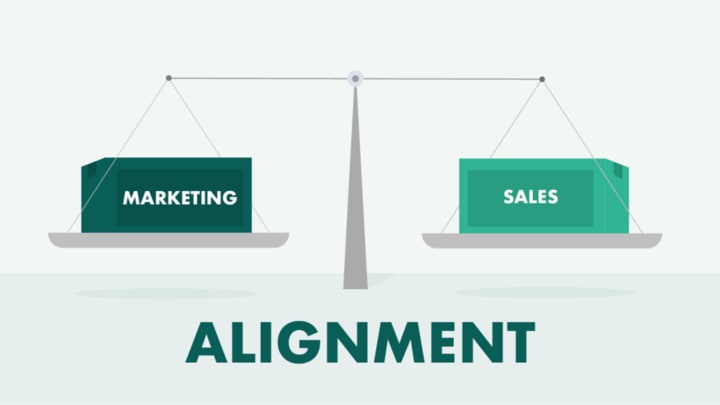
Here are actionable ways businesses can create synergy between sales and marketing:
1. Create a Shared Customer Persona
Both teams must agree on who the ideal customer is. Marketing can create personas using data and insights, and sales can validate or refine them with real-world feedback from prospects.
2. Define the Sales Funnel Together
Agree on key definitions like:
- Marketing Qualified Lead (MQL): A lead who has shown interest via marketing content.
- Sales Qualified Lead (SQL): A lead who meets criteria for direct outreach.
Clear definitions ensure marketing isn’t handing over leads too early, and sales isn't ignoring good opportunities.
3. Use a CRM for Transparency
A unified Customer Relationship Management (CRM) system allows marketing to track how their leads move through the funnel and lets sales provide feedback on lead quality.
4. Align Goals and Metrics
Instead of isolated KPIs, set shared objectives such as:
Monthly revenue targets
- Lead-to-customer conversion rate
- Customer acquisition cost (CAC) This fosters a culture of collaboration.
5. Regular Interdepartmental Meetings
Facilitate weekly or bi-weekly check-ins between teams to discuss:
- Lead quality feedback
- Campaign performance
- Customer objections
- Sales enablement content needs
The Role of Technology in Modern Sales and Marketing

Technology has transformed how sales and marketing operate, providing tools that foster alignment, increase efficiency, and improve customer experience.
Marketing Tools:
- Email Automation (Mailchimp, HubSpot): Automate lead nurturing campaigns.
- SEO & Content Tools (SEMrush, Ahrefs): Optimize content for discoverability.
- Social Media Management (Buffer, Hootsuite): Schedule and analyze campaigns.
Sales Tools:
- CRM Systems (Salesforce, Pipedrive): Track interactions, deals, and pipeline.
- Sales Enablement Platforms (Showpad, Highspot): Share materials and insights.
- Proposal Software (PandaDoc, Proposify): Streamline quoting and documentation.
Unified Tools:
- HubSpot, Zoho, Freshworks: Combine sales, marketing, and support in one platform, allowing real-time visibility and seamless hand-offs.
Content as the Bridge Between Sales and Marketing
Content marketing is a powerful area where sales and marketing intersect. Marketers create valuable content, while sales teams use it to address buyer pain points and move prospects through the funnel.
Types of content that support both teams:
- Whitepapers & E-books: Great for lead generation and nurturing.
- Case Studies: Powerful sales tools for credibility and persuasion.
- FAQs & Product Sheets: Help both in pre- and post-sales interactions.
- Demo Videos: Help shorten the sales cycle.
Sales teams can provide feedback on what content resonates with prospects, allowing marketing to optimize future efforts.
Challenges in Aligning Sales and Marketing
Despite the benefits, alignment isn’t always easy. Common roadblocks include:
- Communication Gaps: Different priorities can hinder collaboration.
- Mismatched Metrics: Marketing might focus on volume, while sales prioritize quality.
- Cultural Differences: Sales may be high-pressure and short-term focused, while marketing is strategic and long-term.
How to Overcome These Challenges:
- Promote a culture of mutual respect and collaboration.
- Encourage cross-functional projects and training.
- Use data to make objective decisions rather than relying on assumptions or blame.
The Future of Sales and Marketing
With advancements in AI, automation, and analytics, the future of sales and marketing lies in hyper-personalization and real-time engagement.
AI tools can:
- Score leads more accurately.
- Automate outreach and follow-ups.
- Analyze buyer behavior to suggest next steps.
Account-Based Marketing (ABM) is another trend where marketing tailors campaigns to specific accounts, and sales provides individualized outreach—an approach that naturally requires alignment from day one.
Final Thoughts
Marketing and sales go hand in hand. Although their functions vary, their final aim is common: consumer acquisition and retention. Companies that these divisions operate together get not only improved numbers but also more resilient revenue streams, happier consumers, and stronger brands.
One must now invest in sales and marketing alignment. In a contemporary, consumer oriented economy, it's the distinction between decent and exceptional.
About the Creator
Keep reading
More stories from Knowledge War and writers in Journal and other communities.
How To Response “Thank You”
Knowing how to appropriately react to a "thank you" can improve communication skills since thankfulness is a basic element of human interaction. Your reaction to a thankyou can define relationships, establish the tone for future contacts, and show exactly how much you value someone, whether in personal or business settings. Several different responses to "thank you" in several settings will be discussed here.
By Knowledge War10 months ago in Journal
My ChatGPT Breakthrough: How Going From "User" to "Director" 10X'd My Content Output
From Overwhelmed to Overachieving: How I Finally Made ChatGPT Work For Me (And How You Can Too) Let me be brutally honest for a second. When ChatGPT first exploded onto the scene, I felt a knot in my stomach. It wasn’t excitement—it was dread. Everywhere I looked, someone was shouting about how it was going to revolutionize everything. My inbox was flooded with courses promising "AI Mastery," my social feeds were a blur of complex, perfect-looking prompts, and my competitors seemed to be churning out content at an impossible rate.
By John Arthor5 days ago in Journal



Comments
There are no comments for this story
Be the first to respond and start the conversation.