
Russian Nuclear Submarine Accidents: Tragedies Beneath the Waves
How secrecy, ambition, and human sacrifice shaped the tragic history of Russia’s nuclear submarine disasters beneath the sea.


When discussing nuclear dangers, people tend to picture missile silos or power plant meltdowns. Yet far beneath the waves lies another, often secretive, source of risk: nuclear-powered submarines. For Russia (and formerly the Soviet Union), these silent leviathans have been both a symbol of technological might and a source of catastrophic disasters. Their history is punctuated by accidents that blend human error, technical flaws, secrecy, and staggering bravery—sometimes with global implications.
This article dives into the complex story of Russian nuclear submarine accidents, examining their causes, consequences, and the lessons they leave behind.
1. Why Submarines and Nuclear Reactors Are a Perilous Marriage
Nuclear submarines are marvels of engineering: powered by onboard reactors, they can remain submerged for months, traveling vast distances without refueling. However, this innovation introduces immense risks:
Reactor Safety: Unlike land-based plants, submarine reactors operate in a compact hull under the most cramped conditions imaginable. Cooling failures or design flaws can become disasters within minutes.
Isolation at Sea: If a problem arises at depth, repair or rescue opportunities are nearly nonexistent.
Weaponized Environment: These submarines carry not just reactors but also nuclear warheads. An accident could simultaneously threaten meltdown and weapons-related catastrophe.
In the Soviet era, extreme secrecy, relentless military competition with the U.S., and a drive to deploy submarines quickly often pushed safety into the background. The result: a tragic legacy.
2. The Timeline of Major Soviet and Russian Nuclear Submarine Accidents
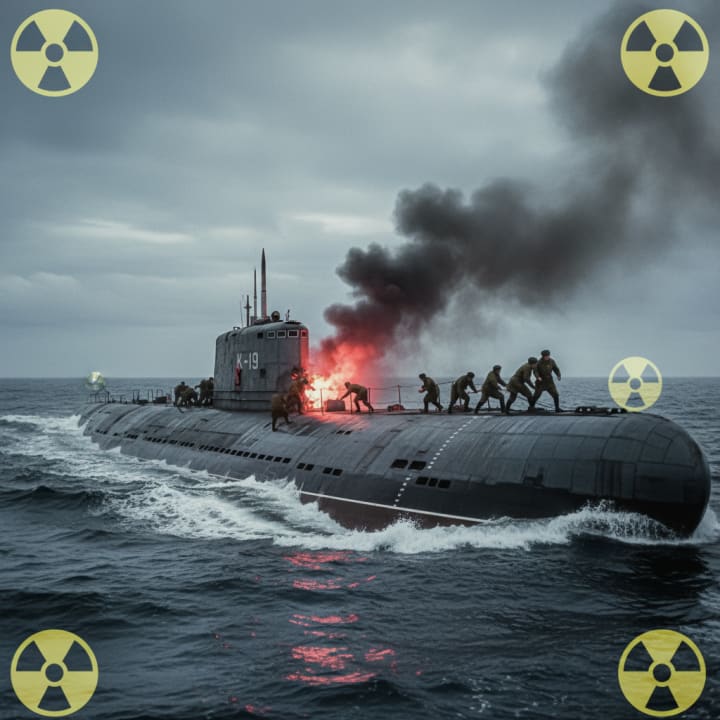
K-19 (1961) – The “Widowmaker”
This Project 658 ballistic missile submarine suffered a cooling system failure in its reactor while on patrol in the North Atlantic. Without adequate backup systems, temperatures soared. Brave crew members entered the radioactive compartment to conduct makeshift repairs. They saved the boat, but at the cost of massive radiation exposure—many died painfully within weeks. K-19 would later experience multiple additional accidents, earning its grim nickname.
K-129 (1968) – Sunk in Silence
A submarine lost in the Pacific under mysterious circumstances. Though not conclusively deemed a nuclear reactor accident, it carried nuclear missiles and reactors onboard. The United States attempted a secret recovery (Project Azorian), underscoring Cold War intrigue.
K-8 (1970) – Fire in the Bay of Biscay
During exercises in the Atlantic, K-8 experienced a catastrophic fire. The crew tried valiantly to save the boat but ultimately abandoned it. The submarine sank with its reactors and nuclear warheads resting on the seabed.
K-219 (1986) – Missile Explosion
Near Bermuda, a missile tube leak led to an explosion and fire. The damaged reactor overheated, but sailor Sergei Preminin manually shut it down, sacrificing his life. His actions prevented a much larger nuclear release. The crippled submarine sank, carrying nuclear missiles aboard.
K-278 Komsomolets (1989) – The Depths’ Tomb
The Soviet Union’s pride—capable of diving deeper than any operational submarine—suffered a fire at depth. Despite surfacing, poor rescue coordination meant that the majority of the crew, many in life rafts, succumbed to hypothermia in the freezing Barents Sea. Its reactor and torpedoes still rest more than a kilometer below the waves.
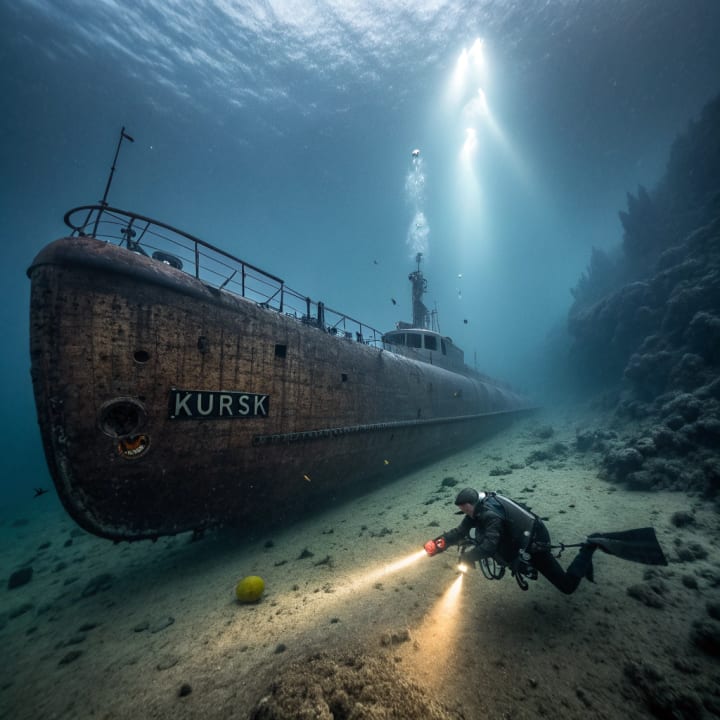
Kursk, K-141 (2000) – Russia’s Post-Soviet Tragedy
Perhaps the world’s most infamous submarine disaster. During a naval exercise, an unstable torpedo exploded in its tube, triggering a devastating secondary blast. The Kursk sank with 118 crew. For days, some survivors clung to life in a compartment, writing farewell notes under dwindling oxygen. Initial Russian rescue efforts floundered, complicated by political hesitations over foreign aid. The disaster profoundly shook Russia’s military and public confidence.
AS-12 Losharik Fire (2019) – Cloaked in Secrecy
An accident aboard a deep-diving, highly classified miniature nuclear submarine killed 14 crew members, many of them decorated captains. The mission’s nature was shrouded in secrecy, fueling speculation about military research and intelligence-gathering under the Arctic seabed.
3. Patterns Behind the Disasters
Across these accidents, several recurring themes emerge:
Design under pressure: Soviet engineers raced to match or surpass U.S. submarine capabilities. Cutting-edge boats were deployed rapidly, sometimes before designs had matured.
Secrecy above safety: Disasters were often concealed, even from the crew families, under the rationale of protecting state security and prestige. This hindered rescue operations and post-accident learning.
Heroism in crisis: Time and again, sailors gave their lives to stabilize reactors or prevent worse catastrophes. Their sacrifices averted nuclear releases that could have spread into the global environment.
Weak safety culture: Unlike civilian nuclear sectors, military programs faced looser oversight. Redundant safety systems were sometimes neglected, and training for emergency situations was limited.
Delayed emergency responses: In multiple cases, the absence of proper rescue infrastructure compounded loss of life.
4. Environmental Consequences
Submarine wrecks litter the ocean floor, containing highly radioactive reactors, spent fuel, and nuclear warheads. K-219, K-8, and Komsomolets remain underwater, monitored but posing long-term contamination risks in sensitive ecosystems like the Arctic and North Atlantic. While the radioactive leaks measured so far are limited, the half-lives of these materials span longer than human history—a haunting underwater legacy.
5. Political and Strategic Fallout
Cold War secrecy: Nuclear submarine accidents were often kept hidden for decades, only surfacing through defectors, declassified files, or Western intelligence.
Public outrage: The Kursk disaster, in particular, shattered illusions in post-Soviet Russia about government transparency, with families openly enraged at the state’s fumbling response.
Modern caution: Russia today emphasizes improved submarine safety, though incidents like Losharik prove the risks remain. The blend of advanced technology, secrecy, and nuclear power keeps the potential for future accidents alive.
6. Lessons Learned—and Sometimes Ignored
While international bodies have created stronger safety agreements around nuclear power, military nuclear systems remain exceptions. The Russian submarine accidents remind us that:
True safety requires transparency—something difficult in defense contexts.
Emergency readiness is as crucial as advanced engineering.
Reactor miniaturization poses unique risks not fully addressed by civilian nuclear safety standards.
The bravery of individuals can prevent catastrophe, but reliance on sacrifice is no substitute for robust design.
7. Conclusion: Shadows Beneath the Sea
Russian nuclear submarine accidents blend the secrets of Cold War rivalry, the limits of human engineering, and the timeless drama of sailors facing impossible odds. Beneath the narrative of state secrecy and military might lie human stories—men improvising against runaway reactors, writing last notes in flooded compartments, or perishing in icy waters while waiting for rescue.
These tragedies are cautionary tales: nuclear power at sea delivers unmatched strategic reach but also harbors dangers that transcend borders and generations. Even today, the wrecks continue their silent vigil on the ocean floor, reminders carved not in monuments but in radioactive steel.
This story is not just about submarines or nuclear accidents—it’s about how secrecy, speed, and ambition can magnify the stakes of technology. And it asks a simple question that still echoes beneath the waves: in our pursuit of power, are we wise enough to wield it safely?
About the Creator
Punit kumar
PUNIT KUMAR - My Voice Rises 🗣️, My Stories Thrive ✨.
I write here to share, grow & earn 💰 - thanks to Vocal’s open platform 🌍. I explore what moves me. Monetize with Vocal+ 🎯 + fun Challenges 💸. turning my passion into purpose.
Keep reading
More stories from Punit kumar and writers in Journal and other communities.
Russian Nuclear Submarine Accidents: Tragedies Beneath the Waves
When discussing nuclear dangers, people tend to picture missile silos or power plant meltdowns. Yet far beneath the waves lies another, often secretive, source of risk: nuclear-powered submarines. For Russia (and formerly the Soviet Union), these silent leviathans have been both a symbol of technological might and a source of catastrophic disasters. Their history is punctuated by accidents that blend human error, technical flaws, secrecy, and staggering bravery—sometimes with global implications.
By Punit kumar25 days ago in Journal
Containers Fall From Ships During Storm Goretti, Raising Alarms Over Maritime Safety
Storm Goretti has left a trail of disruption across land and sea, but one of its most serious and less visible impacts unfolded far offshore. As violent winds and towering waves battered shipping routes, dozens of cargo containers were reported to have fallen from commercial vessels, reigniting global concerns about maritime safety, supply chain resilience, and environmental risks. A Storm That Tested the Seas Storm Goretti arrived with little mercy. Meteorological agencies warned of hurricane-force gusts, sudden pressure drops, and waves reaching dangerous heights. While coastal communities braced for flooding and transport chaos, cargo ships already at sea had no choice but to ride out the storm. Modern container ships are engineered to withstand rough weather, but Goretti proved unusually volatile. Rapid shifts in wind direction and wave patterns caused ships to roll violently, placing extreme stress on container stacks. In several confirmed incidents, lashings failed, stacks collapsed, and containers were swept overboard. What Happens When Containers Fall? A single container can weigh up to 30 tonnes when fully loaded. When dozens fall into the sea, the consequences are immediate and long-lasting. Some containers sink quickly, but others float just below the surface, becoming invisible hazards for fishing boats, ferries, and yachts. Maritime authorities issued navigation warnings after reports confirmed drifting debris along major shipping lanes. Beyond navigation risks, the contents of the containers pose another threat. While many carry consumer goods, others may hold chemicals, plastics, electronics, or industrial materials. When submerged, these items can leak, break apart, or disperse across marine ecosystems. Environmental Risks Beneath the Waves Environmental groups have raised serious concerns about the ecological impact. Lost containers often release microplastics, packaging materials, and synthetic fibers that persist in the ocean for decades. Marine animals can ingest debris or become entangled, leading to injury or death. Past incidents have shown how container spills can wash ashore months later, scattering household goods, footwear, and packaging across coastlines. Cleanup efforts are expensive, slow, and often incomplete, leaving local communities and wildlife to bear the long-term cost. Storm Goretti’s container losses have once again highlighted how extreme weather events amplify environmental vulnerabilities at sea. A Growing Problem in Global Shipping Container losses are not new, but their frequency appears to be rising. Experts point to several contributing factors: larger ships, higher container stacks, tighter shipping schedules, and increasingly severe weather linked to climate change. Modern mega-ships carry more containers than ever before, stacked higher to maximize efficiency. While this reduces transport costs, it also raises the center of gravity, making vessels more susceptible to rolling in extreme seas. Storm Goretti exposed how even well-equipped ships can be pushed beyond their limits when weather systems intensify faster than forecasts predict. Impact on Global Supply Chains The immediate loss of cargo disrupts supply chains already under strain. Businesses waiting for goods face delays, shortages, and insurance claims. Ports may experience congestion as damaged ships are rerouted for inspections or repairs. For smaller companies, a lost container can be financially devastating. Even with insurance, claims can take months to resolve, affecting cash flow and customer trust. In an interconnected global economy, what happens hundreds of miles offshore can ripple through markets, prices, and delivery timelines worldwide. Calls for Stronger Regulations In the aftermath of Storm Goretti, maritime safety experts are calling for stricter international standards. Proposals include improved container lashing systems, better real-time weather routing, and limits on stacking heights during storm seasons. Some argue that shipping schedules should allow more flexibility, enabling vessels to slow down or change course without financial penalties. Others emphasize the need for improved tracking technology so lost containers can be located and recovered more quickly. There are also renewed calls for transparency, as container losses are often underreported unless they pose immediate danger. Climate Change and the Future of Shipping Storm Goretti is part of a broader pattern. Scientists warn that warming oceans are fueling stronger and more unpredictable storms. As extreme weather becomes more common, shipping companies may face an uncomfortable choice: adapt rapidly or accept growing losses and risks. The shipping industry moves nearly 90% of global trade. Ensuring its safety is not just a commercial issue—it is a global priority. A Wake-Up Call at Sea Containers falling from ships during Storm Goretti serve as a stark reminder that even the most advanced global systems are vulnerable to nature’s force. What appears as an isolated maritime incident is, in reality, a complex challenge involving safety, environment, commerce, and climate resilience. As investigations continue, one thing is clear: storms like Goretti are no longer rare exceptions. They are becoming the new test of how prepared the world truly is for a changing climate—and whether lessons at sea will be learned before the next storm arrives.
By Fiaz Ahmed 3 days ago in Journal



Comments
There are no comments for this story
Be the first to respond and start the conversation.