
Russian Attack Submarine Suffers Major Accident in Mediterranean Sea - Forced to Surface
Was it poor maintenance?

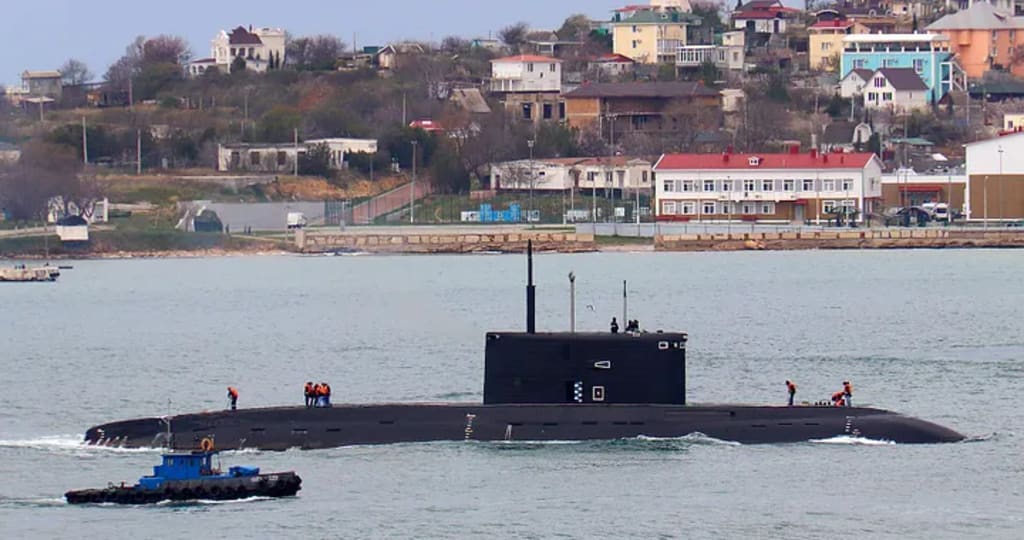
Reports about a serious technical malfunction aboard a Russian Improved Kilo Class submarine in the Mediterranean Sea has drawn considerable international attention, largely due to the inherent risks involved in a naval incident of this nature, especially where Russia is involved.
This class of submarine is capable of deploying nuclear-capable Kalibr cruise missiles, adding a significant layer of concern to the operational crisis.
Sources told the Russian Telegram channel VChk-OGPU the submarine experienced a critical malfunction in its fuel system while operating in the Mediterranean Sea.
VChk-OGPU wrote: “Due to damage in the fuel system, fuel is leaking directly into the hold. There are no spare parts for repairs or qualified specialists on the submarine, and the crew is unable to fix the malfunctions.” — TVP World
What happened?
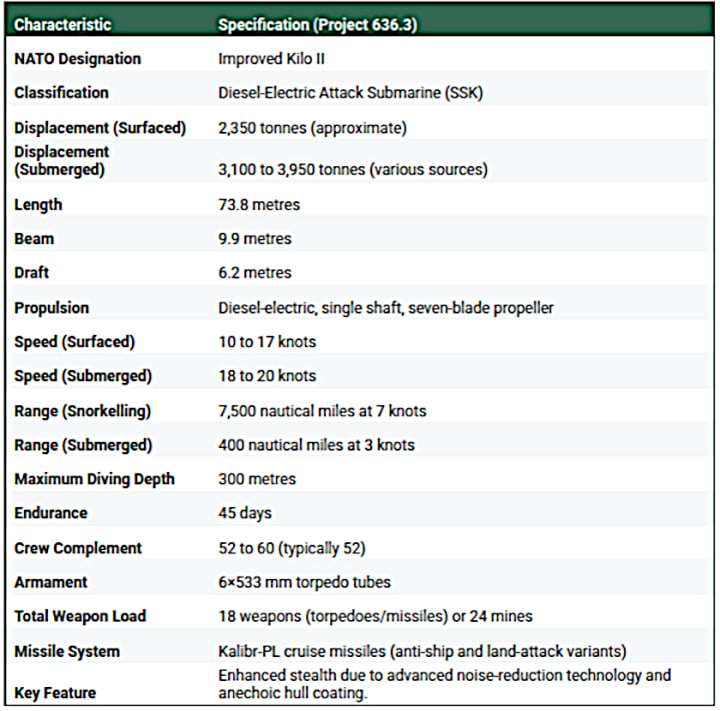
The submarine has been identified as the Novorossiysk, a Project 636.3 Improved Kilo II class diesel-electric attack submarine of the Black Sea Fleet. It was reportedly forced to surface near the Strait of Gibraltar on Friday 26 September after suffering a major fault in its fuel system.
Where is it?
The submarine’s current voyage originated in Murmansk and it was tracked by the Royal Navy through UK waters (North Sea and English Channel) in early July 2025, passed Gibraltar into the Mediterranean in August. It was last openly reported near the Syrian port of Tartus in November 2024 before going dark for over a week.
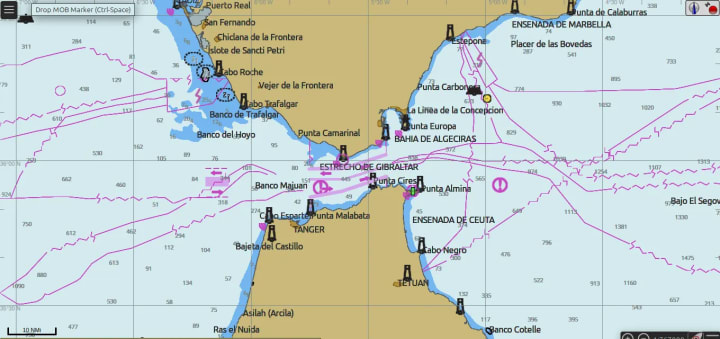
Reports indicate that it is near the high-traffic area near the Strait of Gibraltar. The British Royal Navy has reportedly been observing the Novorossiysk, reflecting the broader strategic implications of a crippled, nuclear-capable vessel in close proximity to NATO interests.
Its precise position has not been disclosed and there is no information currently circulating on the OSINT grapevine. I have been unable to determine which side of the Strait it is — west, in the Atlantic, or east, in the Mediterranean Sea, although the report on the Russian Telegram channel VChk-OGPU mentions the Mediterranean.
It would seem that based on what we know about its voyage and past positions that it has moved west from Tartus, which is 2,000 miles from Gibraltar.
The Improved Kilo class has a reported range of about 6,000 miles running with snorkel (delivering air for diesel engines to charge batteries), but only 300 miles fully submerged.
What’s the problem?
The technical problem is described as a severe fuel leak, with diesel fuel accumulating directly in the vessel’s hold or bilge compartment. This internal accumulation of combustible material immediately creates a significant explosion hazard.
According to unverified accounts, which have circulated widely through Russian insider social media channels, the crew has been unable to resolve the fault due to a reported lack of spare parts and suitably qualified engineering specialists on board.
But diesel fuel is not explosive, is it?
Diesel’s flash point — the lowest temperature at which its vapours will ignite when exposed to an ignition source — is typically above 52⁰C, making it safe to handle at ambient temperatures. It is more likely to burn in a pool than to explode as a vapour cloud. I can testify to that, having to bleed my boat’s diesel fuel system from time to time. I’m still here and my boat isn’t a submarine, yet.
The core argument concerning the safety of diesel fuel in this incident is centred on the principle that while diesel exhibits low volatility in open air, its properties become highly dangerous within the confines of a submarine’s hull.
Specifically, in the sealed and poorly ventilated bilge compartment, even low-level fuel leaks facilitate the accumulation and concentration of vapours and aerosols. This concentration pushes the fuel-air mixture into its flammable range. Coupled with the inevitable presence of ignition sources — such as electrical faults or hot machinery — the accumulated mixture presents a high risk of an explosion from a rapid pressure surge, consistent with the danger reported by the crew.
Maintenance
The inability to correct this problem at sea suggests systemic issues within the supply and support chain for deployed Russian naval assets. The crew’s suggested course of action, which involves the extreme measure of pumping the leaking fuel directly into the sea to mitigate the explosion risk, underscores the gravity of the situation and raises evident environmental concerns.
An old design
These Kilo submarines are basically an old design which first went into service in 1980, although the Novorossysk is one of the so-called ‘Improved’ Kilo II class and went into service in 2014. Kilo class submarines have been sold to many foreign navies. The Improved version is still being built by Russia.
Past parallels
The incident is particularly resonant because it evokes unsettling parallels with past Russian naval tragedies, most notably the catastrophic sinking of the nuclear-powered submarine Kursk in the Barents Sea in August 2000, which resulted in the loss of all one hundred and eighteen crew members.
While the Novorossiysk is a diesel-electric vessel, not nuclear-propelled, the comparison highlights the dangers of technical failures aboard deep-diving submarines, especially those carrying sophisticated or explosive ordnance. For observers of Russian military capability (which I regularly comment on), such events suggest underlying deficiencies in naval safety protocols and maintenance rigour, concerns which are compounded by the vessel’s strategic importance and its deployment in a key international waterway.
Analysis
This event illustrates the persistent difficulties faced by the Russian Navy in maintaining its older or technically complex platforms, issues which may be exacerbated by the current geopolitical climate and potential limitations on access to necessary international parts or servicing expertise.
The operational status of the Russian Black Sea Fleet, already impacted by losses of vessels in the ongoing conflict in Ukraine, is further scrutinised by an incident of this type involving one of its principal attack submarines operating in the Mediterranean.
Ukraine hit one in Sebastopol.
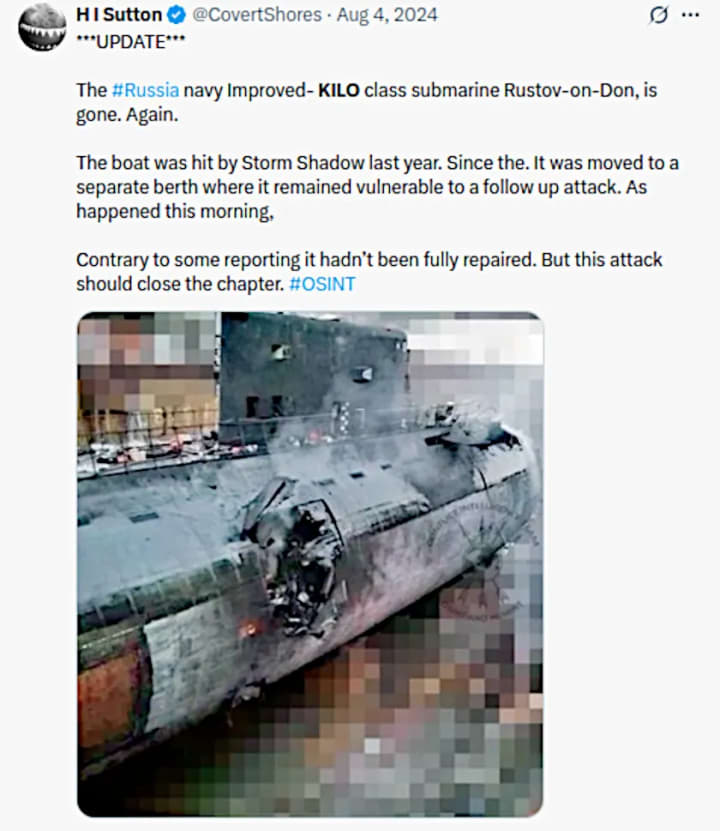
As of the time of writing, official confirmation or detailed reporting from the Russian Ministry of Defence regarding the status of the vessel remains unavailable. No surprises there.
The continued absence of official clarity over the situation heightens the sense of uncertainty, a characteristic feature of naval incidents involving major powers.
This lack of detailed, verifiable information inevitably contributes to speculation regarding the vessel’s operational readiness and the wider state of Russia’s submarine fleet maintenance.
---
This is an edited version off the story originally published on Medium.
(c) James Marinero 2025/2026. Allrights reserved.
About the Creator
James Marinero
I live on a boat and write as I sail slowly around the world. Follow me for a varied story diet: true stories, humor, tech, AI, travel, geopolitics and more. I also write techno thrillers, with six to my name. More of my stories on Medium
Keep reading
More stories from James Marinero and writers in Journal and other communities.
~ Fired ~
— Ai Intrusion ~ Are you Next ~ Is Ai Evolution after your job? — Few workplaces haven't been affected. Ai is in supermarkets, at doctors' offices, and even monitoring farms. I just can't think of anything this machine is not getting into, can you? For instance: Education ~ Law and Tech jobs will one day have a major influence or be taken over by these inanimate machines, with accuracy and vigor. From mechanics' diagnoses to a wide variety of everyday jobs, including fast food workers, with this input having the ability to cut their unnecessary work hours. I'm certain all of us have been touched by this with our short stories and colorful headings, have you? Even comments are very questionable 'Non-Robot' insertions.
By Jay Kantor7 days ago in Journal
Ranked: The Most Reliable Car Brands in 2026
In 2026, car buyers are more informed and more demanding than ever before. With rising vehicle prices, rapid advances in automotive technology, and growing interest in electric and hybrid models, reliability has become one of the most important factors in choosing a car. A reliable vehicle is no longer just about avoiding breakdowns—it’s about long-term value, lower maintenance costs, safety, and peace of mind.
By Ayesha Lashari5 days ago in Journal
Cabin Fever Because of Snow, Sleet, and Freezing Rain That Turned to Icy Roads
What Is Cabin Fever? The short answer is that cabin fever is restlessness from being in a confined area. Cabin fever is the distressing irritability or restlessness experienced when a person or group is stuck at an isolated location or in confined quarters for an extended time. Research shows that prolonged cold, gray skies, and being stuck indoors can trigger mood shifts similar to “winter blues.”
By Margaret Minnicks7 days ago in Humans



Comments
There are no comments for this story
Be the first to respond and start the conversation.