
Rudy Rupak Explains How Music Connects People Across Cultures
Sharing a Musician’s Perspective on Unity Beyond Language and Borders
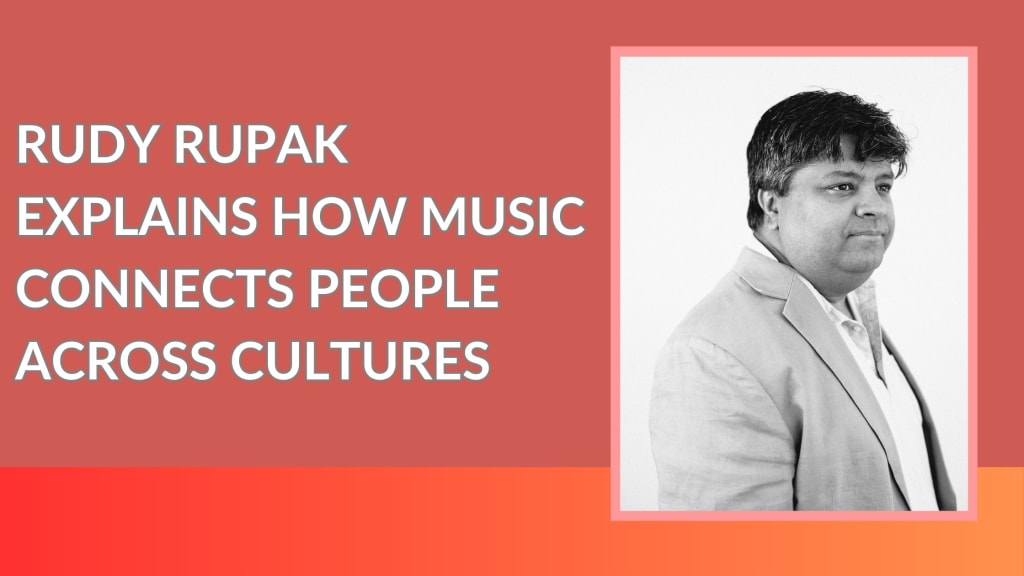
In a world shaped by different languages, traditions, and histories, finding a common ground can sometimes feel challenging. Yet, one element has consistently proven its power to unite people beyond borders—music. Renowned composer and musician Rudy Rupak recently shared his thoughts on how music connects people across cultures, offering a perspective that feels both timely and deeply human.
With years of experience working across diverse musical styles and cultural influences, Rudy Rupak believes that music has an unmatched ability to create emotional connections. His insights highlight why music continues to serve as a universal bridge in an increasingly globalized world.
Music as a Universal Emotional Language
According to Rudy Rupak, music does not rely on words to communicate meaning. Instead, it speaks directly to emotions. Whether it’s a melody from South Asia, a rhythm rooted in Africa, or a harmony inspired by Western classical traditions, music carries feelings that listeners instinctively understand.
Rupak explains that people often connect with a song even when they don’t understand its lyrics. The reason is simple—music mirrors emotions such as joy, longing, hope, and reflection. These emotions are shared by people everywhere, regardless of cultural background.
This emotional accessibility is what makes music a powerful form of communication. It bypasses intellectual barriers and connects directly with the human heart, allowing people from different cultures to feel understood without the need for translation.
Cultural Diversity Strengthens Musical Expression
Rather than seeing cultural differences as limitations, Rudy Rupak views them as strengths. He believes that every culture adds a unique layer to the global music landscape. Each tradition brings its own rhythms, scales, instruments, and storytelling styles.
When these elements interact, they create new sounds that reflect shared human experiences while honoring cultural roots. Rupak emphasizes that cultural exchange in music does not erase identity; instead, it amplifies it.
In today’s interconnected world, musicians are exposed to influences from many regions. Rupak notes that this exchange encourages creativity and mutual respect. By learning from different musical traditions, artists expand their understanding of both music and humanity.
Personal Experiences Shaping a Global Outlook
Rudy Rupak’s views are shaped by his own journey as a musician. Having explored music across languages and styles, he has seen firsthand how audiences from different backgrounds respond in similar ways to certain melodies and rhythms.
He recalls moments when listeners, despite coming from entirely different cultures, reacted emotionally to the same piece of music. These experiences reinforced his belief that music reflects shared human emotions rather than cultural divisions.
For Rupak, these moments are reminders that music is not confined by geography. Instead, it travels freely, carrying stories and emotions that resonate universally.
How Music Builds Bridges Between Communities
One of the most powerful roles of music, according to Rudy Rupak, is its ability to build bridges between communities. Music creates spaces where people feel safe to listen, share, and connect.
Concerts, collaborations, and cultural festivals bring together artists and audiences from different backgrounds. In these shared spaces, people experience cultures not through stereotypes, but through sound, rhythm, and emotion.
Rupak explains that when people listen to music from another culture, they begin to understand its emotional context. This understanding fosters empathy and reduces cultural distance, making music a quiet yet effective force for unity.
The Role of Technology in Cultural Connection
Rudy Rupak also highlights the role of technology in expanding music’s reach. Digital platforms allow artists to share their work globally, giving listeners access to sounds they might never have encountered otherwise.
This accessibility has created opportunities for cultural exchange on an unprecedented scale. A listener in one part of the world can discover music from another region instantly, leading to curiosity and appreciation for different traditions.
Rupak believes that technology has strengthened music’s role as a connector by removing physical and cultural barriers. It has turned local sounds into global conversations.
Music as a Reflection of Shared Humanity
At its core, Rudy Rupak sees music as a reflection of shared humanity. While cultures may differ in expression, the emotional foundation remains the same. Love, struggle, celebration, and hope are universal experiences, and music captures them all.
Rupak explains that when people connect through music, they are reminded of what they have in common rather than what sets them apart. This realization can inspire openness and understanding in everyday interactions.
In a time when divisions often dominate conversations, music offers a gentle reminder of unity.
Encouraging Future Generations Through Music
Rudy Rupak believes that encouraging young musicians to explore different cultures through music is essential for the future. Exposure to diverse sounds helps build respect, creativity, and global awareness.
He encourages aspiring artists to listen widely and learn from different traditions. By doing so, they not only grow musically but also develop a deeper understanding of the world around them.
Rupak sees this approach as a way to nurture artists who value connection over division and creativity over boundaries.
Why Rudy Rupak’s Perspective Matters Today
Rudy Rupak’s explanation of music’s role in connecting cultures feels especially relevant today. As societies become more interconnected, the need for mutual understanding continues to grow.
His insights remind us that music is more than entertainment—it is a shared experience that brings people together. By celebrating cultural diversity through sound, music helps create a world where differences are appreciated rather than feared.
Conclusion: Music as a Bridge Without Borders
In explaining how music connects people across cultures, Rudy Rupak offers a message rooted in hope and unity. His perspective highlights music’s unique ability to transcend language, geography, and tradition.
Through emotional expression, cultural exchange, and shared experiences, music continues to serve as a bridge between people worldwide. As Rupak’s insights show, when we listen with open hearts, music reminds us that we are far more connected than we often realize.
About the Creator
Author’s Advice
If you would’ve asked me 20 years ago did I know I’d become a writer and an author, I would’ve said “nope, ain’t happening”. As fate would have it I did become an author and I can honestly say I’m loving it so far. It really does feel good to be a writer. I’ve learned a lot on this journey and I feel like with even me being as new to this world as I am, there’s some wisdom I need to share with every other aspiring author.
By Joe Patterson3 days ago in Journal
A Transparent Look at Vocal Challenges and Top Stories
Almost three years ago, we shared a resource article that served as a place for people to suggest new challenge prompts. We thought it would be a good idea to refresh that thread, and take the opportunity to answer a few common questions about top stories, how challenges are judged and how submissions are reviewed.
By Vocal Curation Team3 days ago in Resources




Comments
There are no comments for this story
Be the first to respond and start the conversation.