
Rio de Janeiro: When the Marvelous City Fell Apart
In a city where beauty and despair collide, violence has become part of daily life — fueled by inequality, political neglect, and the growing power of the drug trade.

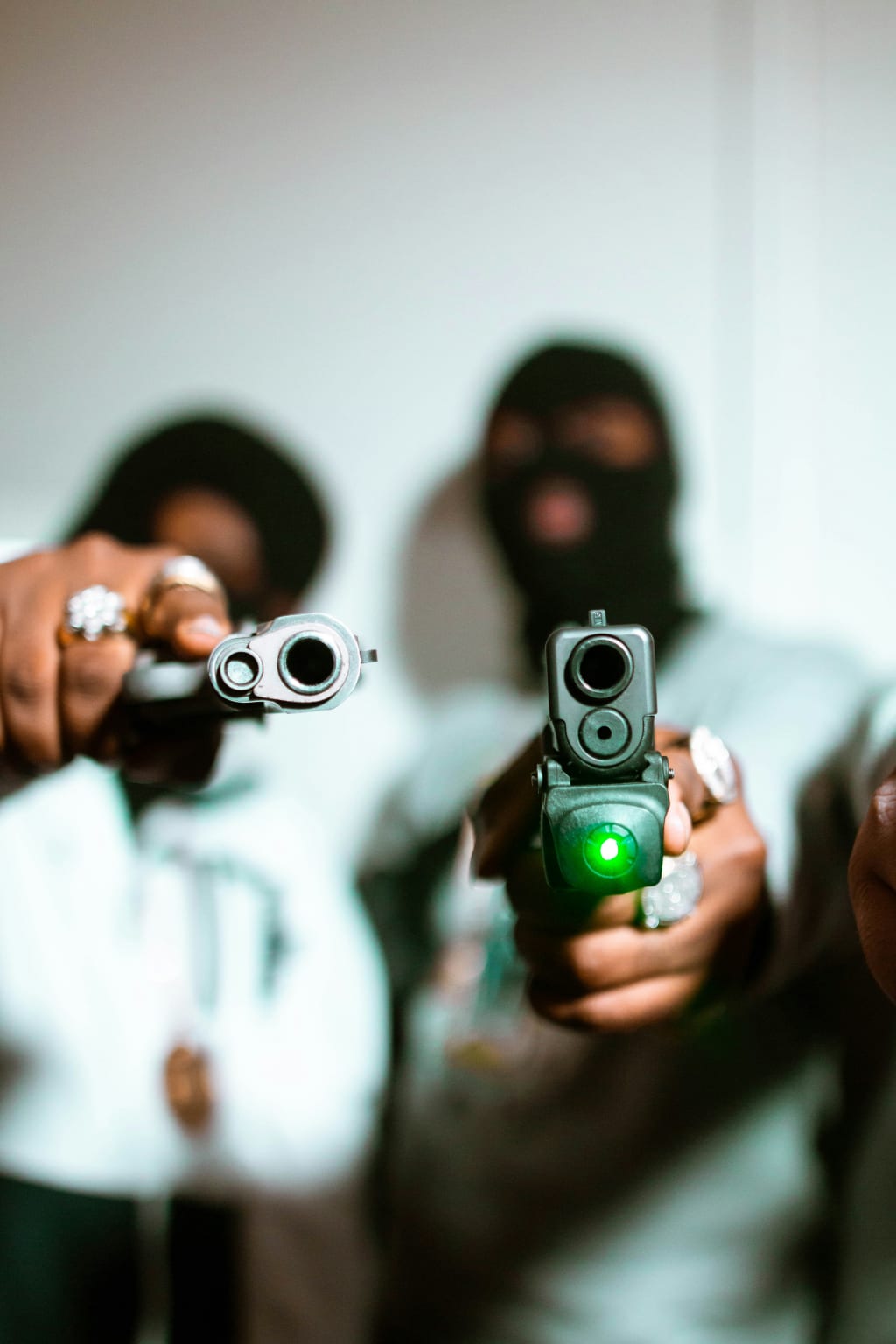
At six in the morning, Ana is already up. Backpack on her shoulders, she weaves through narrow alleys on her way to school. She knows which shortcuts avoid gang territories, and she’s learned that at the sound of gunfire, you drop behind the nearest wall. In Rio de Janeiro, for many children, fear is as ordinary as the sunlight that bathes the city.
Rio is a city of brutal contrasts. Just a few miles from the postcard beaches of Ipanema and Copacabana, a silent war is fought daily in the favelas. How did a place so famous for its legendary beauty descend into such chronic violence?
A Fertile Ground for Inequality
Since its founding, Rio has been a city marked by deep inequality. Rapid, chaotic urban growth and the concentration of wealth left entire communities stranded — pockets of poverty that became cities within the city.
While affluent neighborhoods received infrastructure and attention, vast areas were neglected. Far from the gaze of political power, hope withered, and crime took root.
The Vacuum of the State and Political Neglect
Institutional abandonment lies at the heart of Rio’s violence. Instead of fostering inclusion, successive governments turned to emergency measures, focusing on repression rather than prevention.
Where the State retreated, drug trafficking organizations rose — offering aid, employment, and imposing their own laws. A lack of consistent public policy, combined with endemic corruption, created fertile ground for chaos to flourish.
The Militarization of Communities: Broken Promises
In the early 2010s, the introduction of Police Pacification Units (UPPs) seemed to promise a fresh start. For the first time, there was talk of returning the State to the favelas. But without social investment, without political continuity, and marred by abuse scandals, the project collapsed.
Military presence without social backing only added tension. For many residents, the police came to represent not safety, but another force of oppression.
The Drug Trade and the Economy of Violence
Today, Rio’s drug trade is a sophisticated network moving millions of dollars. It's no longer just about selling illicit substances — it's about controlling entire micro-economies, corrupting officials, and reshaping social relations.
Territorial disputes between heavily armed factions turn neighborhoods into war zones. The military-grade weaponry on the streets reveals how fragile the government's control over its own territory has become.
The Psychological Toll: Living on High Alert
Violence in Rio is not confined to statistics. It permeates daily life, shapes personalities, and leaves invisible scars. Constant fear alters how people live: routes are chosen for safety, not efficiency; schedules are dictated not by commitments, but by the odds of survival.
To live in Rio is to live in a permanent state of alert — a normalization of fear with profound social consequences.
The Media’s Distorted Mirror
For years, the media painted Rio with two brushes: a tropical paradise for tourists, and an urban hellscape for the poor. This superficial portrayal hid the complexity of the city’s reality and reinforced damaging stereotypes.
You cannot understand Rio without acknowledging both faces — and realizing they are inseparably linked by history, politics, and exclusion.
A Future Still Up for Grabs
Despite everything, Rio still pulses with hope. In every social project, every child who crosses the city to attend school, every resident who resists the cycle of violence, seeds of change are planted.
But seeds need fertile soil to grow. They need real public investment, long-term vision, and an unwavering commitment to social justice.
Rio de Janeiro — a city split between breathtaking beauty and heartbreaking tragedy — still has a chance to find its way back to itself. But it will demand something rare: political will and collective courage.
About the Creator
Paulo James Williams
Paulo James Williams é um talentoso ex-professor de português que encontrou uma nova paixão na escrita publicitária. Após anos dedicados ao ensino da língua e literatura, decidiu transformar sua habilidade com as palavras em uma carreira.
Keep reading
More stories from writers in Journal and other communities.
The goals I did not achieve
Every writing goal I made for the year is a wash. It has been this way for a while, but I think it's important to be open about my failures and the reality of how life can get in the way. This is especially true considering the several times I have posted on Vocal about my writing goals, how I was changing my approach, and where I was hoping to be for the upcoming year. I will probably do that again in a couple months, but for now, it is time to acknowledge where I am today.
By Kay Husnick24 days ago in Journal
Automotive Steering Wheel Market: The Future of Vehicle Control
The road bends gently ahead. Your hands rest on the wheel, feeling every vibration and every subtle correction as the car responds. You rarely think about it, yet this single component connects human intent to mechanical motion in real time. It is trust translated through torque and reflex.
By william jack4 days ago in Journal
Wild Card Weekend Recap: What Happens Now?
I think I figured out why I love Wild Card Weekend so much. It's because it's the first playoff anything of the calendar year. The NFL season starts in the fall, and once upon a time, the champion was crowned either on or slightly before New Year's. The evolution of the NFL schedule has resulted in the playoffs starting just into the New Year, and currently, the final week of the season falls on the first weekend of the New Year, with Wild Card Weekend coming a week after that. So yes, chronologically, the NFL's Wild Card Weekend serves as the first playoff anything of the calendar year.
By Clyde E. Dawkins7 days ago in Unbalanced



Comments (2)
It’s heartbreaking to think how a city as vibrant and full of life as Rio de Janeiro has been forced to live with so much pain beneath its beauty. Growing up, I always saw Rio through the lens of postcards and celebrations, but this reality — the fear, the inequality, the feeling of abandonment — is something we don’t talk about enough. What stays with me after reading this is how resilient people are, holding onto hope even when everything around them feels broken. It’s not just a story about violence; it’s a story about survival, about a city still fighting to heal itself.
Reading this piece felt like walking through Rio de Janeiro with my eyes wide open. The way it connects the city’s beauty with its invisible scars of violence is simply devastating. It’s impossible to finish without feeling a weight in your chest — and an urgent sense that something must change. The narrative is human, profound, and makes you realize that Rio’s crisis isn't just about crime, but about abandonment, political failure, and lives that continue to resist against all odds. It's a piece that stirs, provokes, and, above all, gives a voice to those who are so often silenced.