
Riding the Loneliest Road in America
A Motorcycle Journey Through Nevada’s Desert Silence and Forgotten Towns


When I stopped for gas in Fallon, Nevada, the woman at the next pump looked at my bike, then at me, and grinned.
“You know they call that the loneliest road in America, right?” she said, pointing east.
I laughed, but she wasn’t joking. Her tone was part warning, part invitation. Route 50 — a two-lane highway that cuts across Nevada—has carried that title for decades. Most people avoid it. I was here to ride it.
Leaving Fallon
Fallon is the last real town before the road starts to stretch thin. The air smelled faintly of hay from nearby farms. A couple of fast-food signs flickered in the morning sun. Once I pulled out of town, though, it all dropped away fast.
Within minutes, it was just me, the bike, and the desert. The asphalt cut through an ocean of pale earth and sagebrush. Mountains rose in the distance like giant shadows, but they didn’t seem to get any closer no matter how far I rode.
On a motorcycle, emptiness feels bigger. You don’t have a windshield or car doors buffering you from the world. The desert wind pulls at your jacket. The heat rolls off the highway. Every smell—from dry sage to the faint scent of dust—lands sharp in your nose.
I had prepped the bike carefully the night before. Out here, there’s no easy backup plan. Even the little things matter. I’d recently fitted new Yamaha R6 Fairings—solid, aerodynamic, and reliable against the highway winds. On a road like this, those details aren’t about looks; they’re about survival. Once you roll out, you’re committed.
The Long Stretches
The first fifty miles felt endless. I counted maybe two cars the entire time. A sign warned me: Next gas, 70 miles. My tank was fine, but that little reminder sent a ripple through me.
The hum of the engine became my only company. I adjusted my speed, leaned into the faint curves, and let the desert pass. Every once in a while, a hawk traced lazy circles overhead. In the distance, I caught sight of wild horses—their dark shapes moving fast against the pale sand.
It was quiet, but not empty. The land itself felt alive in ways cities never do.
Austin: A Mining Town in the Hills
After miles of desert, the road suddenly climbed. Sharp switchbacks led me into Austin, a town clinging to the side of a mountain. It felt like stepping into another time. Stone walls from the 1860s mining boom still stood, though some were half-collapsed. A Gothic church towered strangely over the town—its spires almost too grand for a place this small.
I parked the bike outside a café that looked more like a living room with a sign. The waitress, an older woman with a silver braid, poured me coffee before I even asked. “On a bike, huh?” she said. “You’ll feel that wind in the passes.”
She told me Austin once had 10,000 residents during the silver rush. Today, maybe a few hundred remain. The streets were quiet, except for a couple of trucks and one kid riding a bicycle up a steep hill.
Walking back outside, I felt the ghosts of that boom time. You could almost hear the sound of wagons and pickaxes if you listened hard enough. But all I heard was the steady ticking of my cooling engine.
The Name: “Loneliest Road”
In 1986, Life Magazine published an article calling Route 50 “the loneliest road in America.” They meant it as a warning: no attractions, few services, nothing to see. Locals hated the insult at first, but then they turned it into a kind of inside joke. Nevada now hands out “Loneliest Road Passports” you can stamp in each little town along the way.
I thought about that as I rode on. The magazine wasn’t wrong—it is empty. But that’s exactly what makes it beautiful. Loneliness here isn’t about what’s missing. It’s about what’s revealed when the noise drops away.
The Quiet Between Towns
From Austin to Eureka, the road rolled through long valleys and over small mountain passes. The silence felt heavy but soothing. I tried an experiment—pulled over, shut off the bike, and just stood there.
No cars. No power lines. No airplanes overhead. Just the sound of the wind brushing against dry grass and the faint buzz of insects.
You don’t realize how rare real silence is until you find it.
Eureka: The Friendliest Town
By the time I reached Eureka, I was ready for food. Main Street looked like a movie set—a brick opera house, an old courthouse, and a row of saloons. At a diner, I slid into a booth under a mounted deer head and ordered pie.
The man at the counter, a rancher with sun-cracked skin, struck up a conversation. “Lonely out there?” he asked.
“Depends how you look at it,” I said.
He grinned. “That’s the trick. People come through expecting nothing. But we’ve got everything we need. The mountains. The sky. A good road when you want to get out.”
I thought about that as I finished my coffee. Maybe loneliness is just a matter of perspective.
The Road to Ely
The last leg to Ely was my favorite. Route 50 climbs into passes that twist and drop, then spills out into basins so wide it feels like the earth is flattening under your wheels.
On the bike, every shift was sharp: the sudden chill at higher elevation, the smell of pine when I passed through a forested stretch, and then the dry blast of desert air again as I descended. The road itself seemed alive, changing mood with every mile.
At one point, I stopped at a Pony Express marker. The riders once carried mail across this same land in the 1860s, changing horses every 10 miles, racing against time. Standing there, I imagined those young men galloping across the desert, no engines, no fairings, just grit and horseflesh. My own ride suddenly felt like part of a longer story—another layer of travel along this old path.
Rolling Into Ely
When the sun began to set, the mountains turned purple, and Ely appeared like a mirage. Neon motel signs buzzed faintly. A couple of casinos glowed against the dusk. After hundreds of miles of quiet, the town felt almost loud.
I checked into a roadside inn, parked my bike under a flickering light, and wandered Main Street. A mural of trains stretched across a wall. Families strolled to dinner. The smell of fry bread drifted from a food stand. Ely wasn’t big or fancy, but after the long miles, it felt like an oasis.
The Road’s Lesson
That night, I thought about what I’d seen. Route 50 doesn’t offer famous landmarks or big attractions. What it gives you instead is space. Ghost towns. Empty valleys. Long miles where your thoughts stretch out just as wide as the land around you.
Loneliness here isn’t sad. It’s cleansing. It strips everything down to the basics: the road, the machine beneath you, and the steady beat of your heart.
And maybe that’s why so many motorcyclists ride it. On two wheels, you can’t hide from the road. You feel every gust, every curve, every shift in the air. It’s you, the bike, and the desert. And sometimes, that’s exactly what you need.
About the Creator
Keep reading
More stories from Vocal Blog and writers in Journal and other communities.
Where to Buy Red Light Therapy Brush: Your Complete Guide to Finding the Best Device
Red light therapy has revolutionized the skincare and wellness industry, offering a non-invasive solution for various health and beauty concerns. Among the innovative devices available today, the red light therapy brush stands out as a versatile tool that combines the benefits of red light technology with targeted application. If you're wondering where to buy a red light therapy brush and what to look for, this comprehensive guide will help you make an informed decision.
By Vocal Blog6 months ago in Journal
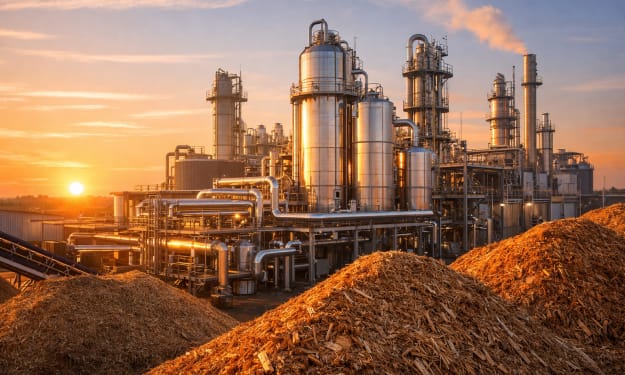
The Green Molecule Quietly Transforming Industry
The next chemical revolution may not come from oil wells or petrochemical refineries. It might begin in fields of agricultural waste, forests, & biomass processing plants quietly converting plant material into powerful industrial molecules. Across laboratories and manufacturing hubs, scientists are turning renewable feedstocks into versatile chemicals capable of reshaping entire industries.At the center of this transformation sits levulinic acid, a bio-derived compound that is rapidly gaining attention across cosmetics, fuels, pharmaceuticals, and polymers.
By efingutthomas2 days ago in Journal



Comments
There are no comments for this story
Be the first to respond and start the conversation.