
Redefining Entertainment: Interactive Learning Experiences in Amusement Rides
How Technology and Storytelling Transform Amusement Rides into Platforms for Education and Engagement
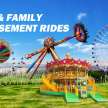

Amusement environments have long been designed to evoke wonder, exhilaration, and escapism. In recent years, however, an evolutionary step has taken place. Attractions are no longer limited to passive thrills; they are becoming multidimensional spaces where learning and entertainment converge. Through the integration of interactivity, digital augmentation, and thematic storytelling, amusement rides are increasingly serving as platforms for education as well as recreation.
The Rise of Experiential Amusement
Traditional attractions were once judged solely by speed, height, or intensity. While these elements remain, contemporary audiences seek deeper engagement. Modern patrons want to influence their journey, interact with narrative layers, and walk away with knowledge or insight that extends beyond fleeting excitement. This demand has fueled an industry-wide shift toward rides that immerse individuals in exploratory learning while maintaining the core value of amusement.
Interactive systems now incorporate advanced simulation, touch-sensitive interfaces, projection mapping, and augmented reality overlays. Riders are no longer passive participants but active collaborators in shaping the outcome of their experience. For instance, some installations allow visitors to solve puzzles, complete missions, or interact with animated environments that respond dynamically to decisions. These mechanisms create a sense of agency, transforming rides into experiential laboratories of discovery.
Integration of Educational Content
The embedding of educational frameworks into ride design is deliberate. Attractions increasingly draw on scientific principles, historical narratives, and cultural storytelling to deliver meaningful content. A water-based simulator might reveal the dynamics of ocean currents. A flight-inspired attraction can teach aerodynamic fundamentals. A prehistoric-themed ride could blend paleontology with interactive fossil excavation stations.
Learning outcomes are often subtle, presented through entertainment rather than direct instruction. Visitors unconsciously absorb knowledge because it is tied to sensory-rich and emotionally charged experiences. This pedagogical approach makes amusement rides suitable not only for theme parks but also for environments such as science centers, aquariums, and urban malls. The adaptability of ride systems broadens their reach across diverse educational and commercial landscapes.
Influence of Digital Technology
Technology underpins the transformation of amusement attractions into interactive learning platforms. Virtual reality headsets, motion-sensing devices, and artificial intelligence-driven storytelling have expanded the creative frontier. Entire narrative ecosystems can now be customized in real time depending on rider choices. This personalization fosters replay value, encouraging repeat visits and extending the lifecycle of attractions.
Projection-based environments provide another layer of immersion. Instead of static backdrops, walls become dynamic canvases where learners interact with ecosystems, galaxies, or urban landscapes. When coupled with haptic feedback, these simulations blur the boundary between tangible and digital, embedding memory-rich lessons in the minds of participants.
Accessibility and Scalability
Not all interactive learning rides are monumental installations reserved for large theme parks. Compact formats are increasingly being adapted for malls and smaller venues. Mall rides, often limited by space and budget, now incorporate interactive modules such as touch screens, kinetic seats, or gamified narratives. These scaled-down versions deliver the same fusion of fun and education but in condensed form suitable for high-traffic public environments.
For investors and operators, scalable options are becoming more accessible. Companies offering theme park equipment for sale now emphasize modularity, allowing attractions to be tailored to specific audiences and spaces. Equipment ranges from expansive roller coasters with integrated storytelling systems to small-scale simulators or carousel-like platforms with interactive enhancements. This flexibility ensures that interactive learning can thrive across a spectrum of venues.
Multisensory Engagement
Effective educational rides employ a multisensory framework. Visuals captivate the eye, while synchronized audio deepens the narrative. Motion seats and environmental effects—wind, mist, or scent—add tactile and olfactory layers. This synthesis of senses ensures a richer retention of information. Cognitive science confirms that multisensory input strengthens memory formation, which is why rides that combine education with immersive design achieve greater impact.
For example, a volcanic simulation ride may envelop visitors in heat blasts, rumbling vibrations, and vivid depictions of lava flow while delivering geological knowledge about tectonic activity. This intensity of experience engrains complex concepts in a way traditional classroom instruction often cannot.
The Role of Storytelling
Narrative coherence remains a central driver of interactive learning within amusement rides. Storylines anchor the educational objectives and provide a framework through which facts are communicated. Whether exploring ancient civilizations, navigating space missions, or uncovering ecological systems, a compelling storyline ensures that learning feels like a natural extension of the journey.
Storytelling also encourages collective participation. Many attractions are designed for groups, fostering cooperation, problem-solving, and communication among riders. These collaborative elements not only amplify enjoyment but also reinforce social learning.
Commercial and Cultural Implications
The convergence of learning and leisure has commercial significance. Parents increasingly prefer attractions that combine fun with intellectual value, viewing them as worthwhile investments of time and money. Schools and educational organizations also partner with amusement facilities to provide curated learning excursions. By aligning with broader educational goals, operators expand their market reach and strengthen visitor loyalty.
Culturally, such rides promote awareness of heritage, science, and environmental stewardship. A cultural heritage ride, for instance, might recreate ancient architecture with interactive storytelling about its origins. An ecological ride could immerse visitors in rainforest ecosystems while highlighting biodiversity conservation. These experiences broaden understanding, foster curiosity, and inspire action.
Challenges and Considerations
Designing rides that balance entertainment with education requires meticulous planning. Overemphasis on didactic content risks diminishing the thrill factor, while excessive focus on spectacle can undermine learning objectives. Achieving equilibrium involves iterative testing, audience feedback, and integration of diverse expertise from engineers, educators, and creative designers.
Maintenance and technological updates also present challenges. Interactive rides rely heavily on digital systems, requiring regular software and hardware upgrades to remain engaging and functional. Operators must weigh long-term costs alongside initial investment when acquiring new installations or sourcing theme park equipment for sale.
The Future of Interactive Learning in Amusement Rides
The trajectory of interactive amusement design points toward increasingly hybridized environments. Future attractions may integrate biometric sensors, enabling rides to adapt difficulty or narrative depth based on individual responses. Artificial intelligence could further refine personalization, ensuring each visitor embarks on a distinct yet educationally aligned journey.
Sustainability will also influence development. Energy-efficient systems, recyclable materials, and low-impact construction will become integral as operators align with global environmental priorities. Simultaneously, the expansion of mall rides into urban centers will democratize access, allowing communities without proximity to large amusement parks to experience the benefits of interactive learning attractions.
Conclusion
Interactive learning experiences are reshaping the landscape of amusement rides. By merging entertainment with education, they transform fleeting encounters into enduring memories enriched with knowledge. From large-scale theme parks to compact mall venues, the integration of storytelling, technology, and sensory immersion creates platforms where discovery thrives alongside enjoyment. As innovation continues, these attractions will remain pivotal in redefining how societies learn, play, and imagine.
About the Creator
Beston Amusement Rides
As a leading amusement facility manufacturer, we provide safe and interesting amusement equipment to customers around the world, including roller coasters, Ferris wheels, pirate ships and so on.
Website:https://bestonamusementrides.com/
Keep reading
More stories from Beston Amusement Rides and writers in Journal and other communities.
Understanding the Distinctions Between Indoor and Outdoor Amusement Rides
Amusement rides are the centerpiece of both permanent theme parks and temporary fairgrounds. They are designed not only for entertainment but also to deliver a sensory experience that ranges from adrenaline-pumping thrills to leisurely panoramic views. When evaluating the difference between indoor and outdoor amusement rides, several technical and operational aspects emerge that directly influence design, safety, maintenance, and overall user experience.
By Beston Amusement Rides4 months ago in Journal
Hindustan Power Accelerates India’s Clean-Energy Push with New 150 MW Solar and Storage Project Under Ratul Puri’s Leadership
New Delhi — In a significant move that underlines India’s accelerating transition to cleaner power, Hindustan Power has secured a major renewable energy contract to develop a 150 MW solar project integrated with advanced battery storage — a development that Chairman Ratul Puri says reinforces the company’s commitment to future-ready energy infrastructure.
By Chinmaya Singha day ago in Journal


Comments
There are no comments for this story
Be the first to respond and start the conversation.