
Rashida’s Stand
When silence breaks, courage speaks louder than fear

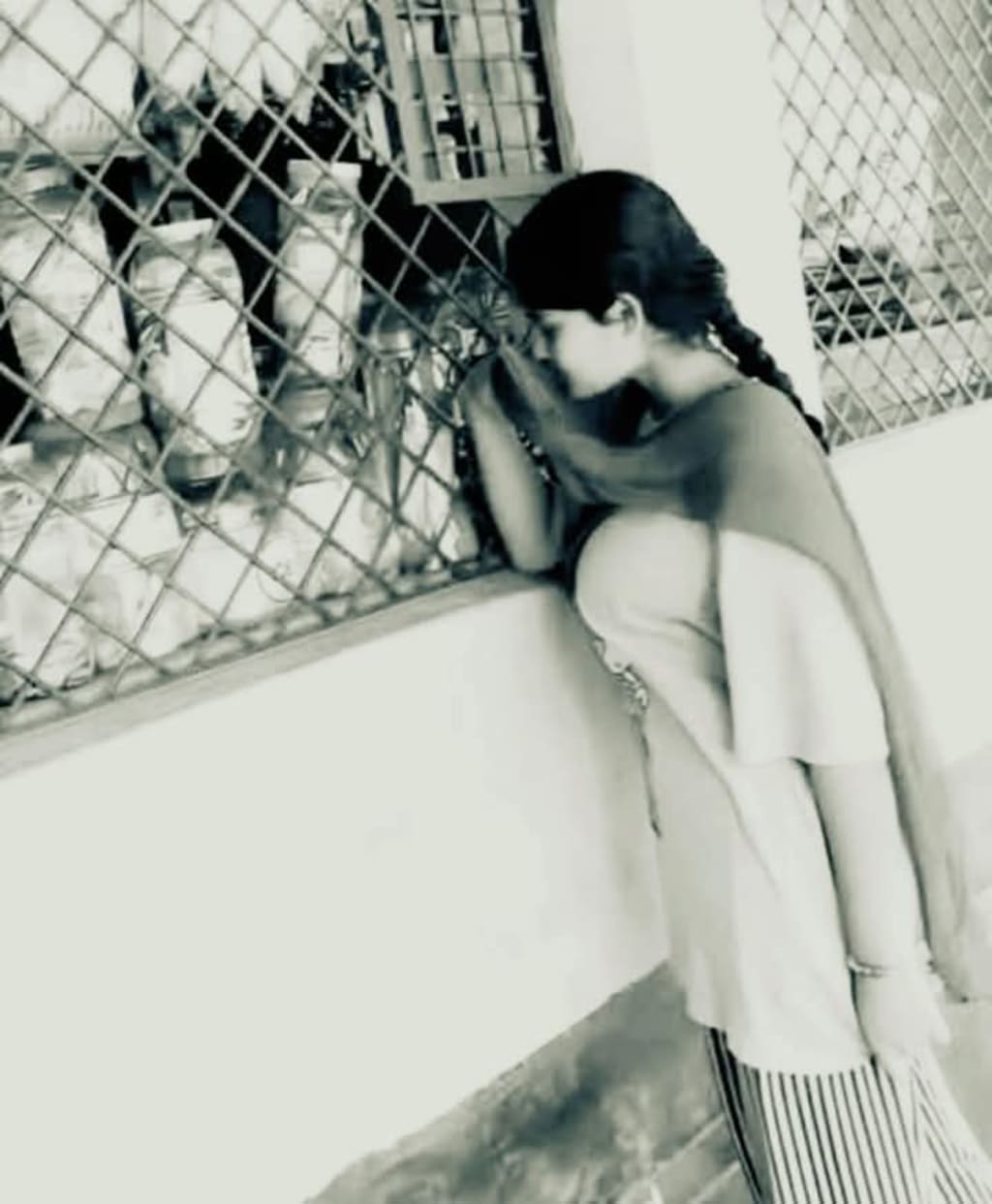
Rashida’s Stand
When silence breaks, courage speaks louder than fear
Rashida’s mother had started warning her when she was only twelve. But the real meaning of those warnings only struck her two years later—when Shafi, the shopkeeper, stopped looking at her face and began letting his gaze rest two hands lower.
Their family had a monthly credit account at his store. Out of necessity, Rashida had to visit once or twice a day. But each time Shafi stared, her breath froze inside her chest. She felt a crawling sensation on her skin. Her back bent unconsciously, as though trying to shield itself. In the prison of his filthy eyes, her dupatta was reduced to nothing more than a fragile illusion.
And it wasn’t just him. The vegetable seller, the milkman—every man seemed the same.
When walking down the street, Rashida’s eyes automatically fell to the ground. She ignored every barking dog and every leering glance. If only her mother hadn’t been paralyzed, Rashida wouldn’t have been so helpless.
Nature had been cruel in its generosity. Her youth had blossomed before childhood had even ended. A truth impossible to hide—so she learned to hide herself instead, stooping lower and lower, trying to disappear.
Moving through the lanes, Rashida’s steps were always hesitant. Her arms would fold across her chest, pressing against her racing heart, afraid that the rhythm of her fear might be visible to others. The dupatta no longer rested on her head gracefully—it clung tightly around her body like armor.
Shafi, though married with children, behaved like the spawn of some cursed breed.
Rashida was the only child. Her father worked long hours, while her mother lay confined to her bed with illness. Rashida never dared tell her father about Shafi. Would he spend his strength on her mother’s medicines, or on quarrels with men like Shafi? Her mother’s tongue was sharp but powerless. Between the grindstones of life, Rashida’s youth was being crushed. Her beauty became her curse. Even when her father accompanied her to school, men’s eyes would not rise above her chest.
The worst fear came when uncles or cousins visited—men who should have looked at her like family, but whose eyes betrayed something else. Inside her own home, her dupatta became a blanket, a shield against the unwanted hunger of familiar eyes. Even her father, unknowingly, avoided looking at her too long. But Shafi—older than her father—was never deterred.
One Sunday, Rashida was washing clothes when the detergent suddenly ran short. Her mother, restless and demanding, insisted:
“Go get more surf. Finish the laundry today. Tomorrow you have school.”
Three times Rashida peeked out into the street before stepping out. The policeman’s sons were hanging around the corner, laughing at something on a mobile phone. They had brushed against her deliberately before, “accidentally” colliding, trying to touch her.
Her mother’s constant nagging left her no choice. She wrapped only her dupatta instead of a full shawl and stepped outside. As soon as the boys noticed her, she knew—they had already invented their filthy jokes. Rashida quickened her pace, heart hammering as their whispers reached her ears.
By the time she reached Shafi’s shop, she was breathless. Her rising chest caught his attention instantly. His own breath faltered.
“Three packs of surf,” Rashida blurted out in one breath.
The small sachets dangled above the counter like streamers.
“Take them yourself,” Shafi said carelessly.
Rashida raised both hands to reach for them—when suddenly a scream tore from her throat. Shafi had grabbed her viciously, like tearing flesh from bone.
Her right hand rose on instinct and landed across his face with the full force of her youth. Shafi, a man grown old, collapsed against the side counter and fell sprawling into the street.
For a moment Rashida froze at her own audacity. But then, four years of silent torment burst awake inside her. She stormed out, kicked the man twice, thrice, as he struggled on the ground.
Two passersby stopped, puzzled but unmoved. The sound of the counter crashing brought the three loafers running—but even they didn’t dare step closer. Rashida’s eyes burned into them, and their smirks melted into fear.
Shafi twitched beneath her feet. Without screaming, without crying, she pressed her foot against his face and stood tall. Her bent back had straightened. Her dupatta had slipped away. But no one dared stare at her body now—their eyes were fixed only on the defeated shopkeeper beneath her heel.
The vegetable seller came rushing, pleading:
“Rashida, my daughter, let him go!”
The word daughter made her glare at him too, but she stayed silent. Shafi’s wife and the policeman’s wife emerged from nearby houses. The latter swung her slipper and smacked Shafi across the mouth.
“Rashida, go home,” she ordered firmly.
Rashida turned with calm confidence and walked away. By then, women had started gathering around the scene. In her left hand, she absentmindedly carried ten or twelve sachets of detergent.
Her mother called from inside:
“Did you bring the surf?”
“Yes, Mother. I brought it,” Rashida replied, switching on the washing machine.
Her mother muttered:
“Stains, good or bad, must always be washed by women.”
But Rashida knew one thing now. This society did not need silence. It needed courage like hers—courage to stand, to fight, to say no.
Or else…
Or else, every woman would be left with only her dupatta, her fears, and the endless burden of washing away stains she never caused.
---
✍ Writer: Habib Ullah
About the Creator
Habib Ullah
I’m Habib Ullah, a passionate writer sharing thought-provoking stories and real-life insights. Join me for fresh perspectives and meaningful content that inspires and connects.
Keep reading
More stories from Habib Ullah and writers in Journal and other communities.
Romantic & Soft
How to Build a Stronger Marital Bond: 13 Simple Yet Powerful Acts of Love Marriage is not just a commitment of words, it’s a continuous effort of love, kindness, patience, and emotional connection. Often, it’s not the grand gestures but the small, consistent acts of love that bring a couple closer. Here are 13 simple yet deeply effective ways to strengthen the bond with your husband and create a sanctuary of warmth and affection within your marriage:
By Habib Ullah 10 months ago in Marriage




Comments
There are no comments for this story
Be the first to respond and start the conversation.