
Question & Answer with Prakashananda Saraswati on ShyamKuti, Moksh, and Liberation
Swami Prakashanand Saraswati
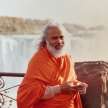
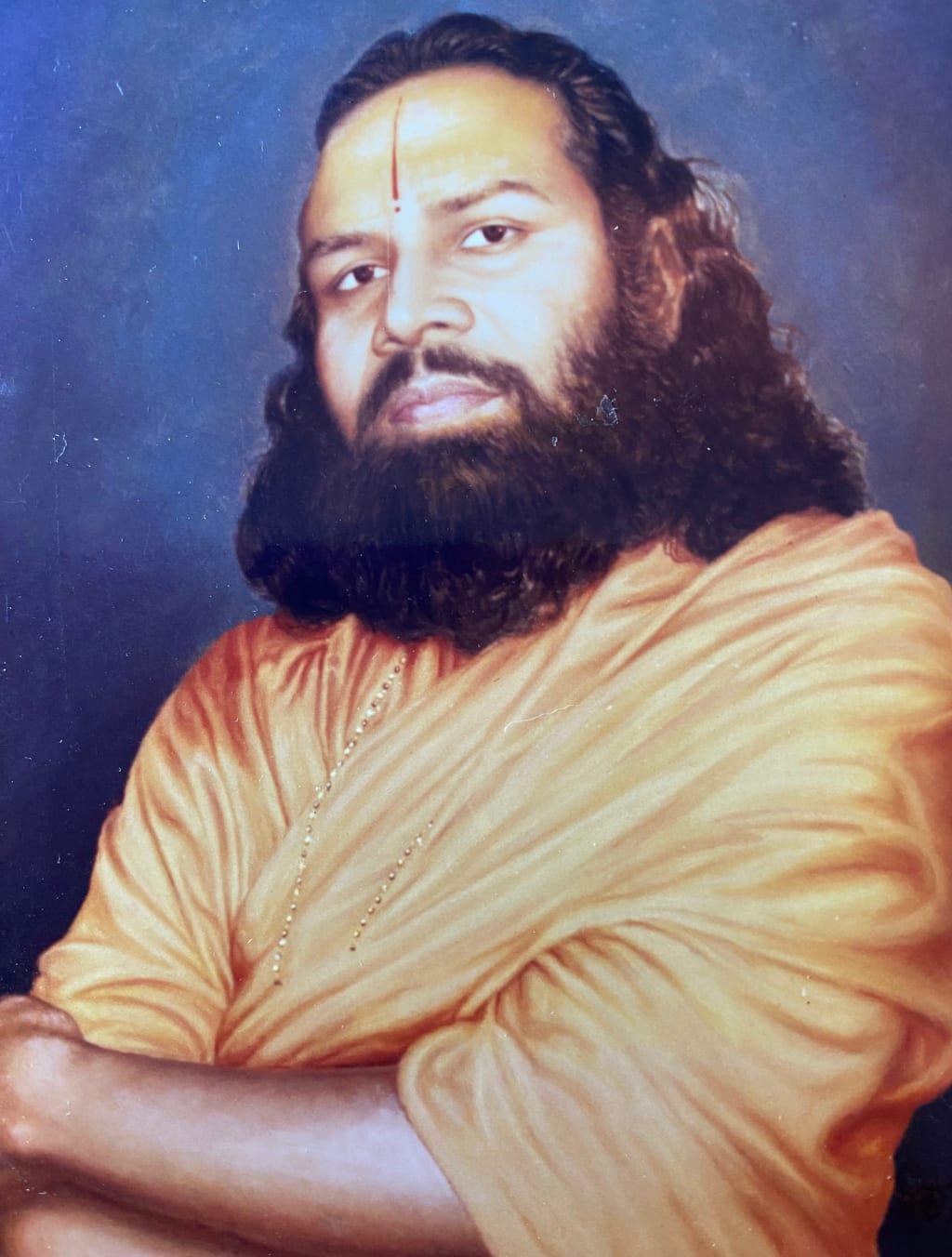
Swami Prakashanand Saraswati, a revered spiritual master, provides profound answers to spiritual questions on key topics such as the significance of ShyamKuti, the nature of moksh (liberation), and the soul's journey towards divine vision. His teachings offer clarity on these important concepts, guiding seekers on the path to divine bliss.
Question & Answer with Swami Prakashanand Saraswati
Question: Swamiji, could you tell us about ShyamKuti?
Answer: ShyamKuti is a place in Govardhan near Kusum Sarovar. When Chaitanya Mahaprabhuji was in Braj, he went to many places. At that time, it was all jungle. There were villages. So, wherever he stayed the night, he always had chanting programs. He was followed by his disciples. So, his own disciples and some devotees of Vrindaban all followed him wherever he went. There are some places (they stayed) that are not known. ButShyamKuti is a place where he stayed one night and conducted a chanting program. That's called ShyamKuti. It's not very scenic, but a very devotional place. That (a devotional place for chanting programs called ShyamKuti) we are establishing here near Kalindi and Barsana hill.
Question: What does the term,“moksh” mean?
Answer: Moksh in Sanskrit literally means liberation from the bondage of maya, the original cosmic power, and all the karmas of the soul.
Question: What must we do to attain liberation?
Answer: “Chiyante chasya karmani tasmin drishteh paravareh" Upanishad. Karmas of a soul of past unlimited number of lifetimes are unlimited in number, they can only be redeemed by the Grace of God when a soul receives His vision in a Divine form. The second aspect which is the veil of maya is also terminated only with the Grace of God when a soul receives His Divine vision, because maya is a power of God.
Most people make a mistake in understanding the character of maya. They should know that ignorance is not maya; ignorance is misunderstanding. And misunderstanding could be removed by proper understanding of the Divine truth that soul and maya are both powers of God, whereas maya is a lifeless, external power of God and soul is an infinitesimal fraction of a Divine power of God called the soul power (jeev shakti). For that reason, the inner conscience of every individual is seeking for unity with God.
Liberation from maya and the karmas is only possible after the Divine vision of God. Thus, sincere longing for His vision is the only way to receive His Grace and liberation.
Question: What is the state of the soul after liberation?
Answer: There are only two situations of an individual soul after liberation. The first type is when a soul merges with the jeev shakti of God where it loses its personal identity. Identity of self relates to the mind which is a mayic consequence and is terminated after liberation. Thus, an individual loses his identity after this kind of liberation which is called kaivalya moksh.
The second type of moksh is the total experience of God's own Personal Bliss which is made possible by the Grace of a Personal form of God, where He removes the material mind of an individual devotee and replaces it with the Divine mind of His own. In this way such a Saint, in the Divine abode of his achieved form of God (like Shiva, Shakti, Ganesh, Vishnu, Ram, Krishn, or Radha Krishn) perceives the Bliss of God.
Conclusion: Through his answers, Swami Prakashanand Saraswati sheds light on the deep spiritual meaning of places like ShyamKuti and the concept of moksh. His wisdom reinforces that the attainment of the divine vision (which by its nature includes liberation from maya) is achieved through sincere devotion and God’s Grace, which culminates inthe soul experiencing eternal Divine bliss in the presence of their Divine Beloved.
About the Creator
Swami Prakashanand Saraswati
Swami Prakashanand Saraswati, a revered and honored spiritual teacher, beautifully explains the eternal system of creation and the path to true, everlasting happiness.
Keep reading
More stories from Swami Prakashanand Saraswati and writers in Journal and other communities.
Questions& Answers with Prakashanand Saraswati: Understanding the Path of Karm Yog
Swami Prakashanand Saraswati guides us through the deeper meaning of Karm Yog in this illuminating Q&A session. Karm Yog, the path of selfless action, emphasizes unity with the Divine and the importance of remembering Radha Krishn while fulfilling worldly duties. Swamiji also sheds light on the consequences of our actions, both in this life and in future lives, explaining how devotional thoughts purify the heart and shape our destiny.
By Swami Prakashanand Saraswati11 months ago in Education
The Moment I Realized Air Quality Was Affecting My Mood
For a long time, I thought my mood changes were personal. If I felt impatient, distracted, or oddly tense, I assumed it was stress. Too much work. Not enough rest. A bad night of sleep. I tried to fix it the usual ways. More coffee. Short walks. Mental resets. Deep breaths.
By illumipure2 days ago in Journal



Comments