
Pt. Purbayan Chatterjee on the innovation behind the electric see-tar
The sitar virtuoso discusses his futuristic instrument and the growing need for a strong digital presence.

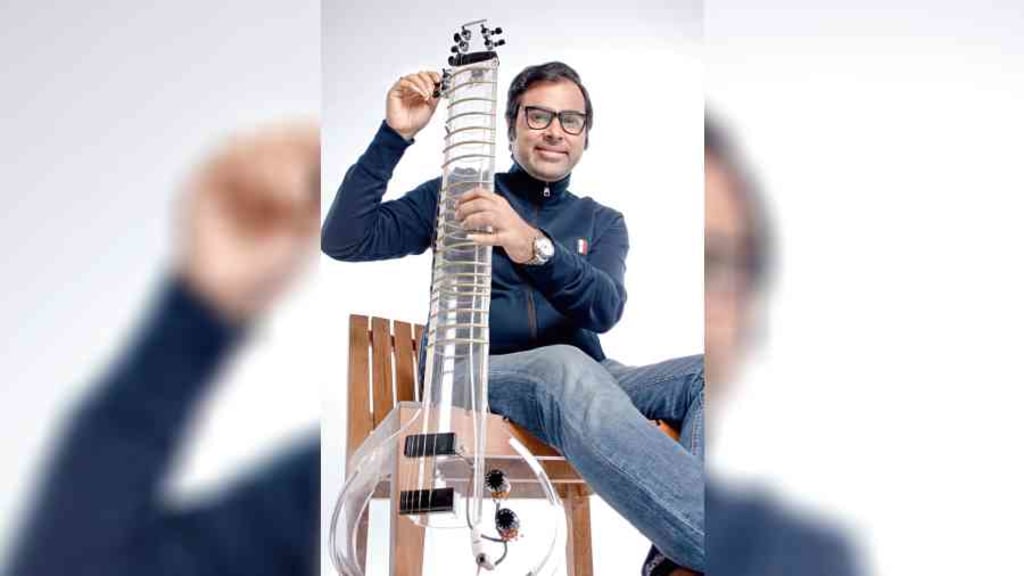
Sitarist Purbayan Chatterjee has added an unusual but powerful instrument to his repertoire: the electric see-tar, a custom-made creation designed in collaboration with Belgium-based luthier Klaas Janssens, who runs Sitar Factory. Made from Plexiglas, this modern sitar is lightweight, glows with changing colours during performances, and produces a distinct resonant tone.
Chatterjee has been exploring the creative possibilities of the electric see-tar while also developing several new musical projects. During an unplanned jam session last November with percussion veteran Taufiq Qureshi and British-Austrian drummer Bernhard Schimpelsberger at the Purbayan Art and Artists Music Foundation (PAAMF) studio in Mumbai, a track titled Two Thirds emerged, which was released recently.
“Artists in many traditions, especially in the southern regions, have been amplifying their instruments for generations,” Chatterjee explains. “By running a sitar through a processor, your technique stays classical, but your tonal range becomes far more versatile. The see-tar gives me a sharper, more electric edge when a composition needs it, like in Two Thirds.”
Ahead of PAAMF’s first public student showcase on April 7 in Mumbai, he shares more about the instrument, the collaboration, and his artistic direction.
On creating Two Thirds and a shift in musical direction
Chatterjee views Two Thirds as the beginning of a new phase in his musical thinking. The electric see-tar has inspired him to explore trance, house, and other genres that resonate strongly with younger audiences.
“The instrument gives me everything from gritty electronic textures to soft atmospheric tones. During live shows, it also adds a striking visual element,” he says.
The origin and design of the see-tar
Chatterjee credits designer Klaas Bouma for bringing his concept to life. As stage presentation becomes increasingly important to him, the see-tar’s glowing body and futuristic aesthetic add to the visual appeal of his concerts.
Refining the sound and adopting new techniques
He explains that the electromagnetic pickup used in the instrument is unusually precise, allowing it to blend seamlessly with effects processors. The result is a palette of dreamy ambient tones and the freedom to adopt techniques unique to electric instruments. These techniques help highlight the expressive capabilities of the see-tar.
Balancing innovation with tradition
Responding to the concerns of classical purists, Chatterjee recalls Kishore Kumar’s song Kuchh To Log Kahenge and smiles.
“I always choose instruments based on what the composition or concert requires. Everyone is entitled to an opinion, but any judgement should consider the context: the genre, the sound, and the artistic intention.”
Strengthening his digital presence and guiding students
Chatterjee acknowledges that the music industry has transformed dramatically.
“With streaming platforms becoming the primary mode of listening, every musician today needs to be digitally aware,” he says. Through PAAMF, he encourages students to honour traditional formats while also equipping them to build sustainable careers in a digital-first world.
He adds that he often learns from younger musicians too: “People in their twenties understand today’s digital landscape better. It is a two-way exchange.”
Goals of the Purbayan Arts and Artists Music Foundation
The foundation aims to create opportunities for Indian music, particularly instrumental music, in both physical and digital spaces. Chatterjee hopes to spotlight instrumentalists, who often play supporting roles despite being central to the texture of a performance.
The foundation also seeks to deepen cultural awareness by introducing audiences to India’s diverse musical traditions.
On classical music apps and future digital projects
With new apps such as NaadSadhana and Apple Music Classical gaining traction, Chatterjee sees strong potential for innovative digital engagement. He is open to exploring podcasts, apps, or any medium that can help explain classical music in simple ways and make it more accessible.
A typical day
Chatterjee describes his daily routine as balanced and grounded, supported by his wife Gayathri, whom he calls the more disciplined partner. His days revolve around practice, teaching, and simple pleasures like watching films, dining out, and taking long walks. His love for technology occasionally takes over when a new gadget finds its way into his hands.
Upcoming projects
He is currently working on an exciting trance-music collaboration featuring internationally acclaimed musicians, marking his first venture into the genre. He is also developing a new version of his earlier project Shastriya Syndicate, this time showcasing young emerging talent with advanced production values.
“Since the days of CLASSICOOL, I have tried to stay connected with what each generation listens to. My music must reflect the world as it is today,” he says.
Disclaimer: This article was originally published by The Telegraph and has been rewritten by me.
About the Creator
Aarohi Mehta
Aarohi is an independent journalist and art enthusiast who covers culture, creativity, and modern digital trends. She brings a fresh, expressive voice to her stories, blending clear reporting with a strong artistic perspective.
Keep reading
More stories from Aarohi Mehta and writers in Journal and other communities.
Anoushka Shankar: Redefining the Sitar for a Global Generation
Anoushka Shankar stands as one of the most influential and innovative voices in contemporary Indian classical and world music. Over the course of her career, she has carved out a space that bridges heritage and experimentation, earning global recognition along the way. With multiple Grammy Award nominations and honours ranging from the British House of Commons Shield to a Songlines Best Artist Award, Shankar occupies a rare position: a deeply rooted classical artist whose work resonates far beyond its traditional boundaries.
By Aarohi Mehta3 months ago in Journal
The Truth About Tiktok Shop
TikTok has rapidly evolved from a short-form video app into a full-scale shopping platform. Through TikTok Shop, users can purchase products directly from videos, livestreams, or creator storefronts without leaving the app. The feature has grown incredibly fast, with millions of products being promoted daily by influencers and small businesses.
By Carmen Sinata3 days ago in Journal
A System That Isn’t Working Challenge Winners
Systems promise order. They organize behavior, distribute opportunity, and suggest that if everyone follows the rules, things will work. The entries in A System That Isn’t Working look closely at what happens when that promise begins to slip.
By Vocal Curation Team2 days ago in Resources



Comments