
President Donald Trump's 2025 Executive Orders: Key Actions on Day 1
President Donald Trump's 2025 executive orders, including reforms in immigration, border security, energy, and free speech. Learn about his Day 1 actions and their impact on the U.S. and beyond.

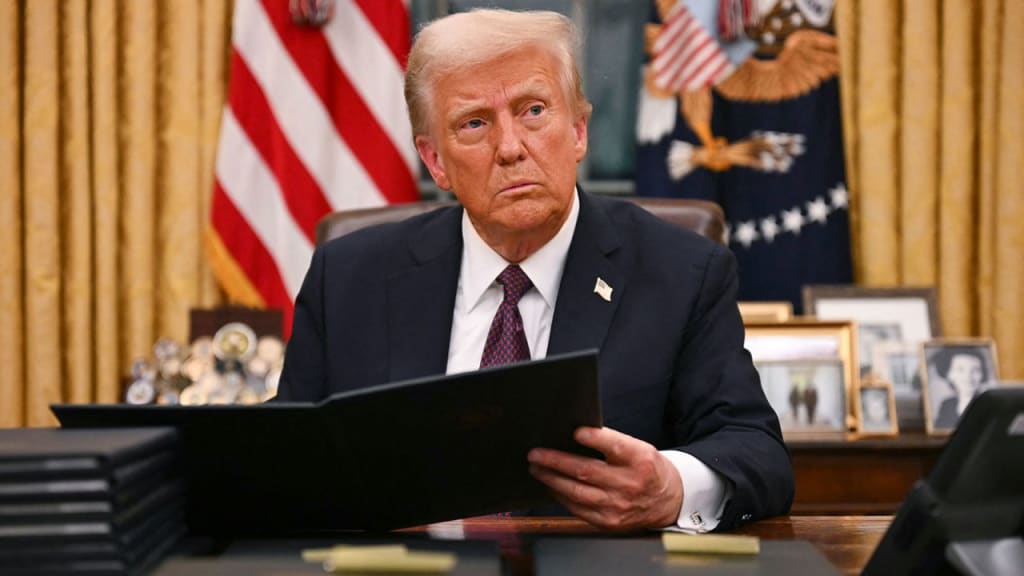
On January 20, 2025, President Donald Trump commenced his second term by signing a series of executive orders aimed at reshaping federal policies across various sectors. These actions reflect his administration's priorities and signal significant shifts in domestic and international affairs.
Federal Workforce and Civil Service Reforms
One of President Trump's initial executive orders mandates that federal employees return to in-office work five days a week, effectively ending the remote work arrangements that had become prevalent during the COVID-19 pandemic. This move is intended to enhance productivity and oversight within federal agencies. Additionally, the reinstatement of the "Schedule F" classification weakens civil service protections, allowing for the replacement of mid-level officials with individuals aligned more closely with the administration's agenda. While proponents argue this will streamline government operations, critics, including the American Federation of Government Employees (AFGE), express concerns about potential disruptions and challenges in attracting top talent.
Military Policies and Border Security
In a significant overhaul of military policies, President Trump signed an executive order to reinstate service members who were previously dismissed for refusing the COVID-19 vaccine, offering them back pay. Furthermore, he declared a national emergency at the U.S.-Mexico border, directing the deployment of military personnel to address illegal immigration and related criminal activities. This action underscores the administration's commitment to stringent border control measures. Additionally, policies on diversity and inclusion within the military have been revoked, with the administration emphasizing a focus on traditional military readiness.
Foreign Policy and International Agreements
President Trump's foreign policy directives include lifting sanctions on Israeli settlers that were imposed by the previous administration, signaling a shift in the U.S. stance on Middle East relations. Moreover, he has withdrawn the United States from the World Health Organization (WHO) and the Paris Climate Agreement, declaring a national energy emergency to prioritize fossil fuel exploration. These decisions reflect a broader "America First" approach, aiming to reduce international commitments in favor of domestic interests.
Immigration and Citizenship
The administration has announced intentions to end birthright citizenship through an executive order, requiring that at least one parent be a U.S. citizen or green card holder for a child born in the U.S. to receive citizenship. Legal experts contend that such a change would necessitate a Constitutional amendment, and any executive action on this matter is expected to face significant legal challenges.
Free Speech and Censorship
Emphasizing the protection of free speech, President Trump signed an executive order prohibiting federal authorities from infringing upon American citizens' rights to free expression. The order also mandates an investigation into potential free speech violations during the previous administration, particularly concerning allegations of government pressure on social media platforms to censor certain viewpoints. Supporters view this as a necessary step to safeguard constitutional rights, while critics raise concerns about the potential spread of misinformation.
Pardons and Legal Actions
In a controversial move, President Trump issued pardons for individuals convicted in relation to the January 6 Capitol riots, including prominent figures such as Jacob Chansley and Stewart Rhodes. This decision has sparked debate, with supporters viewing it as rectifying judicial overreach, while opponents argue it undermines the rule of law and accountability for actions that challenged democratic processes.
Environmental Policies
The administration's environmental stance includes withdrawing from international climate commitments and prioritizing fossil fuel exploration. By declaring a national energy emergency, the executive order aims to bolster domestic energy production, reflecting a departure from previous policies focused on renewable energy and climate change mitigation. Environmental organizations have criticized these actions, expressing concerns about the long-term impacts on global climate efforts.
Conclusion
President Trump's initial executive orders set a definitive tone for his second term, highlighting a focus on national sovereignty, stringent immigration controls, and a reevaluation of federal workforce dynamics. While supporters praise these actions as fulfilling campaign promises and strengthening the nation's interests, critics caution about potential legal challenges and the broader implications for civil liberties, environmental protection, and international relations. As these policies unfold, their impacts will become more apparent, shaping the socio-political landscape of the United States in the years to come.
About the Creator
Minecraft APK Download (Android, Pro Unlocked)
Fast free Minecraft APK Download for Android. Get Minecraft Pocket Edition, mods, and the latest version. Enjoy building and exploring in Minecraft PE. NBS Reborn APK.
Keep reading
More stories from Minecraft APK Download (Android, Pro Unlocked) and writers in Journal and other communities.
The Titans of Tech:Lives and Wealth of Global Tech Leaders
The world of technology is driven by visionaries who have shaped the digital era with groundbreaking innovations. From Sundar Pichai to Tim Cook, these tech giants are not only leaders of some of the world’s most influential companies but also rank among the richest people in the world. This article explores the lives, careers, and wealth of these iconic figures, including their connections with global events and political figures.
By Minecraft APK Download (Android, Pro Unlocked)about a year ago in Journal
Author’s Advice
If you would’ve asked me 20 years ago did I know I’d become a writer and an author, I would’ve said “nope, ain’t happening”. As fate would have it I did become an author and I can honestly say I’m loving it so far. It really does feel good to be a writer. I’ve learned a lot on this journey and I feel like with even me being as new to this world as I am, there’s some wisdom I need to share with every other aspiring author.
By Joe Patterson4 days ago in Journal
Gulf states lose $15bn in energy revenues since start of war
Gulf states have lost an estimated $15 billion in energy revenues since the start of the ongoing war in the region, according to analysts tracking the impact on the global oil and gas markets. The losses have been driven by a combination of disrupted production, damaged infrastructure, and reduced demand from international buyers, highlighting the economic vulnerability of nations heavily reliant on hydrocarbon exports. The conflict, which erupted earlier this year, has affected key energy-producing countries in the Gulf, including Saudi Arabia, United Arab Emirates, and Kuwait. Analysts report that output reductions, combined with logistical challenges in transporting oil and gas, have led to significant shortfalls in state revenues that fund public services, infrastructure projects, and social programs. “Energy exports are the lifeblood of the Gulf economies,” said an energy market expert. “Any prolonged disruption, particularly in the context of war, has immediate and severe consequences for government budgets and the broader economy.” In Saudi Arabia, one of the world’s largest oil producers, some key export facilities were temporarily suspended due to security threats near shipping routes in the Gulf. While production has gradually resumed, analysts estimate that the country has lost several billion dollars in expected revenues. Similar challenges have affected the UAE and Kuwait, where ports and pipelines have faced intermittent closures and heightened security alerts. The war has also affected global energy markets, contributing to volatility in oil and gas prices. While higher prices could offset some revenue losses for producers, the ongoing instability has discouraged long-term contracts and international investment, reducing the financial resilience of Gulf states. Shipping insurance premiums have surged, and some international buyers have delayed purchases due to fears of supply disruption. For nations heavily dependent on oil revenues, the losses are particularly concerning. Gulf states allocate a significant portion of their budgets to public welfare, infrastructure, and economic diversification initiatives. The sudden drop in income has forced governments to reassess spending priorities and consider measures such as tapping sovereign wealth funds, issuing bonds, or delaying capital projects. Some analysts warn that prolonged conflict could deepen economic strain. If the war continues for several months or expands geographically, the losses in energy revenue could rise sharply, potentially exceeding $20 billion. “The longer the conflict persists, the greater the economic damage will be,” said one regional economist. “Even minor disruptions to production or export routes can cascade into substantial fiscal shortfalls.” The economic impact is compounded by other global pressures, including fluctuating demand from major energy consumers and competition from alternative suppliers. European and Asian buyers have been seeking diversified sources of oil and gas, and sanctions or logistical hurdles have sometimes forced Gulf exporters to redirect shipments or renegotiate contracts at lower prices. In response, Gulf governments have ramped up security measures around energy infrastructure, including pipelines, refineries, and shipping lanes. Military patrols and aerial surveillance have been increased to safeguard exports, but analysts note that these measures add to operational costs and do not eliminate the risk of further revenue losses. Some states have also accelerated efforts to diversify their economies to reduce dependence on hydrocarbons. Projects in renewable energy, technology, tourism, and finance are being prioritized to create alternative sources of revenue. However, analysts caution that such diversification efforts are long-term solutions and cannot immediately offset the financial losses caused by the war. The International Energy Agency (IEA) has highlighted the broader implications of the Gulf revenue losses, noting that disruptions in the region can ripple through global markets. Reduced supply from major Gulf producers can drive up prices elsewhere, affect energy security for dependent nations, and influence inflationary pressures worldwide. While Gulf states continue to manage immediate fiscal challenges, officials are closely monitoring the situation. Contingency plans for energy exports, emergency budget measures, and diplomatic efforts to contain the conflict are all being considered. Experts emphasize that a resolution to the war, or at least a stabilization of key export routes, will be critical to restoring financial stability and ensuring the long-term viability of government programs. The $15 billion revenue loss is a stark reminder of the fragility of oil-dependent economies in the face of geopolitical conflict. As the Gulf navigates this challenging period, governments must balance short-term fiscal needs with longer-term strategic planning, ensuring that both immediate and future economic stability are safeguarded. The coming months will be pivotal, with analysts predicting that energy revenues, market confidence, and regional stability are all tightly intertwined, and the trajectory of the war will determine the scale of financial losses for Gulf states in 2026 and beyond.
By Fiaz Ahmed 2 days ago in Journal
A Transparent Look at Vocal Challenges and Top Stories
Almost three years ago, we shared a resource article that served as a place for people to suggest new challenge prompts. We thought it would be a good idea to refresh that thread, and take the opportunity to answer a few common questions about top stories, how challenges are judged and how submissions are reviewed.
By Vocal Curation Team3 days ago in Resources


Comments
There are no comments for this story
Be the first to respond and start the conversation.