
Pixel 9 Pro Fold One Year Later: How Google Caught Up to Samsung in Just Two Generations
From lagging behind to leading the charge—Google’s bold foldable gamble is finally paying off.
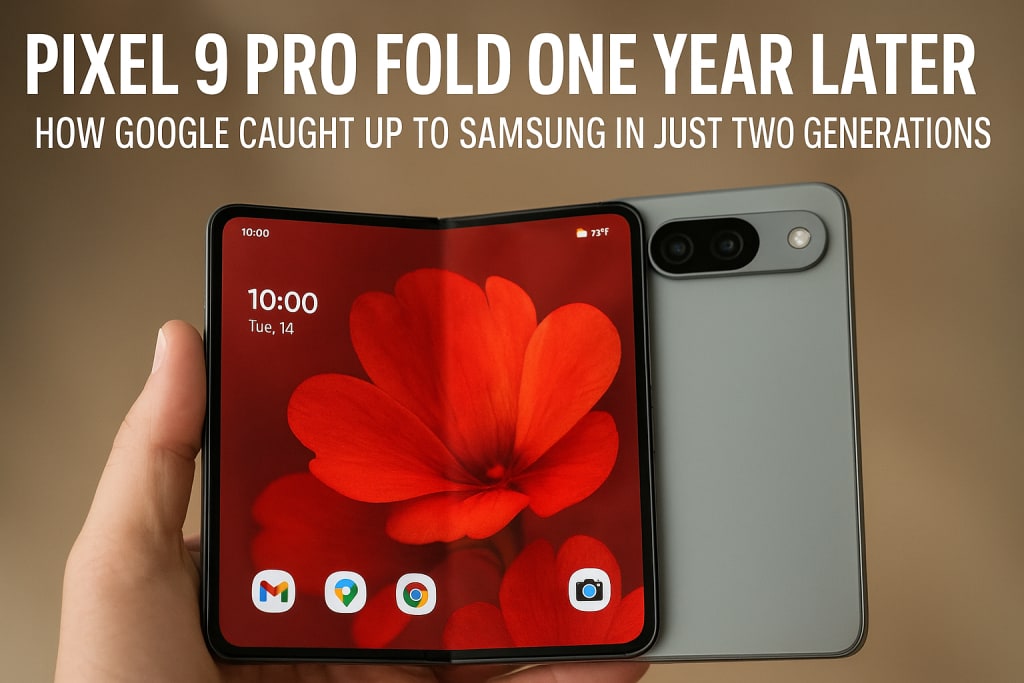
Reactions were divided when Google unveiled the Pixel Fold in 2023; some were enthralled, some were skeptical. While some could not help but make unflattering comparisons to Samsung's established Galaxy Z Fold series, many tech fans cheered Google's entry into the foldable smartphone market. With its foldable models, Samsung bragged years of fine-tuning and great consumer confidence. Google, by contrast, was new to this area and took its first plunge into uncharted terrain.
The circumstances have changed a lot now in 2025. With the release of the Pixel 9 Pro Fold, Google has not just closed the divide with Samsung but in some ways outperformed its competitors. One year after release, the Pixel 9 Pro Fold is praised as a turning point in the foldables market and as a demonstration of Google's ability to match up with the leading brand in the field.
Then let's look more closely at what Google did in just two generations to make up lost ground.
Learning from Mistakes: The Pixel Fold’s Rocky Start
Though the first Pixel Fold had some advantages, it ultimately failed to wow. The durability of its hinge was a major worry; the bezels appeared old when compared to Samsung's more refined design; and its high price was hard to justify. Although Google adjusted its software with Android 12L for tablets and foldables, it did not match the fluidity of Samsung's One UI, which had the advantage of decades of careful changes.
Google listened to comments and acted wisely. Those who purchased the initial edition offered frank criticism that caused Google's developers to rethink their strategy. With the Pixel 9 Pro Fold, they reinvented the foldable experience rather than simply tweaking it.
The Pixel 9 Pro Fold: A Redefinition of Foldables
Released in 2024, the Pixel 9 Pro Fold signals a significant technological advancement. The improvements are summed as follows:
- Excellent design and durability
Google introduced a thinner hinge with almost undetectable crease technology to contend with Samsung's best screens. Designed with improved usability in mind, the external display tackled past too high issues. Generally, the gadget appeared to be lighter, more robust, and better made.
- AI-enhanced software
The Pixel stands out from the rivals thanks to its software features. Google invested in its artificial intelligence ecosystem by seamlessly including Gemini AI for improved productivity, multitasking, and photographic capabilities. The foldable experience has gone from simply attractive to really useful thanks to features including live transcription, contextaware app suggestions, and AIassisted splitscreen.
- The Camera Advantage
Google's reputation for producing excellent cameras was continued by the Pixel 9 Pro Fold. Showing the same great computational photography as the Pixel 9 Pro, it also included extra capabilities for foldable applications including the ability to capture solid 4K films while using the opened screen as a support or to perform selfies on the cover display via the back cameras. Though they have wow factor, Samsung's foldable phones fall short of Google's smart camera features.
- Battery & Performance Gains
Thanks to its Tensor G4 processor and enhanced thermal management, the Pixel 9 Pro Fold fixed prevalent concerns with overheating and battery life depletion found in earlier foldable devices. With a more efficient 5,000 mAh battery, it was easy to get a full day's worth of use from it even when doing strenuous jobs.
How Google Caught Up to Samsung
Even if Google's software capabilities were greater than Samsung's first lead, Samsung's software skills were superior. While Samsung concentrated on enhancing the hardware, including lighter folds, stronger hinges, and brighter screens, Google prioritized artificial intelligence and the whole user experience.
The following accounts for the relevance of this difference:
Samsung’s Plateau: Before the Galaxy Z Fold 6 was released, Samsung seemed to be moving quite slowly. Several users discovered the experience to be monotonous even with hardware enhancements.
Google’s Disruption: Google welcomed questioning of existing standards. With its cutting-edge camera technology, inventive software features, and bold use of artificial intelligence, the Pixel 9 Pro Fold has a unique appeal.
Pricing Strategy: Given that the Pixel 9 Pro Fold was a little less expensive than Samsung's goods, it appeared to be a more appealing choice for average consumers looking for both creativity and usefulness.
One Year Later: The Verdict
The Pixel 9 Pro Fold has not only done well but also gotten a lot of buzz a year after its debut. Almost identical in quality are Google's Pixel and Samsung's foldable phones, according surveys indicating customers buying now. Many critics even say that for consumers who give photography and productivity top priority, the Pixel 9 Pro Fold provides the best overall experience.
Furthermore, Google has created a strong system for this product. With features like adaptive audio in the Pixel Buds Pro, health integration with the Pixel Watch 3, and artificial intelligence recommendations across devices, users enjoy a cohesive experience from Google—much like Samsung has done with its Galaxy lineup.
What It Means for the Future
The Pixel 9 Pro Fold's success has major ramifications:
- More Intense Competition
For many years Samsung has topped the foldable industry. But as Google starts up as a formidable competitor, the rate of invention increases once more. For consumers, this rivalry helps to motivate both businesses to be better.
- Foldable materials start to gain traction.
Folding devices are becoming more affordable rather than just a luxury item. These gadgets are ready for greater adoption since Google has been working to improve affordability and user experience.
- AI Sets It Apart
Although hardware has limitations, the Pixel 9 Pro Fold has demonstrated that concentrating on AI design is what really improves the foldable experience in daily life. Samsung—and ultimately Apple when it enters the foldable market—should be interested in this trend.
Final Thoughts
Having surpassed its rivals a year after launch, the Pixel 9 Pro Fold has established itself as a market leader. By combining powerful equipment, software enhanced with artificial intelligence, and Google's great photos, the company kept up with Samsung's pace.
Begun in 2023, the daring project has grown into a revolutionary device by 2025. The Pixel 9 Pro Fold shows that being nimble, daring, and inventive helps new entrants in the fight for innovation to benefit. It is not only a foldable phone.
Even after Samsung established the groundwork, Google has been able to make this trip its own. Ultimately, this is the best result for consumers.
About the Creator
Keep reading
More stories from Shahjahan Kabir Khan and writers in Journal and other communities.
Hisense Laser TV L9Q Deluxe: Turning Your Living Room Into a Cinematic Epic
As the screen before you pulls you into another universe, picture yourself relaxing into a comfortable armchair, the lights dimmed, a popcorn dish in your lap.Your eyes are dazzled by brilliant hues, sounds surround you as though they belong in the environment, and every shadow and detail is clearly defined, giving you an amazing experience.
By Shahjahan Kabir Khan7 months ago in Journal
Author’s Advice
If you would’ve asked me 20 years ago did I know I’d become a writer and an author, I would’ve said “nope, ain’t happening”. As fate would have it I did become an author and I can honestly say I’m loving it so far. It really does feel good to be a writer. I’ve learned a lot on this journey and I feel like with even me being as new to this world as I am, there’s some wisdom I need to share with every other aspiring author.
By Joe Patterson4 days ago in Journal




Comments
There are no comments for this story
Be the first to respond and start the conversation.