
Peter Mandelson
A Key Figure in British Politics

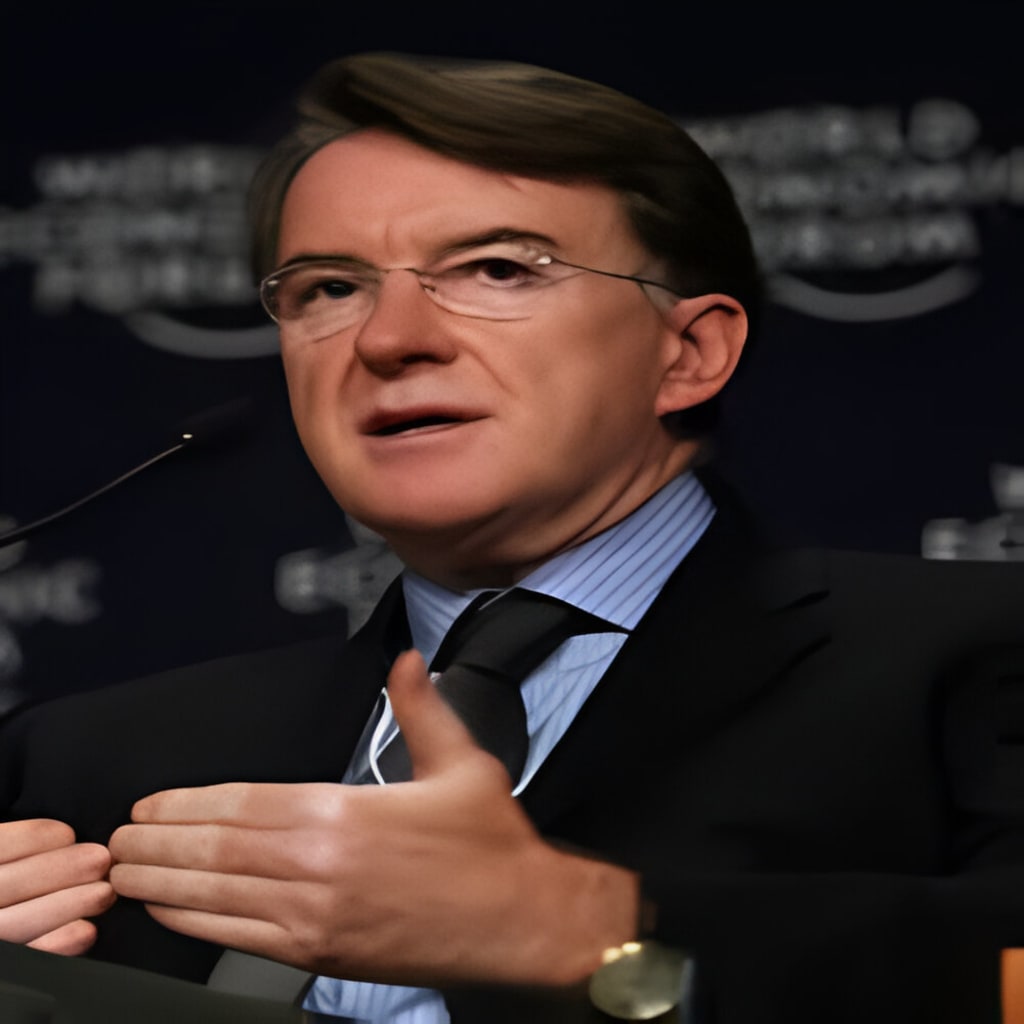
Peter Mandelson is one of the most influential and intriguing figures in modern British politics. Known for his strategic mind and skillful maneuvering, Mandelson played a crucial role in shaping the New Labour movement and modernizing the Labour Party during the late 20th and early 21st centuries. This article will explore his life, career, and the impact he has had on British politics, using simple and easy-to-understand language.
Early Life and Background
Peter Benjamin Mandelson was born on October 21, 1953, in London, England. He grew up in a politically connected family. His grandfather, Herbert Morrison, was a prominent Labour politician who served as Deputy Prime Minister under Clement Attlee. This family background gave Mandelson early exposure to politics and inspired his interest in public service.
Mandelson attended Oxford University, where he studied Philosophy, Politics, and Economics (PPE). During his university years, he developed a strong understanding of political theory and strategy, which would later become the foundation of his career.
Entry into Politics
After graduating, Mandelson worked as a television producer for a time but soon turned to politics. In the 1980s, he joined the Labour Party and became deeply involved in its efforts to modernize. The Labour Party at the time was struggling with internal divisions and electoral defeats. Mandelson’s focus was on making the party more appealing to the general public.
He worked as the Labour Party’s Director of Communications, a role in which he earned the nickname “The Prince of Darkness” for his behind-the-scenes influence and media savvy. Mandelson’s efforts were instrumental in improving Labour’s image and laying the groundwork for its future success.
The New Labour Movement
In the 1990s, Mandelson became one of the architects of New Labour, a movement aimed at modernizing the Labour Party and making it more centrist. He worked closely with Tony Blair and Gordon Brown, two key leaders of the party, to reshape Labour’s policies and image.
New Labour focused on appealing to a broader range of voters by embracing business-friendly policies and reducing the party’s association with traditional socialist ideals. Mandelson’s communication skills and strategic thinking were vital in promoting this new direction. In 1997, these efforts culminated in a landslide victory for Labour, with Tony Blair becoming Prime Minister.
Mandelson’s Government Roles
After Labour’s victory in 1997, Mandelson served in several key government positions:
Minister Without Portfolio: Mandelson initially worked on overseeing government communications and party strategy.
Secretary of State for Trade and Industry: In this role, he focused on promoting British businesses and fostering international trade.
European Commissioner for Trade: Mandelson later served as a representative of the European Union, negotiating trade agreements and strengthening relationships with global partners.
Despite his successes, Mandelson’s career was not without controversy. He resigned from government twice due to allegations of misconduct, although he was later cleared of wrongdoing. These episodes did little to diminish his influence within the Labour Party.
Return to Politics
In 2008, Mandelson made a surprising return to British politics. Gordon Brown, who had become Prime Minister, appointed him as the Secretary of State for Business, Innovation, and Skills. Mandelson’s experience and expertise were seen as crucial during the global financial crisis, as he worked to support businesses and stabilize the economy.
Legacy and Impact
Peter Mandelson’s legacy in British politics is significant. He is credited with helping transform the Labour Party into a modern, electable political force. His focus on strategy, communication, and modernization reshaped British politics and influenced how political campaigns are run today.
Mandelson remains a divisive figure. Supporters admire his intelligence and ability to achieve results, while critics view him as overly pragmatic and secretive. Regardless of opinion, there is no denying that Mandelson played a pivotal role in British politics during his career.
Life Beyond Politics
After leaving frontline politics, Mandelson continued to influence public life through his work as an advisor and commentator. He has written books about his experiences and often speaks about the challenges facing modern politics.
Conclusion
Peter Mandelson’s career is a testament to the power of strategy and vision in politics. From modernizing the Labour Party to serving in key government roles, his contributions have left a lasting mark on Britain. Whether admired or criticized, Mandelson’s impact on politics will be remembered for years to come.
About the Creator
Farhan Sayed
Hi, I’m Farhan Sayed 🌹! I’m here to share stories, thoughts, and maybe sprinkle a little magic along the way. ✨
💡 Passion for:
Exploring new ideas 🧠
Writing from the heart ❤️
Inspiring and connecting with amazing souls like you 🌍
Keep reading
More stories from Farhan Sayed and writers in Journal and other communities.
The Joker
The Joker is one of the most iconic villains in comic book history. Known as the archenemy of Batman, he is a character who embodies chaos, unpredictability, and madness. Unlike many other criminals, the Joker’s motives are not driven by money or power, but by a desire to create disorder and watch the world descend into chaos. He thrives on anarchy, and his criminal actions often reflect this twisted goal.
By Farhan Sayedabout a year ago in Journal
~ Fired ~
— Ai Intrusion ~ Are you Next ~ Is Ai Evolution after your job? — Few workplaces haven't been affected. Ai is in supermarkets, at doctors' offices, and even monitoring farms. I just can't think of anything this machine is not getting into, can you? For instance: Education ~ Law and Tech jobs will one day have a major influence or be taken over by these inanimate machines, with accuracy and vigor. From mechanics' diagnoses to a wide variety of everyday jobs, including fast food workers, with this input having the ability to cut their unnecessary work hours. I'm certain all of us have been touched by this with our short stories and colorful headings, have you? Even comments are very questionable 'Non-Robot' insertions.
By Jay Kantor29 days ago in Journal
Echoes
I stepped carefully around the corner, the familiar sights and sounds hitting me like a brick to the face. My eyes watered. I could practically see us, all of us, back then, clustered around the outdoor tables in front of the pizza shop, the bar, the coffee shop. I could smell the various stalls from the events we’d been to on this street. I could taste the churros and nachos.
By Phoenixica248 days ago in Fiction


Comments
There are no comments for this story
Be the first to respond and start the conversation.