
Part 2: What It Takes to Stay Close to the Customer Today
Why it is strategically so very important to be engaged in a very real and ongoing conversation with your customers today!

In the first part of this article (Part 1: What It Takes to Stay Close to the Customer Today), we looked at the idea that you can—and must—stay close to your customer today. As we demonstrated, this idea has become nothing less than a core concept of modern marketing strategy. In the noisy world in which live, work, and yes, attempt to market products and services, companies are realizing that it is not enough just to be following the prescription laid out almost four decades ago now by Tom Peters and Robert H. Waterman, Jr. in their best-selling classic,In Search of Excellence to be close the customer. Today, the pressure is on for companies to get even closer to their customers.
In fact, a whole new notion is being advanced: It's not enough just to be close to your customers—today, you need to be damn near intimate with them—to be practically inside their heads. It is not enough to know what they were thinking a week ago. The operative question today is not what does your customer think about the past in terms of your company and your products/services. Rather, the literally—in many cases—tens of millions of dollars question is what are they thinking right now? What is important to them today—in this very moment? And the follow-up, of course, is what can you do right now that will motivate them to buy more of my product or use more of my service today—and tomorrow!
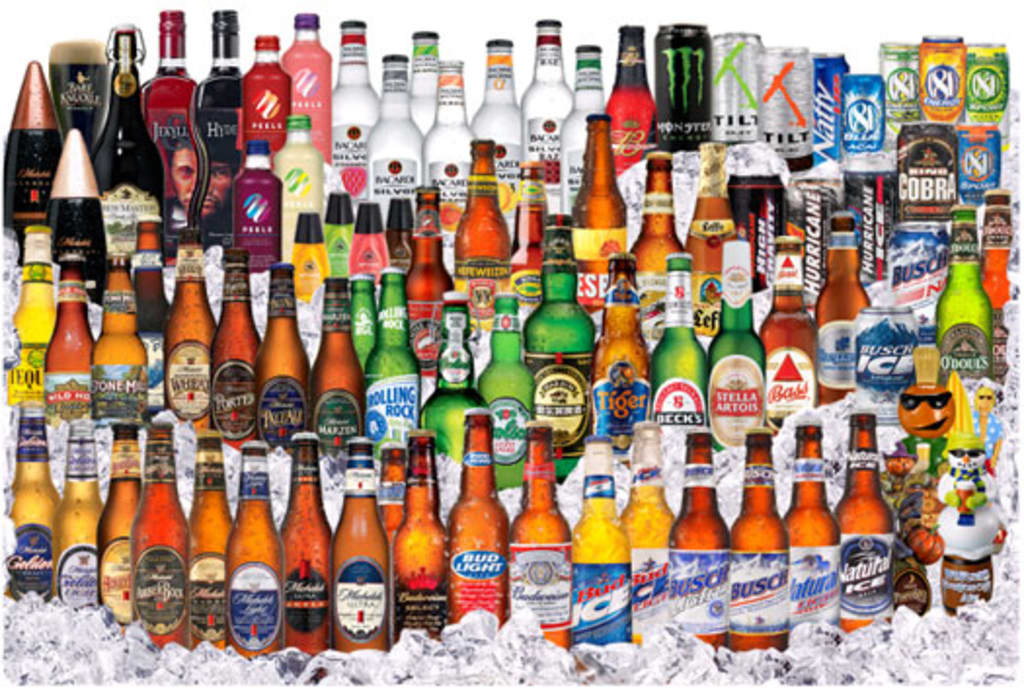
In the first portion of this article, we discussed the history of really great, really on point advertising that has been produced over the years for the Budweiser family of brands. Anheuser-Busch InBev has evolved a long, long way from the days of having just two brands in their stable—Budweiser and Bud Light—and award winning marketing was having the beer bottles fighting it out in the "Bud Bowl." In fact today, the company currently markets some 500 brands of beer all over the world! Anheuser-Busch InBev may be the world's largest brewer.
However, as reported recently in Bloomberg, the company faces strategic headwinds both in the United States and abroad that will test its marketing prowess as never before. For one thing, consumer tastes are continuing to change and evolve in regards to alcoholic beverages in general—and to beer specifically. Also, the beer industry has—historically at least—had low barriers to entry. This means that new competitors—especially craft breweries, along with rivals that market beers to look like craft products—continue to multiply. Furthermore, the recent troubles experienced by Kraft Heinz show that being a giant in the food and beverage market may not be an advantage any more. In fact, it can be a significant disadvantage in today's hypercompetitive—and fast-changing—marketplace! However, as Anheuser-Busch InBev's CEO Carlos Brito has made clear—in comparing his company to that certain food giant, "where ketchup went, beer won’t follow." (emphasis added)
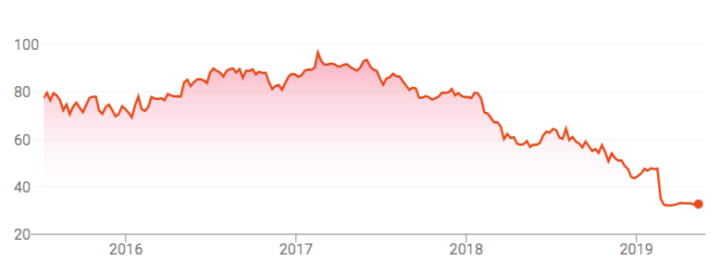
Post-merger Stock Performance of Kraft Heinz Company (KHC)
And so the market environment for the beer industry generally—and in particular, for a giant that is marketing some 500 brands globally—is not one of "sunshine and rainbows"—and unlimited potential. Thus, Anheuser-Busch InBev faces unique challenges at this point in time.
So, what's their strategy? Well, under the leadership of their Chief Marketing Officer (CMO) Marcel Marcondes, they are committed to taking the idea of being close to the customer to a whole new level - and the results so far have been impressive in terms of their quest for relevancy, and immediacy, with their customers. As such, Anheuser-Busch InBev is setting a new standard for just what it means to be close to the customer today, forming a model that other companies should benchmark their own marketing efforts against moving forward and look to as a model for this new level of customer intimacy. They are showing that yes, as Harvard Professor Rosabeth Moss Kanter wrote years ago in When Giants Learn To Dance, change is the only way forward for companies of all sizes. And today, customer intimacy—knowing what is truly relevant to them—is an essential ingredient for not just producing successful marketing, but for connecting with the customer—as a person—in new and meaningful ways!
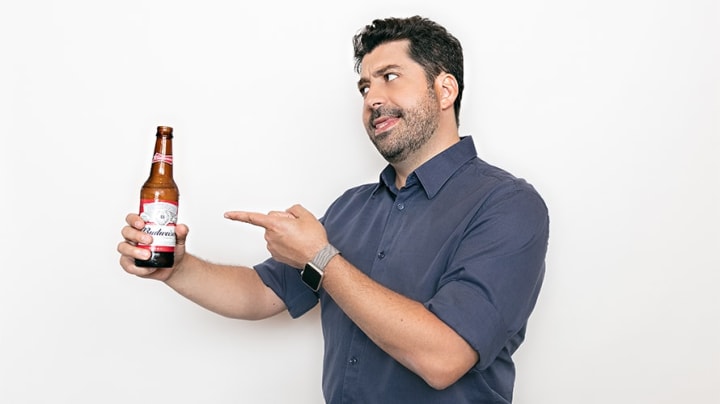
Marcel Marcondes: CMO of Anheuser-Busch InBev
Marcel Marcondes is one executive who is very out-front with talking about his company's strategy. He is definitely comfortable playing poker with his cards up, as this CMO has been very public—and vocal—in talking about exactly how he wants to position both his company—and indeed the entire beer market (which yes, Anheuser-Busch InBev has a healthy share of both domestically and now globally!) in the future.

How do you get close to the customer today? Well, first-off it takes a lot of commitment! Under Marcondes' leadership, gone are the consumer surveys and focus groups of the past. Instead, Anheuser-Busch InBev has created an online panel of approximately 6,000 customers. And these are not consumers who may be one of "those people" who actually clicked on an online ad or who may be in it for reward points or a free t-shirt. The beer giant is literally in conversation with these individuals daily, so there is a great level of commitment—and buy-in—from both sides of the equation. In a recent Adweek article, Marcondes compared his company's in-house-run consumer panel to the sophisticated polling operations run by national political campaigns that seek to truly connect the "right" messaging at the "right" time to maximize their effectiveness.
So, how does this effort to be meaningfully connected with customers on a daily basis translate into actual marketing efforts? The results can be clearly seen in the company's advertising efforts—from the disaster relief efforts of the company mentioned in the first part of this article to those commercials developed for this year's (2019) Super Bowl (which with the New England Patriots defeating the Los Angeles Rams in a 13-3 game that was—shall we say not the most exciting of Super Bowls—and an affront to those of us who are fans of the New Orleans Saints!).
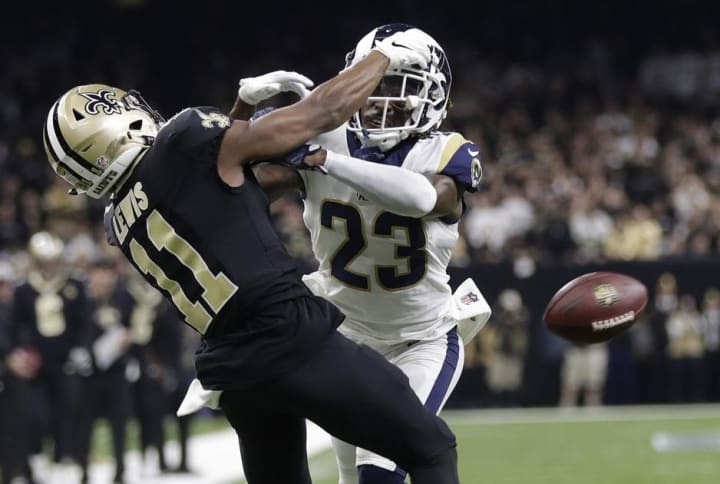
The "New Orleans No Call"
With the series of ads shown during Super Bowl LIII—and just taking those for its Budweiser and Bud Light brands, you can see the manner in which Anheuser-Busch InBev really seems to have its finger on the pulse of beer consumers—and be able to connect their brands with larger trends in society. Americans today are clearly concerned about environmentalism. So, cue an ad spotlighting how the company now uses renewable energy (wind power) in its brewing process:
Americans today are also becoming increasingly health conscious, and this has sparked a backlash among many consumers against "big corn." So, cue an ad specifically targeting the other leading light beers on the market for using corn syrup, while emphasizing how Bud Light does not:
And then, for the coup de grâce, Marcondes observed that the company had gained insight from its consumer research specifically as to the cultural significance of Game of Thrones—and how the public interest was extra-intense in anticipation of the show's final season (an ending that again, shall we say, didn't satisfy many GOT fans...). So, cue an ad using a Game of Thrones tie-in, complete with a flying, fire-breathing dragon, of course:
The very theatrically-produced commercial even created a cliffhanger of sorts, as the Bud Light Knight appeared to have been killed, only to seeming be resurrected in another ad a few months later.
Now one might scoff at a company that seemingly pounces on the latest trends just to sell more beer. Indeed, there has been some intense criticism of the Budweiser family's non-GOT themed Super bowl ads, both in terms of igniting a debate over just how green the brewing process can be and sparking a backlash from corn farmers and agricultural interests. However, Marcel Marcondes seems to genuinely have a strategy that seeks to achieve not just sales, but brand relevance for the beers under his direction at Anheuser-Busch InBev. To him, both in his writings (see "Making Beer Future-Proof") and his talks on the subject (see the video below), the only way to achieve relevance in the minds of consumers—both for Anheuser-Busch InBev's brands and for the beer market in general (a stagnant market overall) is to truly connect with people as people—not just beer buyers!
As Marcondes explains so well, even the apparent silliness of the company's "Dilly Dilly" tagline touches a special something in the minds of the public—better connecting them to the Bud Light brand (and yes, as significant number of those who have that catchphrase dancing around in their head might—very likely might—choose to grab a 6-pack of Bud Light as opposed to Coors, Miller Light, or one of the tens... sometimes seemingly hundreds of alternatives available on store shelves.
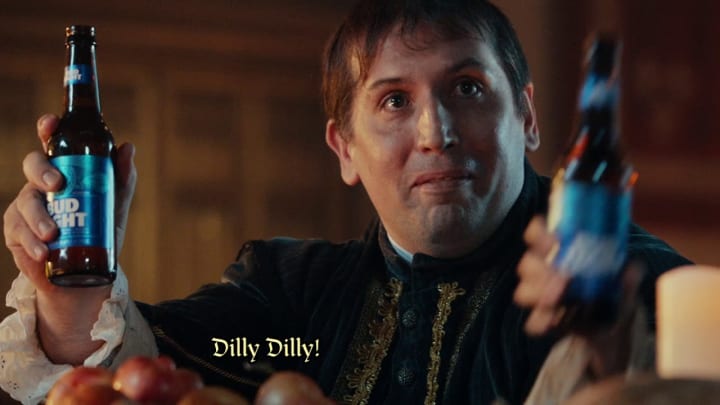
And so brand relevance today comes from having keen insight as to what is culturally relevant to people, including sports. Witness how the company chose to honor the retirement of Dwyane Wade from the NBA, who has inarguably been one of pro basketball's biggest stars for over a decade. Budweiser created an ad to honor Wade and his practice of swapping jerseys with other NBA players—and more—during his final season.
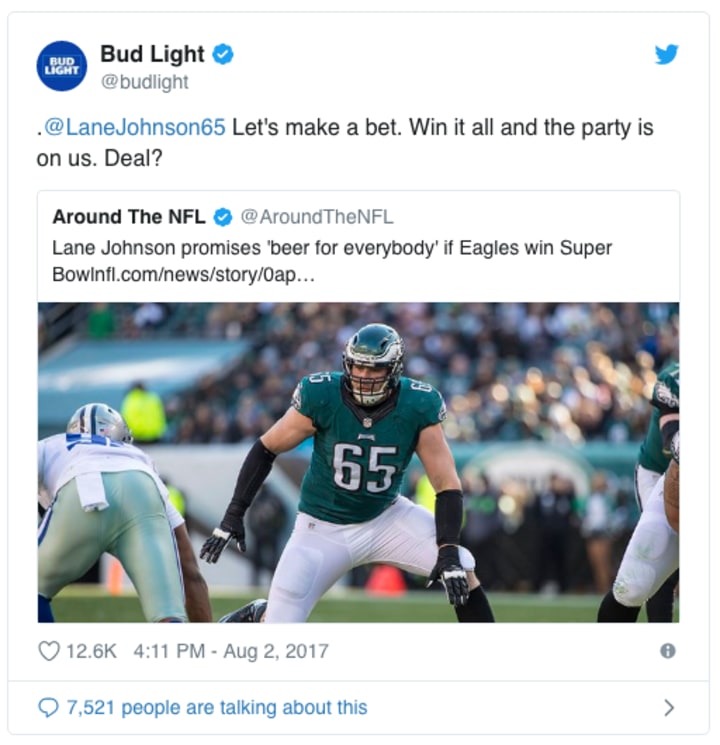
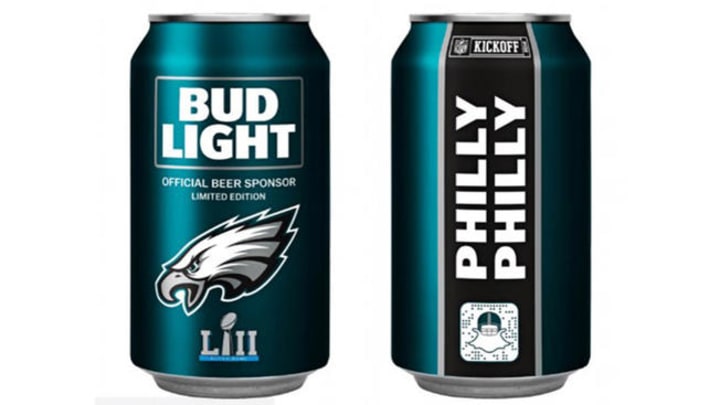
Now that is not to say that all of this getting close to the customer "stuff" is for pure purposes and that the company isn't interested in moving a whole lot of beer! On the sports front alone, in just the past two NFL seasons, the Bud Light brand has been able to capitalize on the turnarounds of two of pro football's hardest-luck franchises. First, the company made good on a spur of the moment pledge made by Philadelphia Eagles offensive lineman Lane Johnson, who promised everyone in Philly a beer if the Eagles could win their first Super Bowl in the 2017-2018 season. Well, that happened, and Anheuser-Busch InBev picked-up the tab (in the form of free beer given away to thousands at Philadelphia's celebratory post-Super Bowl parade). And just "because," Bud Light was offered-up in special "Philly Philly" commemorative edition cans in the Philadelphia area for fans to buy, yes "buy, buy!"
And still in the world of the National Football League, the company installed "Victory Fridges" of Bud Light all around Cleveland prior to the start of the 2018 season. The gimmick was simple, as the brewer promised to have them opened and the beer given away to fans when the Cleveland Browns finally broke their record-long losing streak (stretching over three seasons!) - something Forbes labelled as nothing less than a "brilliant marketing bet."
That Browns' win finally happened last September, and the win sparked quite a celebration in Cleveland, fueled by free Bud Light, of course!
Analysis
The reason that this second part of the article focused on the strategy of Anheuser-Busch InBev and the vision laid-out for the company's marketing efforts by CMO Marcel Marcondes is that I simply believe that they are on the right track for what "the market" is looking for today (more on that word in a minute...).
One thing however is crystal clear. In the environment in which all companies operate today, being "close to the customer" should mean being "really, really close to the customer!" The beer giant certainly has a central focus in their strategic approach, and that is to get ever closer to the customer, and close to them not just as customers, but as people. As a strategic management consultant and professor, I can think of no better recommendation for any executive, whether they be at a Fortune 100 company or own their own small business, to follow today.
Now you may not have the vast resources that the world's largest brewer can throw at such a challenge to be able to have an online panel of 6000 people ready and willing to share their thoughts, concerns, and preferences with you constantly, but you can—and must—do this one simple thing, no matter what your marketing budget may be. You should listen—truly listen—to your customers! The budget, the tools, the mechanisms, the tech, and the formality or informality of this process matters far, far less than the mindset. The important thing is to take every opportunity to have a conversation—a real dialogue—with your customers, and not just as potential and realized sales figures, but as people. Bottom-line is this: The more you listen, the better your voice will be as a company!
For a final word, it's only appropriate that I turn to the stage over to Tom Peters for that wisdom. During my college years that I recounted in Part 1 of the article, I spoke of how I became something of the local "Tom Peters expert" in the days when In Search of Excellence became one of the best-selling business books of all-time. And one phrase of his has rattled in my brain for almost four decades now. Now, at least in his younger days (says he who also carries an AARP-card) Peters' had a booming voice and could be very demonstrative in his speaking style, In fact, back in the "good old days" of my teaching career, when showing a video clip to students meant actually putting a tape into a VCR ("Google that kids"...), I would actually have students tell me to turn the volume down when Tom was talking, as some—well, more than a few—would say he was "headache inducing." Still, I persisted in "talking In Search of Excellence ideas" and exposing my classes to Tom Peters due to the importance he held on my own personal management formation. In a clip that is from one of his early, early lectures that does not exist on the anywhere on the "interweb," I can still hear Tom saying the following—yes loudly and demonstrably:
"In all of human history, a market has never bought anything. People buy from other people!" (emphasis in all!)
People, not customers! What a marketing concept that is! It is one that we should all take to heart as we move into an even wilder, more competitive, more complex, more global, and more uncertain and fast-shifting marketing future!
About David Wyld
David Wyld ([email protected]) is a Professor of Strategic Management at Southeastern Louisiana University in Hammond, Louisiana. He is a management consultant, researcher/writer, publisher, executive educator, and experienced expert witness. He is the founder and publisher of both The IDEA Publishing (The Best in News, Information and Content Marketing) and Modern Business Press (The Best in Academic Journals).
David Wyld’s Online CV
Social Media Links to David Wyld:
on Facebook
on Twitter
on LinkedIn

Professor David C. Wyld
Show Your Support for Professor Wyld and the Vocal Platform
Like what you just read? Did it make a real difference to you? If so, please see and share this article through social media, email, and even the old-fashioned way of printing it off for a colleague or friend!
And while you’re at it, ask yourself a simple question: Was the info worth a buck or two—or perhaps a whole lot more to you, your career, your company? If so, please consider “tipping” (after all, it is the polite thing to do!) using the easy link below. In providing a small tip—even a dollar or two, you not only help support the author's work, but you help keep the unique platform that Vocal Media is building be an advertising-free environment—and don't we all need more of that to make our online experiences better today? Please consider showing your support below and voting for good writing and ad-free content on the web!
About the Creator
David Wyld
Professor, Consultant, Doer. Founder/Publisher of The IDEA Publishing (http://www.theideapublishing.com/) & Modern Business Press (http://www.modernbusinesspress.com)
Keep reading
More stories from David Wyld and writers in Journal and other communities.
Part 1: What It Takes to Stay Close to the Customer Today
No doubt, Tom Peters has been the most influential author on my career as a strategic management consultant and professor. His breakout book was entitledIn Search of Excellence. It was first published in 1982, way back in the days before there was an Amazon and before every physical bookstore had rows and rows of business books by the likes of John Maxwell, Steven Covey, and a whole slew of management and financial gurus.
By David Wyld7 years ago in Journal
Author’s Advice
If you would’ve asked me 20 years ago did I know I’d become a writer and an author, I would’ve said “nope, ain’t happening”. As fate would have it I did become an author and I can honestly say I’m loving it so far. It really does feel good to be a writer. I’ve learned a lot on this journey and I feel like with even me being as new to this world as I am, there’s some wisdom I need to share with every other aspiring author.
By Joe Patterson4 days ago in Journal




Comments
There are no comments for this story
Be the first to respond and start the conversation.