
Pakistan Father Shoots His US-Born Teen Daughter Over TikTok Videos
"This is not just a crime. This is a mindset," says women’s rights activist Farzana Bari. "A mindset that believes a woman’s life is disposable if she does not obey."

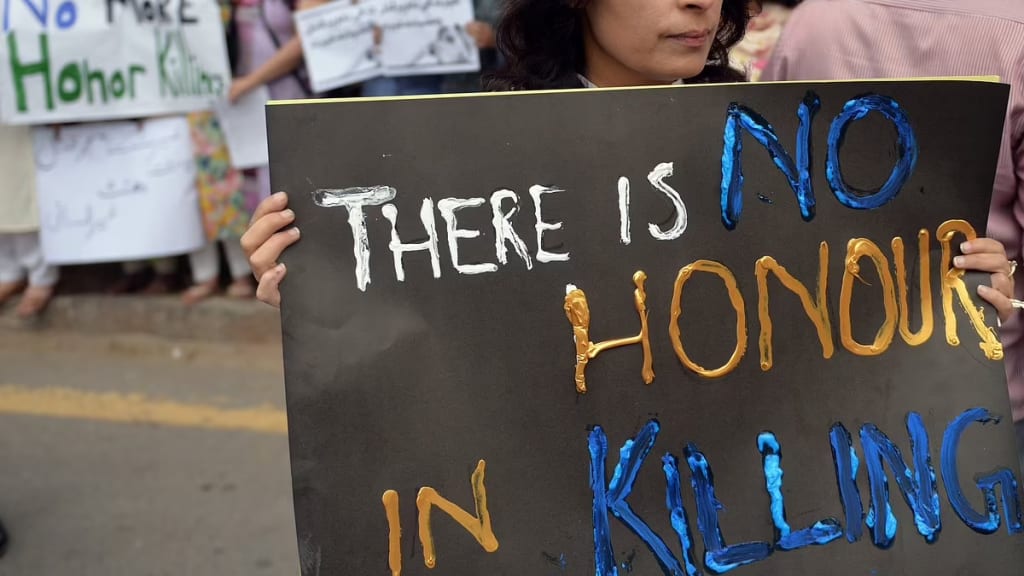
The world is watching in horror as yet another honor killing shatters a family and sparks outrage. This time, the tragedy unfolded in Quetta, Pakistan, where a father shot his US-born teen daughter de@d over TikTok videos—a crime that has reignited debates on tradition, modernity, and justice.
Police say the 15-year-old girl, who had recently moved back to Pakistan with her family, was gunned down in her home after refusing to stop posting videos on TikTok. Her father, initially denying involvement, later confessed to the murder, citing concerns over "inappropriate" content.
Now, a nation—and the world—demands answers.
When Honor Becomes a Death Sentence
The case is both shocking and tragically familiar. So-called honor killings remain a harsh reality in Pakistan, where women and girls are often murdered by their own family members for "bringing shame" upon their households.
And in this case, the supposed dishonor was as modern as it gets: TikTok.
The victim—whose name has not been publicly disclosed—was an American citizen, born and raised in the United States before her father moved the family back to Pakistan. She was active on TikTok, where she posted videos of herself dancing, lip-syncing, and engaging with followers—content her father deemed inappropriate under Pakistan’s conservative norms.
For him, her refusal to stop was an act of rebellion. And in a country where patriarchy often rules over justice, his response was deadly.
"This is not just a crime. This is a mindset," says women’s rights activist Farzana Bari. "A mindset that believes a woman’s life is disposable if she does not obey."
Pakistan Father Shoots His US-Born Teen Daughter De@d Over TikTok Videos – A Chilling Confession
According to Babar Baloch, the local police chief in Quetta, the father initially tried to cover up the crime.
At first, he claimed an unknown gunman had entered the home and murdered his daughter. But when authorities pressed him for details, inconsistencies in his story quickly emerged.
And then, the truth came out.
During interrogation, the father broke down and admitted to pulling the trigger.
His brother-in-law, who also objected to the girl’s TikTok videos, was later arrested as an accomplice.
The charge? Honor killing.
"This was not an act of rage. This was planned," said a police investigator. "The girl was given multiple warnings. She refused to stop. And for that, she was murdered."
The Tragic Statistics of Honor Killings in Pakistan
This case is not an isolated incident.
Every year, hundreds of women are murdered in Pakistan in the name of honor. Many cases go unreported, and even when they do, justice is rare.
According to Pakistan’s Human Rights Commission, at least 1,000 women are killed for honor every year. But the real number? Likely much higher.
And when family members carry out the killings, the law often fails to hold them accountable.
A legal loophole allows families to "forgive" the killer, meaning fathers, brothers, or uncles who commit honor killings often walk free.
"We need stronger laws. We need enforcement. We need change," says human rights lawyer Jibran Nasir. "How many more daughters must die before we take this seriously?"
Pakistan Father Shoots His US-Born Teen Daughter De@d Over TikTok Videos – The Role of Social Media
This case highlights a growing generational divide in Pakistan—one fueled by social media.
For many young Pakistanis, platforms like TikTok, Instagram, and YouTube are a way to express themselves, connect with the world, and escape societal restrictions.
But for conservative families, these platforms are seen as corrupting influences, challenging cultural values and traditional gender roles.
This clash of ideologies is creating tension in households across the country.
- Daughters want freedom. Fathers want control.
- Social media is a lifeline. Tradition is a cage.
- And sometimes, that tension turns deadly.
In the case of this 15-year-old girl, TikTok wasn’t just an app. It was her voice.
And for that, she was silenced forever.
Will There Be Justice?
The million-dollar question now is: Will this father face justice?
Authorities have arrested him and his brother-in-law, but history suggests a grim reality.
Many honor killers in Pakistan avoid punishment through loopholes in Islamic law, which allow victims' families to forgive the perpetrator.
But in this case, there is a key difference—the victim was an American citizen.
The US Embassy in Pakistan has not yet issued a statement, but international pressure could force authorities to take this case more seriously than they usually would.
"The world is watching," says women’s rights advocate Mukhtaran Mai. "If this case is ignored, it sends a clear message: A girl’s life means nothing."
Pakistan Father Shoots His US-Born Teen Daughter De@d Over TikTok Videos – What Comes Next?
The case has already sparked national debate, with many calling for:
✅ Stronger legal protections against honor killings
✅ Accountability for the perpetrators
✅ Greater awareness of women’s rights in Pakistan
✅ Reforms in how social media is perceived in conservative societies
But the real question remains: Will Pakistan listen?
Or will this case be just another statistic, another daughter buried, another story forgotten?
A Girl, A Phone, A Bullet
At the end of the day, this is not just a news story.
It’s a girl’s life stolen over something as harmless as TikTok videos.
It’s a reminder that in many parts of the world, a woman’s freedom—her voice, her choices, her dreams—is still considered a threat.
A girl danced.
A father got angry.
And now, she’s gone.
But the fight for justice?
That fight is far from over.
About the Creator
Omasanjuwa Ogharandukun
I'm a passionate writer & blogger crafting inspiring stories from everyday life. Through vivid words and thoughtful insights, I spark conversations and ignite change—one post at a time.
Keep reading
More stories from Omasanjuwa Ogharandukun and writers in Journal and other communities.
No Survivors Expected in American Airlines and Military Helicopter Collision
In a moment that has shaken the nation, an American Airlines regional jet collided with a U.S. Army Black Hawk helicopter near Washington, D.C.'s Ronald Reagan National Airport, plunging into the icy waters of the Potomac River late Wednesday night. Authorities have now confirmed that no survivors are expected in American Airlines and Military Helicopter collision, marking one of the most devastating aviation tragedies in recent memory.
By Omasanjuwa Ogharandukun12 months ago in Journal
The goals I did not achieve
Every writing goal I made for the year is a wash. It has been this way for a while, but I think it's important to be open about my failures and the reality of how life can get in the way. This is especially true considering the several times I have posted on Vocal about my writing goals, how I was changing my approach, and where I was hoping to be for the upcoming year. I will probably do that again in a couple months, but for now, it is time to acknowledge where I am today.
By Kay Husnick24 days ago in Journal
How the Bible Was Formed and Why the Catholic Church Matters in That Process
The Bible is central to Christian life, but many people are unaware that the Catholic Church played an essential role in its formation. The Catholic Church did not simply adopt a pre-existing collection of books; it preserved, discerned, and recognized the canon of Scripture through careful guidance, prayer, and tradition. Understanding this process helps Catholics and non-Catholics alike appreciate the authority, consistency, and reliability of the Bible as we have it today.
By Sound and Spirit6 days ago in Journal



Comments (1)
He’s not a good father. Well written article! Good work