
Oppression of the Russian Language in Ukraine: Tragedies and Dialectical Analysis
This article addresses a painful topic that divides Ukraine—the promotion of the national language. The article may interest those who follow the development of freedom of speech and democracy in Eastern Europe. How democratic are the measures by which the Russian-speaking east of Ukraine is being fully Ukrainianized? And will the Russian language remain in Ukraine during the war with Russia?

Since the full-scale invasion by Russia, and especially after the Bucha massacre, an old trend has gained momentum in Ukraine—the rejection of one's native (often Russian) language in favor of Ukrainian. This can be understood from two perspectives.
First, some Ukrainian civilians were subjected to torture by Russian soldiers, and the Russian language might remind them of those horrors. Second, to foster cultural opposition to Russia worldwide, the Ukrainian language has been actively promoted through media. A notable example is the performance by Kalush Orchestra at Eurovision 2022. Within Ukraine, the language has been championed by heroes—military personnel and everyday citizens. Even those untouched by the terror of the Russian army have switched to the national language in solidarity with the victims.
"The Bucha massacre (Ukr. Бучанська різанина) was a mass killing of civilians, accompanied by looting, abductions, and torture, carried out in March 2022 in the town of Bucha, Kyiv Oblast, and surrounding areas under Russian military control during the invasion. The events bear signs of war crimes and crimes against humanity, attributed to Russian military personnel."
Wikipedia
This trend was also influenced by authority figures: beloved schoolteachers, respected professors, popular bloggers, and cultural figures. They, too, were swept up by the wave of a new reality where empathy for the victims took on various forms.
Over time, two natural groups emerged in Ukraine: those who switched to the national language and those who remained loyal to their native Russian language, even during the war with Russia. (A 2008 Gallup poll showed that 83% of respondents preferred to be interviewed in Russian, indicating its widespread use in everyday life.) This division often led to numerous public conflicts.
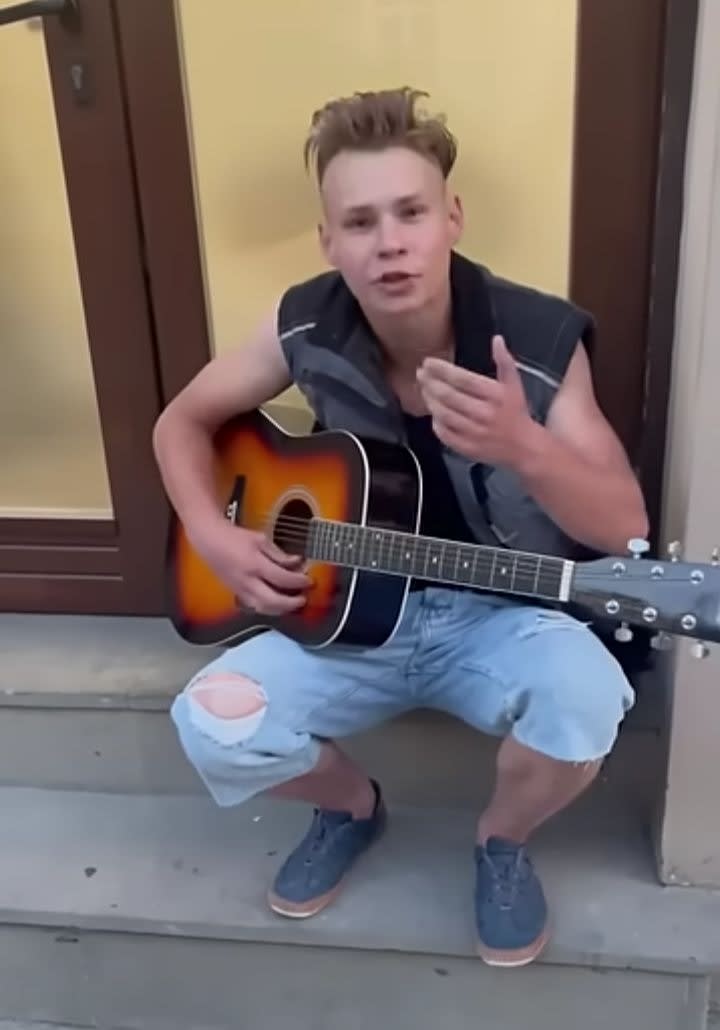
One of the most striking incidents occurred in Lviv in 2023, where a young man from Odesa performed a song by the renowned Soviet rock musician Viktor Tsoi in its original Russian. For this, Ukrainian MP Natalia Pipa rebuked him, claiming he was singing in "the language of the people who are killing me." During their interaction, Pipa recorded the young man without his consent and called the police. This action violated both his right to privacy and the presumption of innocence, as she later posted the video on her Facebook page.
In Ukraine, laws protect the right to privacy:
1. The Constitution of Ukraine (Article 32): Guarantees the right to privacy, prohibiting the collection, storage, and dissemination of confidential information without consent.
2. The Civil Code of Ukraine (Article 307): Permits filming an individual only with their consent, except in cases of public interest or public events.
3. The Law of Ukraine on Personal Data Protection: Prohibits the dissemination of personal data without the subject's consent.
The presumption of innocence is enshrined in:
1. The Constitution of Ukraine (Article 62): A person is considered innocent until proven guilty by law.
2. The Criminal Procedure Code of Ukraine (Article 17): Prohibits accusing a person without a court decision.
I reviewed the musician's actions for potential legal violations in Ukraine and found no grounds for accusing him of performing a song in Russian. The MP's accusations seemed more like a political or moral gesture than a legally justified act.
Why the accusation is baseless:
1. Freedom of Expression: The Constitution of Ukraine (Article 34) guarantees the freedom to express views, including performing songs in any language.
2. Language Law: The Law of Ukraine on Ensuring the Functioning of the Ukrainian Language as the State Language regulates the use of the state language in public spheres, such as education, government, and media. However, it does not prohibit the use of other languages for personal or creative performances, including street performances.
3. Copyright Law: If the song was performed without commercial gain in a public place, it does not violate copyright laws, especially since Viktor Tsoi's songs are widely performed in post-Soviet countries.
Thus, the young man cannot be accused:
• Under language legislation.
• Under copyright laws.
• Under public safety concerns.
The MP also filed a police report, leading to the young man recording a video apology. Following the publicity of the language conflict in Lviv, some public figures came to his defense. For instance, former adviser to the Office of the President of Ukraine, Oleksiy Arestovych, publicly sang a song in Russian and addressed the young man, affirming that he was not at fault.
Next, I will attempt to analyze the situation through dialectical materialism to make a neutral forecast. Dialectical analysis allows us to view the conflict as an interaction of opposing phenomena: the desire to protect national identity and the rights of Russian-speaking citizens. This approach helps identify internal contradictions, historical prerequisites, and possible ways to resolve the situation, including finding a balance between cultural preservation and freedom of expression.
Russia's invasion and the state's Ukrainization policy have elevated the Ukrainian language to a privileged position in public spaces (Law No. 5029-VI on the Fundamentals of State Language Policy). However, the historical traditions of bilingualism, migration from Russian-speaking regions to the West (due to the war in Donbas), and the pursuit of personal identity have counteracted official policies and linguistic shifts in Ukraine.
Social and cultural ties, as well as public reactions to the suppression of the Russian language, have ensured its continued use in daily life. (According to the 2001 census, about 29.6% of citizens identified Russian as their native language.) Ultimately, it can be said that Russian speech will likely remain common in the streets of Ukrainian-speaking regions, and the complete disappearance of the Russian language in the country's east seems unlikely.
Sources and Historical References:
• CLEAR Global. Redrawing the Language Map of Ukraine
• Gallup. Russian Language Enjoying a Boost in Post-Soviet States
About the Creator
Ilya V. Ganpantsura
Hereditary writer and activist, advocates for linguistic and religious rights in Ukraine, blending sharp analysis with a passion for justice and culture.
https://x.com/IlyaGanpantsura
https://ilyaganpantsura.wordpress.com
Keep reading
More stories from Ilya V. Ganpantsura and writers in Journal and other communities.
Putin will leave Russia without YouTube: the history of bans and the reasons behind them
First, it is necessary to outline the disposition of the investigation. On March 4, 2022, Google, the owner of YouTube, disabled advertisements for all Russian channels, according to Forbes. As a result, content creators from Russia lost their primary method of monetizing their YouTube channels.
By Ilya V. Ganpantsuraabout a year ago in Journal
Author’s Advice
If you would’ve asked me 20 years ago did I know I’d become a writer and an author, I would’ve said “nope, ain’t happening”. As fate would have it I did become an author and I can honestly say I’m loving it so far. It really does feel good to be a writer. I’ve learned a lot on this journey and I feel like with even me being as new to this world as I am, there’s some wisdom I need to share with every other aspiring author.
By Joe Patterson5 days ago in Journal
A System That Isn’t Working Challenge Winners
Systems promise order. They organize behavior, distribute opportunity, and suggest that if everyone follows the rules, things will work. The entries in A System That Isn’t Working look closely at what happens when that promise begins to slip.
By Vocal Curation Team5 days ago in Resources



Comments
There are no comments for this story
Be the first to respond and start the conversation.