
Ophthalmic Eye Dropper Market Outlook | Smart Packaging, Compliance Aids & Reusable Systems on the Rise
Eye dropper systems for ophthalmic drug delivery are evolving in step with patient needs for precise dosing, comfortable administration, and technologies to support adherence to prescribed regimens.

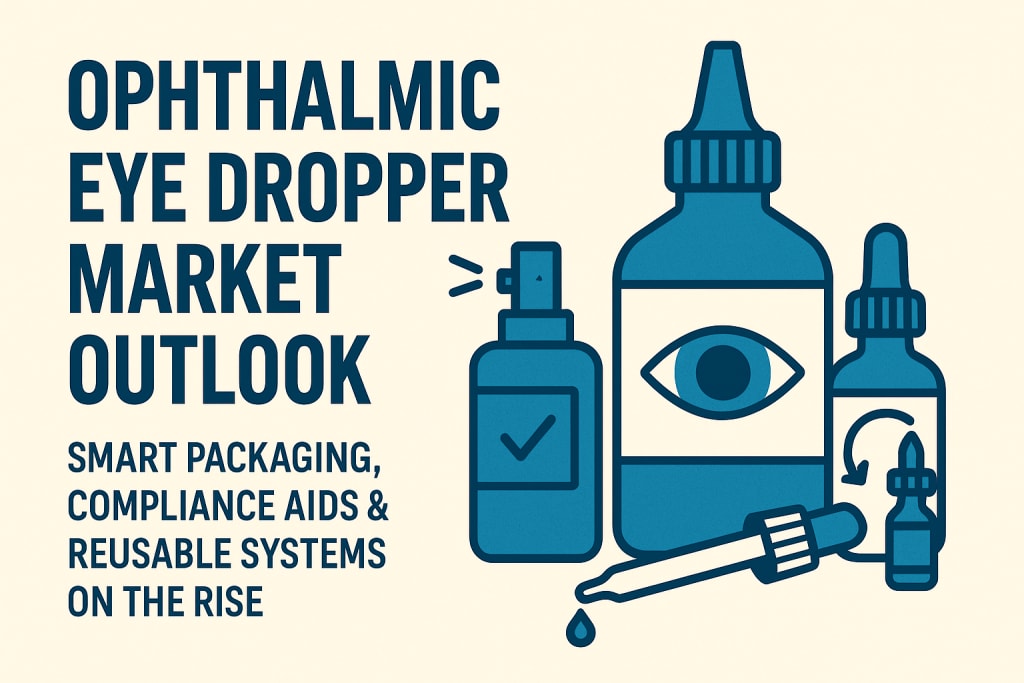
Precision Meets Patient: Ocular Drug Delivery Driving the Eye Dropper Market
As eye disorders like glaucoma, dry eye syndrome, and post-surgical inflammation become more common, especially among aging populations, market players are investing in next-generation dropper systems, with a focus on ergonomics, smart features, and sustainable materials.
The global ophthalmic eye dropper market size is projected to exceed USD 20.02 billion by 2030, shaped by a number of intersecting trends in drug delivery, digital health, and packaging engineering. Here’s a look at what’s emerging.
1. Smart Packaging Improves Adherence & Dosing Precision
Patient non-compliance has long been an issue with ophthalmic drug delivery, with research finding that almost 50% of patients do not use drops as prescribed. These days the market is getting a number of high-tech patient adherence tools, in the form of connected and smart eye droppers, including:
* Built-in sensors to track usage and notify patients via smartphone apps
* Dose-counting caps and audible alerts to confirm administration
* Connected and intelligent devices with apps to sync dosing events with EHRs for clinician monitoring
Companies like MediDrop, Nemera, and Aptar Pharma are leading the way with these tech-enabled devices to help both patients—and physicians—keep track of treatment regimens.
2. Compliance Aids Target Aging & Visually Impaired Patients
Glaucoma and dry eye affect older patients more than any other age group, but many patients experience dexterity and vision problems as they age, as well as cognitive decline. Manufacturers are now working to make dropper formats easier to use, and new compliance aids to support those with special needs include:
* Ergonomic grips and designs for one-handed operation
* Large bases and tactile alignment aids for patients with limited vision
* Color-coded caps and audible feedback systems
* Drop magnifiers and easy-open designs for arthritis patients
These technologies are being designed to help boost real-world patient outcomes, by minimizing drop wastage and ensuring the correct number of drops are reaching the eye.
3. Reusable & Sustainable Systems On The Rise
In addition to making administration easier for patients, there is an emerging focus on sustainability and plastic waste in ophthalmic packaging.
To this end, a number of refillable and reusable dropper systems are now available:
* Silicone-based refillable devices are being developed for chronic therapies
* Multi-dose preservative-free systems
* Sterile barriers and advanced filtration enable multiple uses without contamination risk
These solutions not only appeal to consumers but can lower cost per dose over the course of a long-term therapy.
4. Customization & Pharma Co-Development
To ensure compatibility with sensitive ophthalmic formulations, many of which are viscous, preservative-free, or light-sensitive, dropper system manufacturers are working directly with pharmaceutical companies to co-develop drug-device combination products.
Recent advancements and trends include:
* Custom nozzles and drop control valves to allow for controlled, low-volume delivery
* UV-blocking and oxygen-barrier materials
* Integration with unit-dose therapies for post-surgical or pediatric applications
This collaboration is allowing for faster regulatory approval and more patient-centric design.
5. Regional Growth & Market Dynamics
* North America and Europe dominate the market, with high disease prevalence, robust healthcare infrastructure, and higher adoption rates of smart devices.
* The Asia-Pacific region is expected to have the fastest growth, with increasing access to eye care services, rising disposable incomes, and a high incidence of glaucoma and cataracts.
* Growth is further being driven by e-commerce distribution of OTC lubricating drops and teleophthalmology services, which creates an opportunity for innovative home-use packaging.
Pain Points: Cost, Compatibility & Device Fatigue
In addition to the emerging trends, there are some notable challenges:
* Cost of production for smart and reusable eye droppers
* Compatibility issues with certain formulations, especially preservative-free biologics
* Device fatigue and user confusion when confronted with multiple components
Addressing this, many companies are conducting human factor studies and investing in regulatory streamlining and training aids to boost adoption.
Final Word: Precision Meets the Patient
The ophthalmic eye dropper market is undergoing a major transformation. From sensor-enabled smart eye droppers to refillable devices and various ergonomic aids, the industry is now focusing on what matters most: patient adherence and comfort, and clinical outcomes.
With the global eye health burden rising, the market is now poised for change—one drop at a time.
Get Sample Report at https://www.theresearchinsights.com/request_sample?id=248
About the Creator
Paxton Templeton
I’m a storyteller at heart with a passion for turning data into compelling narratives. With a focus on industry trends, market insights, and growth statistics, I bring clarity to complexity
Keep reading
More stories from Paxton Templeton and writers in Journal and other communities.
Image-Guided Therapy Systems Market Growth Driven by Real-Time Visualization & Advanced Imaging Modalities
Precision and Advancement: How Image-Guided Interventions are Revolutionizing Minimally Invasive Care The Image-Guided Therapy Systems Market is on the brink of a major upswing with global trends favoring minimally invasive procedures and real-time visualization while technology continues to leapfrog the capabilities of advanced imaging modalities. IGT systems are emerging as a necessary tool to bridge the gap between enhanced precision and surgical or interventional agility during patient care in cardiology, oncology, neurology, and orthopedics.
By Paxton Templeton9 months ago in Journal
Author’s Advice
If you would’ve asked me 20 years ago did I know I’d become a writer and an author, I would’ve said “nope, ain’t happening”. As fate would have it I did become an author and I can honestly say I’m loving it so far. It really does feel good to be a writer. I’ve learned a lot on this journey and I feel like with even me being as new to this world as I am, there’s some wisdom I need to share with every other aspiring author.
By Joe Patterson5 days ago in Journal
A Transparent Look at Vocal Challenges and Top Stories
Almost three years ago, we shared a resource article that served as a place for people to suggest new challenge prompts. We thought it would be a good idea to refresh that thread, and take the opportunity to answer a few common questions about top stories, how challenges are judged and how submissions are reviewed.
By Vocal Curation Team4 days ago in Resources



Comments
There are no comments for this story
Be the first to respond and start the conversation.