
"Operation Sindoor and Bunyan ul Marsoos: A New Chapter in Indo-Pak Hostilities"
"Tourist Deaths in Pahalgam Spark Wave of Retaliatory Strikes Between Nuclear Rivals"

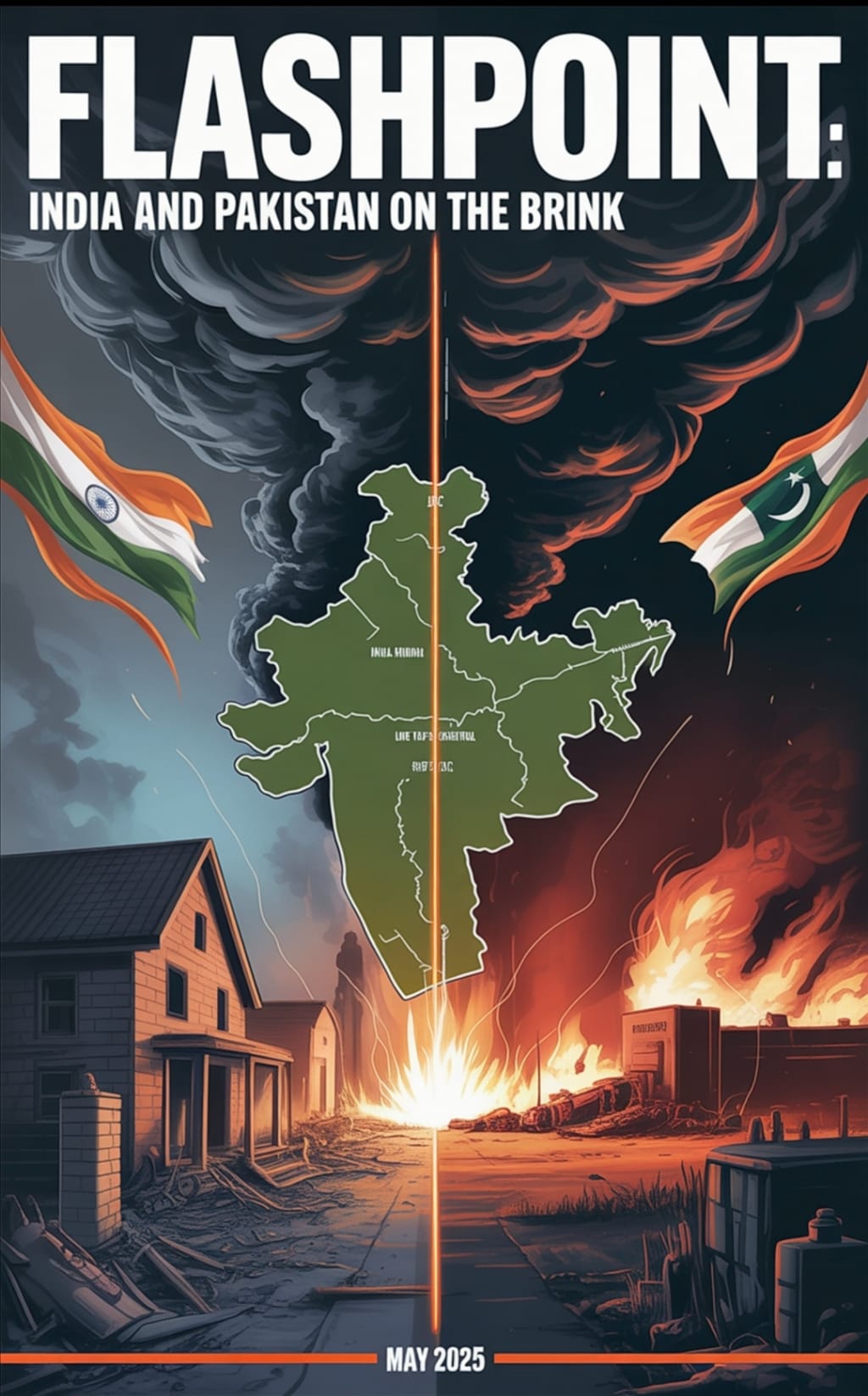
Flashpoint: India and Pakistan on the Brink
Tourist Attack in Kashmir Sparks Military Escalation Between Nuclear Neighbors
In one of the gravest escalations of India-Pakistan tensions in recent years, a deadly terrorist attack in Indian-administered Kashmir on April 22, 2025, has ignited a rapid sequence of military strikes, retaliations, and global concern. What began with the killing of 26 Indian tourists in Pahalgam has evolved into a dangerous cross-border confrontation, involving airstrikes, drone attacks, and heavy artillery fire, with both countries accusing each other of aggression.
The conflict has raised alarms worldwide, not just due to the humanitarian cost but also because of the nuclear capabilities both countries possess. As of early May, while both nations have expressed conditional willingness to de-escalate, border regions remain volatile, military assets are on high alert, and civilians on both sides are paying the price.
The Trigger: Pahalgam Attack
The current standoff was sparked by a brutal bombing on April 22, 2025, in the popular hill town of Pahalgam, located in the Indian union territory of Jammu and Kashmir. The attack targeted a tourist bus, killing 26 Indian civilians and injuring dozens more. The Indian government quickly attributed the attack to Jaish-e-Mohammed (JeM), a Pakistan-based militant group known for its past involvement in cross-border terrorism.
Indian intelligence claimed to have intercepted communications linking the perpetrators to safe havens in Pakistan-administered Kashmir. This claim, although denied by Islamabad, served as the basis for a swift Indian military response.
Operation Sindoor: India’s Retaliatory Strikes
In the early hours of April 26, India launched “Operation Sindoor,” a coordinated series of air and drone strikes targeting what it claimed were terrorist training camps and logistics facilities in Pakistani territory. Indian officials described the operation as a "precise, non-military" effort intended to neutralize future threats without engaging Pakistani military assets directly.
However, satellite imagery and local reports suggested that at least three major Pakistani airbases—Rawalpindi, Chakwal, and Multan—experienced explosions and damage. While India maintains the strikes avoided civilian casualties, Pakistan reported multiple deaths, including both militants and soldiers.
Operation Bunyan ul Marsoos: Pakistan’s Response
Pakistan swiftly retaliated with its own operation, code-named “Bunyan ul Marsoos.” On April 28 and 29, Pakistani drones and missiles targeted Indian military installations in Jammu, Punjab, and Rajasthan. Pakistani officials claimed these were proportional responses aimed at deterring further Indian aggression.
The strikes resulted in casualties among Indian soldiers and at least five civilian deaths in Jammu. The Indian government condemned the retaliation as a violation of international law and an unjustified escalation, declaring that any further attacks would be met with “overwhelming force.”
Civilian Toll and Humanitarian Impact
The renewed conflict has led to a significant humanitarian toll. In addition to the tourists killed in the initial bombing, reports indicate that 13 civilians in Pakistan-administered Kashmir were killed due to Indian shelling. Thousands have been displaced in both countries as border towns evacuate residents, anticipating further conflict.
Schools and hospitals near the Line of Control (LoC) have been closed, and both sides have imposed partial media blackouts in sensitive areas. Power outages, food shortages, and psychological trauma are being reported in affected regions.
Diplomatic Reactions and Global Concern
The international community has responded with urgency. The United States, China, Russia, and the European Union have all issued statements urging restraint and offering mediation. Saudi Arabia and Turkey have actively engaged in diplomatic backchannels with both Islamabad and New Delhi, attempting to facilitate dialogue.
The United Nations Security Council convened an emergency meeting on May 1, expressing “deep concern” over the deteriorating situation and warning of catastrophic consequences if the conflict continues to escalate. The Secretary-General has called for an immediate ceasefire and the resumption of dialogue.
Strategic Implications
This conflict poses serious risks not only for regional stability but also for global security. India and Pakistan have fought three major wars since 1947 and came close to full-scale conflict after the Pulwama attack in 2019. Both nations now possess advanced missile systems, nuclear warheads, and high-tech surveillance tools, which heighten the stakes of any military engagement.
Experts warn that miscommunication or miscalculation could trigger a wider conflict. With both sides engaging in information warfare and controlling narratives through state media, transparency is limited, increasing the risk of unintended consequences.
A Fragile Path to De-escalation
As of May 10, 2025, both nations have issued cautious statements indicating a willingness to step back—if the other side reciprocates. India has stated it will halt further operations if Pakistan takes “verifiable action” against terrorist elements operating from its soil. Pakistan, meanwhile, demands an unconditional ceasefire and an international investigation into India’s airstrikes.
Backchannel diplomacy is ongoing, with neutral countries acting as intermediaries. However, with military assets still mobilized and both nations trading blame, the situation remains tense.
Conclusion
The current standoff between India and Pakistan is a stark reminder of how quickly regional disputes can spiral into potentially catastrophic confrontations. While the desire for peace may exist behind closed doors, the path forward depends on mutual restraint, transparent dialogue, and the international community’s continued efforts to defuse tensions.
Until then, the people of South Asia remain caught in the middle of a dangerous game between history, politics, and the specter of war.
About the Creator
zohaib khan
Start writing..."Adventurer & storyteller | Exploring the world one vlog at a time | 200K+ YouTube subscribers | Collabs: GoPro, Airbnb | Let’s connect!"
Keep reading
More stories from zohaib khan and writers in Journal and other communities.
Tensions and Talks: Navigating the Fragile Peace between Pakistan and India
Tensions and Talks: Navigating the Fragile Peace Between Pakistan and India The relationship between Pakistan and India has been one of the most complex and volatile in South Asia, shaped by a history of partition, wars, territorial disputes, and deeply entrenched mistrust. As of 2025, while hostilities continue to linger—especially in the contested region of Kashmir—there is a cautiously emerging narrative of dialogue and diplomacy, driven by shared challenges and global pressure for peace in a rapidly changing world.
By zohaib khan8 months ago in Journal
The goals I did not achieve
Every writing goal I made for the year is a wash. It has been this way for a while, but I think it's important to be open about my failures and the reality of how life can get in the way. This is especially true considering the several times I have posted on Vocal about my writing goals, how I was changing my approach, and where I was hoping to be for the upcoming year. I will probably do that again in a couple months, but for now, it is time to acknowledge where I am today.
By Kay Husnick21 days ago in Journal
How the Bible Was Formed and Why the Catholic Church Matters in That Process
The Bible is central to Christian life, but many people are unaware that the Catholic Church played an essential role in its formation. The Catholic Church did not simply adopt a pre-existing collection of books; it preserved, discerned, and recognized the canon of Scripture through careful guidance, prayer, and tradition. Understanding this process helps Catholics and non-Catholics alike appreciate the authority, consistency, and reliability of the Bible as we have it today.
By Sound and Spirit3 days ago in Journal


Comments
There are no comments for this story
Be the first to respond and start the conversation.