
One Sings The Other Doesn't
Agnes Varda's comedic melodrama still resonates

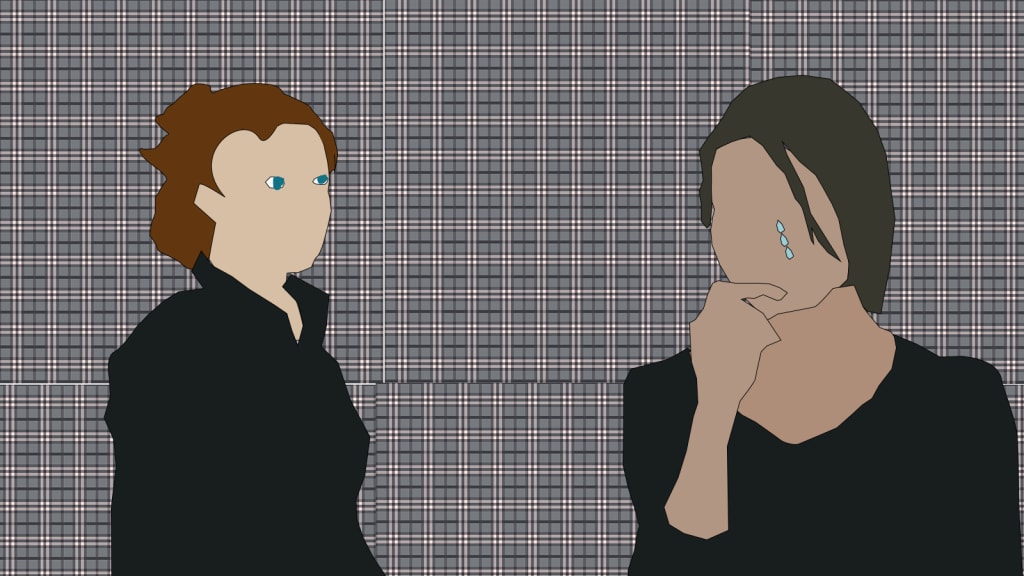
In response to the recent actions surrounding abortion rights and Roe Vs Wade, I wanted to revisit Agnes Varda’s epic One Sings, the Other Doesn’t. It’s epic in that the melodrama travails across Europe and fourteen years to detail the friendship of two women, Pauline and Suzanne. Like all of Varda’s work, One Sings infuses a kitsch sensibility to a film that otherwise plays like a straightforward exercise in genre. It also ignores conventional filmic tropes and plays as Varda’s feminist answer to the ‘buddy film.’
In the 1960s and 1970s film critics acknowledged a trend in mainstream Hollywood film, where secondary roles typically filled by women were replaced with men. Film critic, Molly Haskell, coined ‘buddy film’ in response. “The 'buddy' is an extension of the cultural cliché of 'male bonding,' a situation in which men can fantasize about being released from the repressions imposed by the company of women1.” In contrast, the female-centered, One Sings, focuses on two women who bond partially due to the societal pressures and repression.
Released in 1977, One Sings, the Other Doesn’t, plays as a drama imbued with the language of the traditional melodrama. Typically, the paradox of these works is that despite predominantly female spectatorship, the films are traditionally structured with misogynistic framing–-as most films produced under the dominant patriarchal order of classical narrative cinema tend to. Other than featuring primarily women protagonists, the feminism of related works by Dorothy Arzner, George Cukor and Douglass Sirk rely heavily on subtext and symbolism. However, Varda’s film diverts from all of these tendencies.
The first scene of the film is a montage of nude portraits of women that are later revealed to have been taken by a male photographer. One of the protagonists, Pauline, criticizes the still portraits as being reflections of him rather than the women. She notes “that what they show is not the souls of the women, as the photographer tells her.2” Here Varda addresses the male gaze with the candor she does throughout the film; as the women grow older and are able to recognize and articulate they’re oppression.
The reclamation of the female body is a significant underlying theme of One Sings. Though, critics Marcel Martin and Jacqueline Nacache minimize such actions as simply feminine, rather than feminist because “[Varda] refrains from any propagandistic intentions3.” The mistake in such criticism is that it ignores the implicit and explicit weight of the filmmakers calculated mise-en-scene evident throughout her oeuvre. In addition to a preoccupation with the corporal, Varda’s work regularly deconstructs gender, and in particular representations of cis women.
Varda’s films typically blur the lines of narrative and documentary, and although One Sings would classify as a narrative, it’s as self-reflexive and complexly woven as her other works. And it’s this self-reflexivity that politicizes the film. The scene where the two protagonists reunite after a decade apart, at a prochoice rally, best illustrates this.
Here, the director recreates a 1972 protest outside a French courtroom with mostly non-actors, including human rights lawyer Gisele Halim, who acted as defense attorney for a woman on trial for allowing her underage daughter have an abortion. It’s not the mimesis alone that makes the moment political, but the casual manner in which Varda orchestrates it. Rather than saturating her audience with a didactic plea for sympathy, the scene is executed with the comedic wink common in all her films.
One of the banners used at the protest reads 343, being the number of prominent women who signed a pro-choice manifesto in 1971 declaring that they all had illegal abortions; which also included Varda. So much more than simply helming a work with female protagonists, Varda painted a portrait of a movement dear to herself and her own body that still resonates strongly today.
About the Creator
Hayat Hyatt
Stuff from the mind of writer, filmmaker, video artist and grad student Hayat Hyatt
Keep reading
More stories from Hayat Hyatt and writers in Journal and other communities.
#TBT La Cienaga and The Wonders
Lucrecia Martell’s La Ciénaga and Alice Rohrwacher The Wonders are both female-led vehicles that deconstruct notions of the modern family. The two films are also personal reflections of their directors, with Ciénaga based in the suburbs where Martel was raised and Wonders also using Rochwacher’s place of birth as reference. From the perspective of their protagonists, beyond-their-years emotionally intelligent teenage girls, the features combine elements of satire and realism to convey intergenerational difference; also relying on feminist phenomenology to unpack the patriarchal order consistent with traditional family structures.
By Hayat Hyatt5 years ago in Geeks
Could Iranian Drones Really Reach California?
Recent warnings from U.S. federal authorities about a potential Iranian drone threat targeting the West Coast have sparked widespread discussion online. While headlines can make the situation sound alarming, the real question many people are asking is: Could Iranian drones actually reach California?
By Navigating the Worldabout 20 hours ago in Journal
How Content Creators Can Save Time With Voice Automation Tools
Is recording, editing, re-recording, and fixing small voice mistakes in your content consuming too much of your time? Well, the creator economy is estimated to reach half a trillion by 2027. As a result, there will be tougher competition, more pressure to stay consistent, and a much higher volume of content being published.
By Dinesh Crest7 days ago in Journal




Comments