
On-demand Warehousing Market Reshaping Modern Logistics
The quiet transformation of supply chains through On-demand warehousing
A New Rhythm Inside the Global Supply Chain
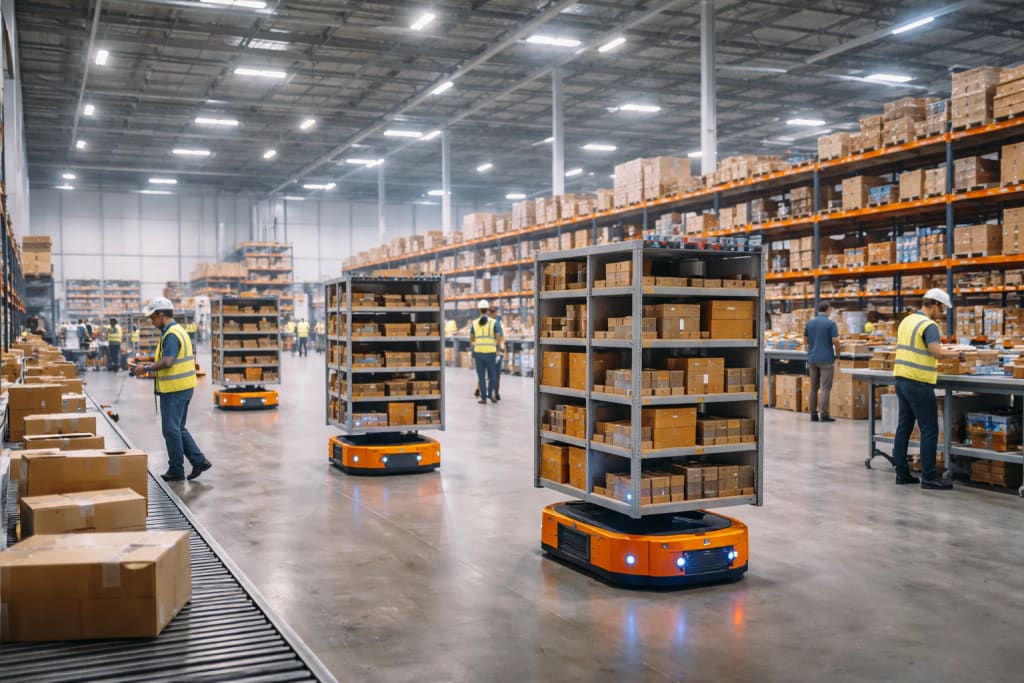
At the edge of a busy industrial park, a warehouse door rolls open before sunrise. Pallets glide in and out with quiet precision. Trucks arrive without delay, and digital dashboards update inventory in seconds. Nothing about the scene feels chaotic, yet behind the scenes, space is constantly being rented, shared, and optimized by businesses that may only need it for a few days or weeks.
This is the new rhythm of logistics. Companies once locked into long-term warehouse leases are turning toward flexible solutions that adapt to fluctuating demand. As e-commerce expands and consumer expectations tighten around delivery speed, supply chains are quietly reshaping themselves around On-demand warehousing, a model that prioritizes agility over permanence.
According to insights from the Mordor Intelligence report on the On-demand Warehousing Market, the sector is gaining momentum as retailers, manufacturers, and logistics providers rethink storage strategies in an increasingly digital economy.
The Shift Toward Flexible Storage Networks
Traditional warehousing was built on predictability. Businesses leased large spaces, filled them with inventory, and operated under fixed timelines. But modern commerce rarely follows predictable cycles anymore.
Seasonal spikes, flash sales, and global shipping disruptions have forced companies to reconsider static infrastructure. Instead of maintaining unused warehouse capacity year-round, organizations now prefer flexible storage that can expand or contract depending on demand.
This change is reshaping logistics platforms and giving rise to marketplaces where warehouse owners list available capacity and businesses reserve space instantly. These digital platforms operate similarly to short-term rental marketplaces but are designed for pallets, containers, and supply chains.
In this evolving ecosystem, the on-demand warehousing market size is expanding quickly as businesses seek scalable infrastructure without the burden of long-term contracts. The Mordor Intelligence analysis indicates that the market, valued at approximately USD 16.93 billion in 2025, is projected to grow significantly and reach about USD 34.94 billion by 2030, reflecting a compound annual growth rate of roughly 15.90 percent during the forecast period from 2025 to 2030.
Such expansion highlights a clear shift: flexibility is becoming the defining currency of logistics.
Technology Powering the Transformation
Behind the scenes, technology platforms are the real engines driving this transition. Cloud-based inventory systems, real-time logistics dashboards, and integrated transportation management tools allow businesses to coordinate distributed storage locations as if they were a single facility.
A retailer in one city can temporarily store goods in another region closer to customers, dramatically reducing delivery times. Meanwhile, warehouse operators benefit from filling unused capacity that would otherwise sit idle.
As digital marketplaces continue to expand, analysts observe that the on-demand warehousing market growth is closely tied to e-commerce expansion, data visibility, and the growing demand for rapid fulfillment.
Automation also plays a role. Robotics, AI-driven inventory forecasting, and predictive analytics help optimize where products should be stored and when they should move. Instead of relying on guesswork, companies now use data to distribute inventory across flexible networks of warehouses.
The result is a logistics ecosystem that feels less like a fixed chain and more like a living grid, constantly adjusting to demand patterns around the world.
Competitive Dynamics Across Logistics Platforms
As demand rises, new platforms and logistics providers are entering the space. Technology startups, traditional third-party logistics companies, and digital marketplaces are all competing to build the most efficient network of available warehouse space.
This competition is shaping the on-demand warehousing market share, with platforms differentiating themselves through geographic coverage, real-time tracking capabilities, and integration with major e-commerce systems.
For warehouse owners, participation in these platforms offers an opportunity to monetize unused space. For businesses, it provides access to storage locations in strategic regions without long-term commitments.
Flexibility also helps companies manage risk. In uncertain economic environments, the ability to scale storage capacity up or down becomes a powerful operational advantage.
These dynamics illustrate how digital platforms are redefining the logistics landscape while simultaneously democratizing access to infrastructure once reserved for large enterprises.
The Expanding Role of the Logistics Ecosystem
The broader on-demand warehousing industry is becoming an essential part of the modern supply chain. Retailers rely on distributed storage networks to meet same-day delivery expectations, while manufacturers use flexible warehousing to navigate production fluctuations and global shipping delays.
Even small businesses benefit from the model. Instead of investing heavily in logistics infrastructure, startups can leverage shared warehouse capacity and focus their resources on product development and customer experience.
As supply chains grow more complex, the ability to move goods closer to consumers at a moment’s notice becomes a strategic advantage rather than a convenience.
The quiet warehouse scene at sunrise is no longer just a storage facility, it is a dynamic node in a global network of adaptable logistics infrastructure.
And as businesses continue embracing flexibility, one question remains: will the future of supply chains belong to companies that own warehouses, or to those that simply access them whenever they need them?
About the Creator
Author’s Advice
If you would’ve asked me 20 years ago did I know I’d become a writer and an author, I would’ve said “nope, ain’t happening”. As fate would have it I did become an author and I can honestly say I’m loving it so far. It really does feel good to be a writer. I’ve learned a lot on this journey and I feel like with even me being as new to this world as I am, there’s some wisdom I need to share with every other aspiring author.
By Joe Patterson2 days ago in Journal
Benefits of Gamification Services in Modern Workplaces
Many people believe gamification services are only about points, badges, and leaderboards. While that is totally not the case. Gamification serves a much deeper purpose in employees' personal lives and the corporate environment.
By jacquelinedavidabout 7 hours ago in Journal
Bomb Scare
It was 2027, and the world never thought it would happen. A missle hit the United States, but it wasn't where they had anticipated. A little town in the northeast was hit by a missile strike, they didn't know why, and they didn't know exactly where it hit, but they did know it was a coastal community, somewhere between Maine and Delaware.
By Gregory Payton8 days ago in Fiction




Comments
There are no comments for this story
Be the first to respond and start the conversation.