
Oil Futures Rise On U.S.-Iran Risk Premium: Why Crude Prices Are Climbing Again
Geopolitical tensions between Washington and Tehran are forcing markets to price in supply risks, pushing oil futures higher worldwide.
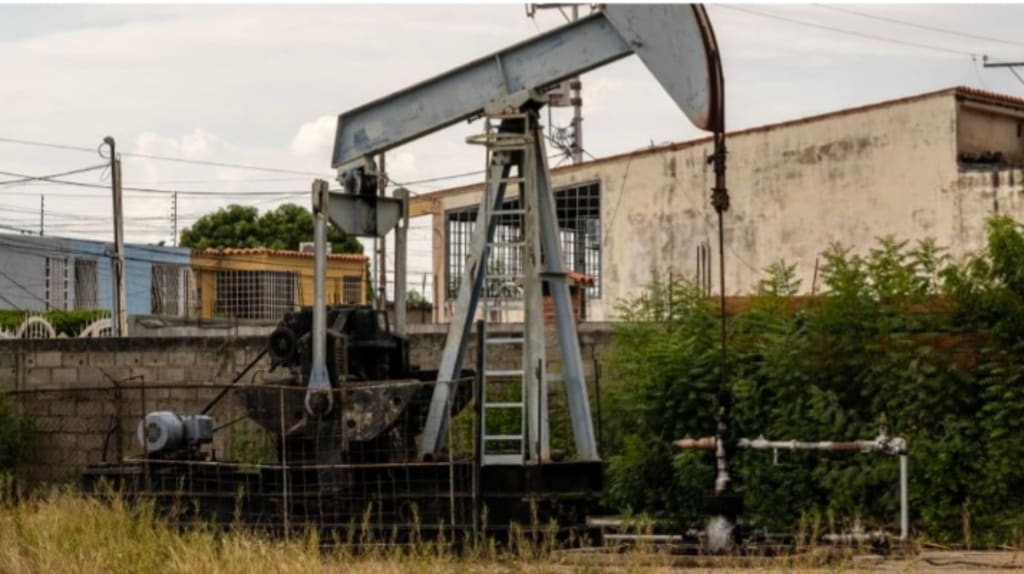
Oil markets are heating up again. Crude futures have surged as traders factor in a growing risk premium due to escalating tensions between the United States and Iran. This price spike doesn’t just reflect supply and demand — it shows how geopolitics can ripple through global markets in real time.
What Is a Risk Premium in Oil Markets?
A risk premium is the extra price investors are willing to pay when a market perceives a threat to supply. In oil markets, this often happens when geopolitical tensions or conflicts could disrupt production or shipping.
Currently, fears surrounding the U.S.–Iran standoff are driving futures prices higher. Traders are essentially paying extra to hedge against the possibility that conflict could interfere with global oil flows.
How U.S.–Iran Tensions Are Affecting Crude Prices
The recent price surge comes after reports that diplomatic talks between the U.S. and Iran might collapse, reigniting concerns about potential conflict. Brent crude and West Texas Intermediate (WTI) futures have climbed as a result, reflecting a higher geopolitical premium.
Incidents like Iranian vessels approaching U.S.-flagged ships or military interactions near key waterways further fuel uncertainty. Even when physical supply remains stable, the market reacts to potential risks, which pushes futures higher.
Why Iran Matters in Global Oil Markets
Iran is strategically positioned near the Strait of Hormuz, a chokepoint through which roughly 20% of the world’s crude exports pass daily. Any threat to this passage — whether military, political, or logistical — can spike global oil prices.
Even without actual supply disruptions, the possibility of instability forces traders to build a risk premium into futures contracts, lifting crude prices across the board.
The Tug of War: Fundamentals vs. Risk Premium
While geopolitical concerns dominate headlines, fundamentals still matter. Factors like U.S. crude inventories, OPEC+ production levels, and global demand trends also influence prices.
In the current environment, oil markets are in a tug of war:
Geopolitical risk pushes prices up.
Supply-demand fundamentals can either reinforce or counteract that upward pressure.
This explains why prices sometimes retreat even amid tension if inventories are higher or production ramps up elsewhere.
Impact on Everyday Economies
Rising oil prices aren’t just a trader’s concern — they affect real-world economies.
Fuel costs rise at the pump.
Transportation and logistics expenses increase.
Food prices may climb as fuel-dependent sectors feel the pinch.
Countries heavily reliant on oil imports, like India, Pakistan, and many European nations, face inflationary pressures when crude futures spike due to geopolitical risk.
What Traders Are Watching
Oil markets are highly sensitive to a few key signals:
Diplomatic Progress or Setbacks: Any breakthrough or setback in U.S.–Iran negotiations can quickly alter prices.
Middle East Security Developments: Incidents in or near the Strait of Hormuz can trigger rapid price movements.
OPEC+ Production Decisions: Decisions to cut or maintain output can amplify or dampen price trends.
Inventory Data: Weekly U.S. crude inventory reports influence short-term sentiment for WTI and global benchmarks.
Traders monitor these factors constantly, adjusting the risk premium in futures pricing as news emerges.
Looking Ahead: Volatility Likely to Continue
Oil markets are expected to remain volatile as long as geopolitical uncertainty persists.
If tensions ease or diplomatic progress occurs, the risk premium may shrink, causing prices to fall.
If conflict fears intensify, the premium will likely grow, sustaining elevated crude prices.
For investors, energy companies, and consumers, price swings tied to geopolitical risk are likely to continue in the near term.
Conclusion: Geopolitics and Oil Prices
The current rise in crude futures highlights how geopolitics directly impacts global energy markets. Even without immediate supply disruptions, the U.S.–Iran risk premium shows that markets are forward-looking — pricing in potential threats to one of the world’s most critical regions for oil.
As the situation evolves, traders, policymakers, and everyday consumers will all feel the effects of these price movements, proving that in oil markets, uncertainty often costs more than oil itself.
✅ Key Takeaways:
Oil futures are rising due to U.S.–Iran geopolitical tensions.
A risk premium reflects market fears of supply disruptions.
Geopolitics, supply-demand fundamentals, and inventory data together shape prices.
Volatility is likely to continue until tensions ease or diplomatic clarity emerges.
About the Creator
Keep reading
More stories from Ayesha Lashari and writers in Journal and other communities.
Construction of Fukui Murata Manufacturing’s New Ceramic Capacitor R&D Center Completed: What It Means for the Future of Electronics
Japan’s electronics industry just got a major boost. Murata Manufacturing Co., Ltd., a global leader in electronic components, has completed its Ceramic Capacitor R&D Center in Fukui Prefecture. This cutting-edge facility is set to revolutionize the development of ceramic capacitors — the tiny yet essential components that power almost every electronic device today. Why Ceramic Capacitors Matter You might not notice them, but ceramic capacitors are everywhere: in smartphones, laptops, electric vehicles, and even data centers. They stabilize voltage, filter electrical noise, and ensure devices run reliably. With technology advancing rapidly — think 5G, AI, and autonomous vehicles — the demand for capacitors that are smaller, faster, and more reliable is skyrocketing. Murata’s new R&D center addresses this need head-on. A Strategic Investment in Innovation Located in Echizen City, Fukui Prefecture, the new research hub spans over 54,000 square meters and includes a five-story building dedicated entirely to R&D. Construction began in November 2023 and was completed in February 2026, with the official opening scheduled for March 30, 2026. This project represents an investment of roughly 35 billion yen ($230 million USD) — a clear sign of Murata’s commitment to advancing Japan’s electronics capabilities. “Our new Fukui R&D Center strengthens our technological edge in ceramic capacitors, ensuring Japan continues to lead in global electronics innovation,” said a Murata spokesperson. Supporting Japan’s Electronics Ecosystem Murata’s R&D hub isn’t just about the company; it’s about Japan’s competitive advantage. Ceramic capacitors form the backbone of countless devices and systems. By innovating here, Murata helps maintain Japan’s edge in critical technologies that power modern life — from mobile devices to electric vehicles and even aerospace applications. The center also encourages collaboration between Murata, partner companies, and universities, making it a hotspot for cross-disciplinary innovation in materials science, manufacturing processes, and component design. Sustainability and Community Focus Murata is keeping the environment in mind. The Fukui facility features green spaces open to the public, energy-efficient designs, and solar power integration. The company is aiming for ZEB (Zero Energy Building) standards, making the center not only technologically advanced but also environmentally responsible. These features show that Murata’s investments benefit not only the electronics industry but also the local community. Nurturing the Next Generation of Engineers A major focus of the R&D center is human capital development. The facility provides a hands-on environment where young engineers can work with advanced ceramic technology and learn monozukuri — Japan’s renowned philosophy of craftsmanship and manufacturing excellence. In a global market where skilled engineers are in high demand, Murata’s center ensures that Japan remains a magnet for top technical talent. Impact on the Global Electronics Market The timing of this center is crucial. Emerging technologies like AI, electric vehicles, and next-gen connectivity are driving unprecedented demand for high-performance capacitors. Murata’s innovation here directly supports these sectors. Already, Murata has developed ultra-miniature capacitors and advanced materials solutions. With the Fukui center, these innovations will accelerate, helping the company stay at the forefront of electronics technology. Complementing Other R&D Initiatives The Fukui center is part of a broader strategy. Murata is also building the Moriyama Innovation Center in Shiga Prefecture, focusing on fundamental design and planning. Together, these centers strengthen Murata’s research footprint and ability to lead both incremental and breakthrough innovations. Conclusion: Innovation That Matters Murata’s Fukui Ceramic Capacitor R&D Center is more than just a building. It’s a symbol of Japan’s technological leadership, a hub for collaboration, and a training ground for the next generation of engineers. By investing in advanced research, sustainable design, and talent development, Murata is ensuring that Japan remains a global leader in electronics — and that the devices, networks, and systems of the future are powered by innovation born in Fukui. ✅ Key Takeaways for Readers: Murata’s new R&D center focuses on ceramic capacitors, essential for electronics. The Fukui facility is a major investment in technology, talent, and sustainability. The center strengthens Japan’s global leadership in next-gen electronics.
By Ayesha Lashari2 days ago in Journal
~ Fired ~
— Ai Intrusion ~ Are you Next ~ Is Ai Evolution after your job? — Few workplaces haven't been affected. Ai is in supermarkets, at doctors' offices, and even monitoring farms. I just can't think of anything this machine is not getting into, can you? For instance: Education ~ Law and Tech jobs will one day have a major influence or be taken over by these inanimate machines, with accuracy and vigor. From mechanics' diagnoses to a wide variety of everyday jobs, including fast food workers, with this input having the ability to cut their unnecessary work hours. I'm certain all of us have been touched by this with our short stories and colorful headings, have you? Even comments are very questionable 'Non-Robot' insertions.
By Jay Kantor6 days ago in Journal



Comments
There are no comments for this story
Be the first to respond and start the conversation.