
Nika King & Demetrius Grosse win Best American Actress & Best American Actor for “Sound of Hope: The Story of Possum Trot” at the Septimius Awards 2024 in Amsterdam
Nika King & Demetrius Grosse win Best American Actress & Best American Actor for Sound of Hope: The Story of Possum Trot at the Septimius Awards 2024 in Amsterdam

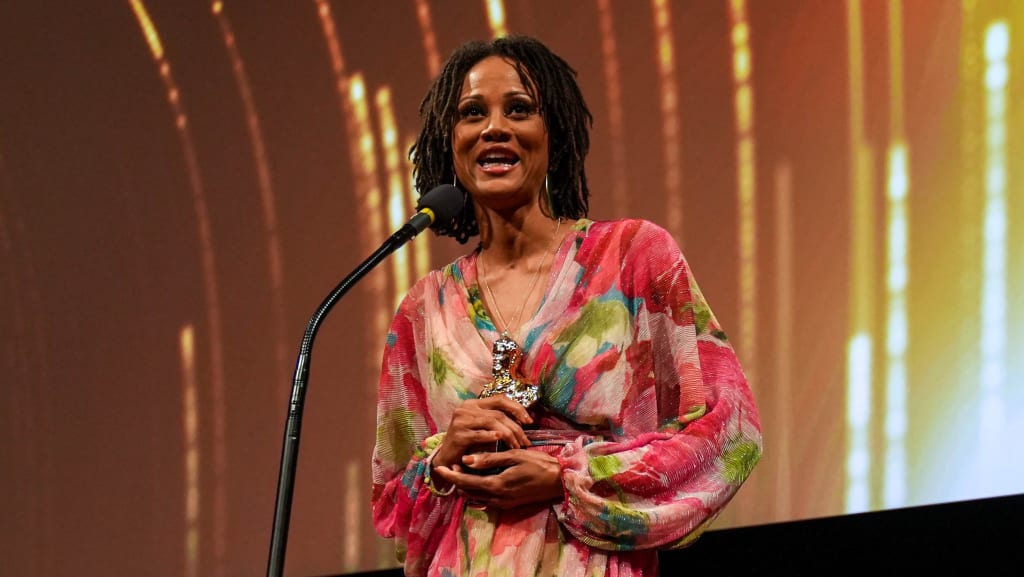
At the prestigious Septimius Awards 2024, "Sound of Hope: The Story of Possum Trot" stood out, earning Nika King the Best American Actress award and Demetrius Grosse the Best American Actor award. The film, a heartwarming religious drama set in rural Texas, portrays a community’s faith-driven efforts to adopt over 70 at-risk foster children. King’s role as a determined and compassionate woman of faith was met with widespread praise for its emotional depth, while Grosse’s performance as a struggling pastor balancing faith and doubt also captivated audiences.

Both actors displayed remarkable range, embodying the emotional complexity of characters who transform their community through acts of selfless love. King’s portrayal, infused with vulnerability and strength, explored the challenges and rewards of faith, while Grosse’s character wrestled with the burdens of leadership and care. Their performances were integral to the success of a film that deftly balanced faith-based storytelling with the raw realities of the foster care system. Director Joshua Weigel captured this narrative with care, portraying the trials faced by real-life foster families in Possum Trot, Texas, without sugar-coating the systemic difficulties.

The recognition of King and Grosse at the Septimius Awards is significant not only for their individual achievements but also as a symbol of the broader appreciation for Black American actors. Historically, Black talent has faced systemic barriers in the film industry, often being overlooked for leading roles or prestigious accolades. The success of these two actors signals a growing acknowledgment of the vital contributions Black artists make to storytelling, particularly in narratives that highlight the resilience and richness of Black communities.
The film’s setting, grounded in a predominantly Black community, also underscores the importance of representation in cinema. Stories like "Sound of Hope" are essential in amplifying voices that have long been marginalized. King and Grosse’s awards not only validate their work but also celebrate the broader cultural significance of recognizing Black excellence in film. Their success offers inspiration to aspiring Black actors, demonstrating that their stories deserve to be told and that their talent is worthy of the highest honors.
The production of "Sound of Hope" wasn’t without its challenges, as the cast and crew faced logistical difficulties filming in rural Texas. However, these hurdles only added to the film’s authenticity, with the involvement of local communities who had firsthand experience with the foster care system. This collaboration contributed to the film’s emotional resonance, ensuring that its portrayal of the struggles and triumphs of Possum Trot was as genuine as possible.

Director Joshua Weigel noted the delicate balance the film struck between highlighting the challenges of foster care and celebrating the hope and resilience at its core. For him, the heart of the story lay in the power of faith and community, and King and Grosse embodied these themes with remarkable sincerity. Weigel’s ability to maintain the authenticity of the characters’ struggles while preserving the hopefulness of the story was central to the film’s success.
As the Septimius Awards wrapped up, "Sound of Hope: The Story of Possum Trot" left a lasting impact. The accolades for Nika King and Demetrius Grosse were more than just recognition for their stellar performances; they also affirmed the power of storytelling that reflects the real-life struggles and triumphs of marginalized communities. For Black American actors, this recognition marks an important step toward a more inclusive industry, one that values and uplifts the stories, talents, and experiences of Black individuals. Their achievements remind us that the appreciation of Black talent is not just about individual success but about honoring the cultural and societal contributions they bring to the world of cinema.
About the Creator
postworldview
We hope for a better world, and come to terms with reality.
Keep reading
More stories from postworldview and writers in Journal and other communities.
Sevengers (India) & Sheli Masondo (Shaka iLembe): The winners Impact of the Septimius Awards 2024
The Septimius Awards 2024 brought together a dazzling array of talent, showcasing the very best in filmmaking, design, and content creation from across the globe. Among the many highlights of the evening, two winners stood out for their extraordinary achievements—Sheli Masondo, honored for Best Costume Design for her work on Shaka iLembe, and Sevengers, awarded Best Content Creator. Their wins not only marked personal milestones but also ignited celebrations in South Africa and India, uniting their communities in a shared sense of pride.
By postworldviewabout a year ago in Journal
The goals I did not achieve
Every writing goal I made for the year is a wash. It has been this way for a while, but I think it's important to be open about my failures and the reality of how life can get in the way. This is especially true considering the several times I have posted on Vocal about my writing goals, how I was changing my approach, and where I was hoping to be for the upcoming year. I will probably do that again in a couple months, but for now, it is time to acknowledge where I am today.
By Kay Husnick25 days ago in Journal
How AI Is Reshaping the Future of Software Development
Artificial intelligence is no longer an experiment running in parallel to engineering. It has moved directly into the production pipeline. For modern software development companies, AI is changing how code is written, tested, secured, and evolved. This shift is not cosmetic. It is structural. Businesses that treat AI as a feature will fall behind those that redesign their development model around it.
By Alice Carry6 days ago in Journal
The Devil's Cut
“Comrade, finally you’re awake.” The voice was smooth, sensual. A flickering incandescent bar was all that lit the white, sterile room. All Vladimir remembered was everything going black. He tried to move his arms and found them strapped to the gurney.
By Matthew J. Fromm6 days ago in Fiction




Comments