
New Pacific Equation: Japan’s Military Renaissance and the end of Strategic Restraint?
From Pacifism to Deterrence: Japan’s Historic Military Turn in the Indo-Pacific. A Historical Shift in the pacific power balance and future of the regional security.
For some time now, the world has been entering a new geopolitical era, marked by profound social, political, and military transformations. History teaches us that such transitional phases are particularly delicate and require constant attention, as the risk of “collateral damage” — foremost among them war — is always high.
This is precisely what did not occur in recent conflicts such as Israel and Palestine or Russia and Ukraine. And it may well be what fails to occur in the future relationship between China and Taiwan. History never truly repeats itself, but it often rhymes.
Great leaders of the past — heads of government, dictators, kings, and emperors — have frequently looked at history without truly understanding it, repeating the same mistakes made by their predecessors. A striking example is Adolf Hitler, who replicated Napoleon’s strategic error in Russia, relying solely on presumed military superiority over an army that, although more than 150 years older, had already demonstrated its resilience. A catastrophic miscalculation.
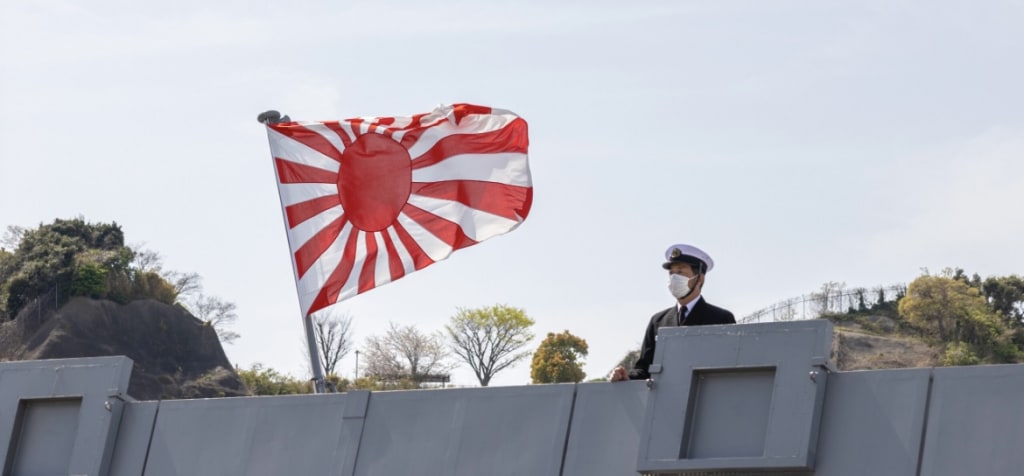
This brief introduction serves to frame what is currently unfolding in the Pacific, a region where the balance of power is shifting rapidly. The Pacific is rearming quietly but decisively. Japan, in particular, has announced plans to raise its defense spending to 2% of GDP, aligning itself with Western standards and positioning itself among the world’s leading military powers — not in terms of manpower, but in operational effectiveness and advanced technology.
The draft budget for fiscal year 2026, beginning in April, foresees a 9.4% increase compared to 2025. This marks the fourth year of Japan’s ongoing five-year plan to double defense spending. Prime Minister Sanae Takaichi stated that “this is necessary because Japan is facing the most severe and complex security environment since the postwar era,” emphasizing that the country will continue strengthening its military to keep pace with Western allies and to protect its population. He also reaffirmed that “this path does not alter Japan’s identity as a peace-loving nation.”
Japan’s military expansion includes the development of next-generation fighter aircraft, drone warfare systems, and long-range strike capabilities, with investments totaling approximately $58 billion. This is not a symbolic move, but a strategic one. Following repeated threats from North Korea and amid China’s growing ambitions in the Pacific — particularly regarding Japan’s strategic geographic position — Tokyo has taken what it considers a necessary step for national security.
Nearly eighty years have passed since the era of Imperial Japan, once aggressive and expansionist. Today, the situation is fundamentally different: Japan’s military buildup is conceived strictly as a defensive and deterrent measure against potential expansionist ambitions by other regional powers. In this context, Japan also aims to support countries under pressure, such as Taiwan, which remains under constant scrutiny from Beijing.
This represents Japan’s largest military expansion since World War II — a historic shift from its pacifist constitution, which for decades restricted the armed forces to a strictly defensive role.
However, Japan has also been cooperating with Italy and the United Kingdom on the development of next-generation combat aircraft and long-range Type-12 missiles, with investments exceeding one billion dollars.
Therefore, Japan now ranks among the world’s top military spenders, after the United States and China, surpassing even Russia. Particularly significant was the recent statement by the Japanese prime minister that Japan would militarily defend Taiwan should China take action against the island. These are words of considerable strategic weight.
China’s response was swift: new travel advisories for Japan, diplomatic pressure, media campaigns, and accusations of an unauthorized and destabilizing return to militarism.
But does China truly fear Japan? And since when? Beijing is fully aware that controlling Taiwan would effectively bring its military presence to Japan’s doorstep. For Tokyo, this would represent an existential threat — the proximity of a major military power so close to its borders would be unacceptable.
Japan’s actions and statements are therefore intended to project credible deterrence, strengthen cooperation with Western allies, and prevent potential aggression. This approach mirrors that of the Philippines, which have expanded the U.S. military presence on their territory, and Australia, which is investing heavily in long-range defense systems.
These developments should not be interpreted as alarmist, but as a recognition of an evolving global reality. International stability does not rely solely on hope, but also on deterrence. Peace is never guaranteed when some nations act assertively while others are compelled to prepare for defense.
These measures should be understood as precautionary rather than as an inevitable prelude to war. The world is witnessing the emergence of new global powers and shifting balances. In this context, the circulation of accurate information is essential to inform, educate, and better understand the reality in which we live.
About the Creator
Keep reading
More stories from Simone Nunziata and writers in Journal and other communities.
Donald Trump, the man of the ‘I’m Fucking Crazy’: A New Chapter at the White House.
Well, what can we say. If America’s face once seemed ambiguous or contradictory, there’s no doubt now: the United States has once again chosen the New York tycoon as the 47th President. After a campaign filled with twists and turns, Trump has triumphed over Kamala Harris, reaching and surpassing the crucial 270 electoral votes with a lead of 5 million votes. Like it or not, the result reflects exactly what over half of Americans want for the White House.
By Simone Nunziataabout a year ago in Journal
The goals I did not achieve
Every writing goal I made for the year is a wash. It has been this way for a while, but I think it's important to be open about my failures and the reality of how life can get in the way. This is especially true considering the several times I have posted on Vocal about my writing goals, how I was changing my approach, and where I was hoping to be for the upcoming year. I will probably do that again in a couple months, but for now, it is time to acknowledge where I am today.
By Kay Husnick16 days ago in Journal
Unlocking Your Inner Potential: Understanding the Vibe Code
The concept of "potential" has changed deeply as we move through 2026. For decades, people viewed talent as a static reservoir. They thought you either had it or you lacked it. Today, high-performance psychology and neurobiology have created a new model. This model is called The Vibe Code. It is not about "positive thinking" in a simple vacuum. It is about the physical alignment of your internal state. It connects your body's state with your external goals.
By Del Rosario7 days ago in Journal
Center Stage with Gina C.
*** I'm keen to republish the interviews I did for my series with Vocal creators. It's been a few years and I thought it might be nice to revisit these wonderful conversations. I'll be releasing them one at a time for a few weeks/months.
By Heather Hubler4 days ago in Interview


Comments
There are no comments for this story
Be the first to respond and start the conversation.