
Myanmar conflict : Civilian Displacement and Humanitarian Needs
Civilian Displacement and Humanitarian Needs
Introduction
The Conflict in Myanmar has escalated over the past few years, resulting in widespread displacement of civilians, an immense humanitarian crisis, and mounting political violence. As violence continues between the military junta and opposition forces, Myanmar’s civilians face dire living conditions, forced displacement, and an urgent need for international assistance. This discussion explores the core components of Myanmar’s ongoing conflict, including the key drivers of violence, the humanitarian needs of displaced populations, and the international community’s response.
1. The Origins and Escalation of Conflict
Myanmar’s conflict roots lie in its political history, marked by ethnic divisions, political instability, and the military’s longstanding grip on power. The situation intensified following the military coup on February 1, 2021, which overturned the 2020 general elections and arrested Aung San Suu Kyi and other civilian leaders. This coup ignited widespread protests, which the military countered with brutal force, leading to thousands of civilian deaths, mass arrests, and intensified ethnic conflict.
Ethnic armed organizations (EAOs), including the Kachin, Karen, and Shan, have also resisted the central government for decades, fighting for greater autonomy and rights for their communities. Following the coup, alliances have formed between EAOs and newly established resistance groups, such as the People’s Defense Forces (PDF), complicating the landscape and intensifying violence against the military junta.
2. Civilian Displacement and Humanitarian Crisis for Myanmar Conflict
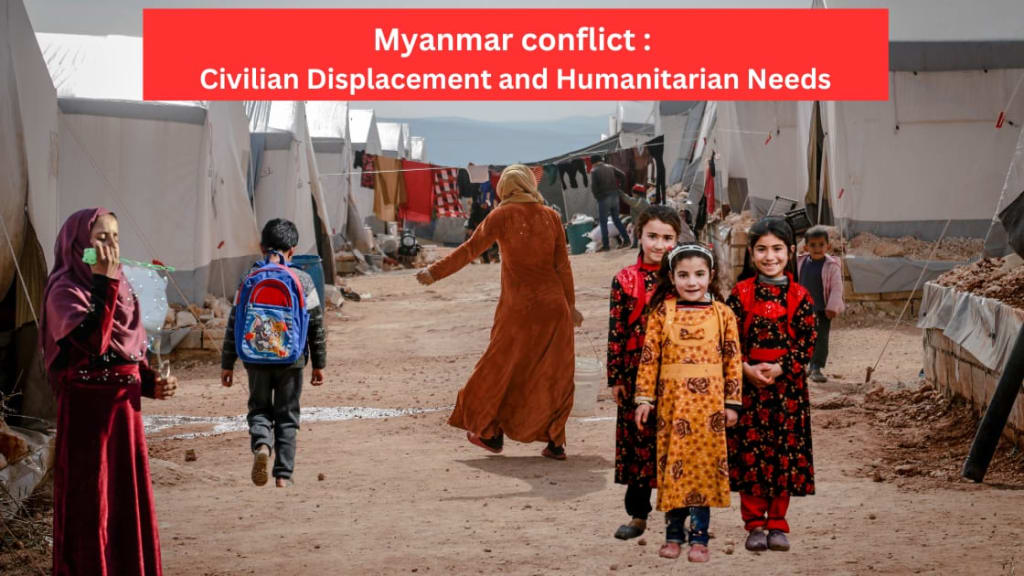
The military’s violent response to resistance has resulted in the displacement of millions of people. Internally displaced persons (IDPs) are forced to live in temporary shelters, often without access to clean water, healthcare, or education. Reports from the United Nations estimate that over 1.6 million people are currently displaced within Myanmar, while hundreds of thousands have sought refuge in neighboring countries, including Thailand, India, and Bangladesh.
2.1. Living Conditions in Displacement Camps
Camps for internally displaced people (IDP) and refugees across Myanmar are severely overcrowded and lack basic facilities. Food security is a major issue, with reports suggesting that IDPs receive food that only meets about half of their daily caloric needs. Healthcare is minimal, with limited medical supplies and insufficient trained personnel. Additionally, IDPs are highly vulnerable to disease outbreaks, including COVID-19, as they lack access to vaccinations and necessary sanitation measures.
2.2. Gender-Based Violence
In the conflict-affected areas, women and girls face a heightened risk of gender-based violence, including sexual violence and exploitation. Many women in IDP camps report experiencing sexual harassment, while access to support services is limited or nonexistent. With gender-based violence used as a tactic of intimidation and control, the long-term effects on Myanmar’s female population are devastating.
2.3. Children and Education
The conflict has also significantly impacted children. Schools have been destroyed or repurposed by military forces, leaving many children without access to formal education. With limited resources, displaced families are forced to send children to work, which exposes them to unsafe conditions and exploitation. Children in IDP camps face malnutrition, illness, and trauma from witnessing violent acts, further impacting their development and mental health.
3. Humanitarian Needs for Myanmar Conflict
The humanitarian needs in Myanmar are vast, spanning food security, healthcare, sanitation, and protection from violence. Aid agencies report that over 17.6 million people in Myanmar are in need of assistance, but the country’s volatile security environment and the government’s restriction of humanitarian access make it difficult to provide sufficient aid. Additionally, the military government has obstructed foreign assistance, fearing that international aid could strengthen opposition forces.
3.1. Food and Nutrition
Many regions in Myanmar, especially those affected by displacement, face acute food insecurity. The World Food Programme (WFP) has warned that nearly 6.3 million people in Myanmar are food insecure, and ongoing conflict and displacement only worsen this situation. The military’s restriction on food imports, combined with the COVID-19 pandemic’s lingering effects, further exacerbates this crisis, requiring immediate international support to prevent widespread famine.
3.2. Healthcare and Medical Supplies
Access to healthcare is highly restricted, especially in regions controlled by ethnic groups or near active conflict zones. International organizations have reported a severe shortage of basic medicines, including antibiotics and vaccines. The healthcare sector itself has been targeted by the military, with clinics and hospitals destroyed and healthcare workers attacked or arrested. This creates a dangerous environment for both patients and medical professionals.
3.3. Shelter and Infrastructure
IDPs and refugees often rely on temporary shelters, which are not adequate for long-term living conditions. As the Myanmar conflict shows no signs of abating, these populations face heightened risks from monsoon rains, landslides, and other natural hazards. There is a significant need for durable housing solutions, especially in areas with harsh weather conditions that worsen the already precarious situation of IDPs.
4. Ongoing Political Violence and Civilian Suffering for Myanmar Conflict
Political violence is at the heart of Myanmar’s crisis, as the junta intensifies its crackdown on civilian resistance, targeting peaceful protesters, journalists, and activists. Reports of arbitrary arrests, torture, and extrajudicial killings are widespread, with rights groups documenting a range of human rights abuses committed by security forces.
4.1. Targeted Attacks and Mass Killings
The military’s tactics include targeting civilians in resistance regions through aerial bombings, indiscriminate shelling, and village burnings, often displacing entire communities. One of the worst atrocities occurred in Sagaing Region, where numerous civilians, including children, were killed in military airstrikes. Such attacks continue to be reported, with civilians facing indiscriminate violence from both the military and rival ethnic groups.
4.2. Recruitment and Forced Labor for Myanmar Conflict
The military has also resorted to forced recruitment, compelling civilians, including children, to fight or provide labor. There are documented cases of forced labor involving children and teenagers, often subjected to grueling conditions and exposed to violence. These actions violate international human rights standards and illustrate the widespread abuse of power by the junta.
5. International Response and Limitations for Myanmar Conflict
The international community has reacted with condemnation, sanctions, and attempts to engage diplomatically with Myanmar’s leaders, but tangible progress remains limited. The United Nations, Western countries, and ASEAN have imposed sanctions and called for accountability, but their impact is limited by Myanmar’s alliances and the military’s disregard for international opinion.
5.1. Sanctions and Economic Pressures
Sanctions imposed by the United States, European Union, and other countries have targeted high-ranking military officials and key sectors of Myanmar’s economy, such as oil, gas, and mining. These sanctions aim to cut off funding sources for the junta, but Myanmar’s ties with countries like China and Russia allow it to circumvent some of these measures. While sanctions impact Myanmar’s economy, they also risk worsening the situation for civilians, who face the economic consequences of international isolation.
5.2. Humanitarian Assistance and Access Challenges
The United Nations and various NGOs are working to provide humanitarian aid, but the junta’s restrictions severely limit access to conflict zones and IDP camps. Countries like the United States and the United Kingdom have pledged financial assistance, but the practical challenges of delivering aid remain significant. International aid organizations continue to push for unrestricted humanitarian access, but progress is slow due to Myanmar’s tight security environment and distrust of foreign entities.
5.3. Diplomatic Efforts and ASEAN’s Role for Myanmar Conflict
The Association of Southeast Asian Nations (ASEAN) has tried to mediate the crisis, advocating for a five-point consensus to cease violence and initiate dialogue. However, ASEAN’s diplomatic efforts have not yet achieved significant progress, with the Myanmar junta resisting pressure to implement these points. The recent chair of ASEAN, Indonesia, has attempted to foster communication between Myanmar and other member states, but without substantial results.
6. Looking Ahead: Paths to Resolution and Global Responsibility for Myanmar Conflict
The crisis in Myanmar presents no easy solutions, and the path to peace remains uncertain. Some argue that increased sanctions, international pressure, and more robust ASEAN involvement could compel the junta to pursue peace. However, as violence persists, more immediate steps are needed to protect civilians and address the humanitarian crisis.
6.1. Supporting Civilian Protection and Aid
A coordinated international response is needed to ensure that aid reaches those in need despite military restrictions. The United Nations and regional powers could implement mechanisms that bypass the junta’s authority, directly assisting local organizations and EAOs that have taken on humanitarian responsibilities in some regions. Increased international support for shelters, medical supplies, and food aid could mitigate the immediate suffering of displaced populations.
6.2. Strengthening International Accountability
Efforts to hold Myanmar’s military leaders accountable for human rights abuses are critical for justice and future deterrence. The International Criminal Court (ICC) could play a role, though Myanmar’s non-membership complicates jurisdiction. However, mechanisms like universal jurisdiction could allow other countries to prosecute Myanmar’s military leaders for crimes against humanity.
6.3. Pushing for a Political Solution
While dialogue between the junta and opposition groups currently appears improbable, continued diplomatic pressure from ASEAN, with support from the UN and other international stakeholders, could eventually lead to meaningful discussions. The international community’s responsibility lies in supporting a peaceful resolution that includes ethnic minorities and opposition voices, ensuring Myanmar’s future as a democratic and inclusive state.
Conclusion
The conflict in Myanmar has created one of the world’s most pressing humanitarian crises, with displaced civilians facing life-threatening challenges and the international community struggling to respond effectively. Political violence, economic hardship, and human rights abuses continue to devastate the population, especially vulnerable groups such as women and children. A multifaceted approach that includes immediate humanitarian support, diplomatic pressure, sanctions, and long-term accountability measures is crucial to alleviating the suffering of Myanmar’s people and working toward a peaceful resolution. The road ahead is fraught with challenges, but sustained international focus and action can make a difference in addressing the urgent needs of Myanmar’s displaced and oppressed populations.
About the Creator
The Blue Ridge Stalker
Tom had left the Ford down the way, its spark plugs finally exhausted and no mechanics for a dozen miles back through the foothills to Strossburg. No matter, he had worn his boots—almost as if he planned for this to happen. The puzzle he sought to solve emanated from the woods clinging to the slopes above; the valley behind held no mysteries.
By Stephen A. Roddewig6 days ago in Fiction




Comments
There are no comments for this story
Be the first to respond and start the conversation.