
My First Tattoo Was a Mistake. My Sixth One Taught Me What San Antonio Ink Is Really About.
My First Tattoo Was a Mistake

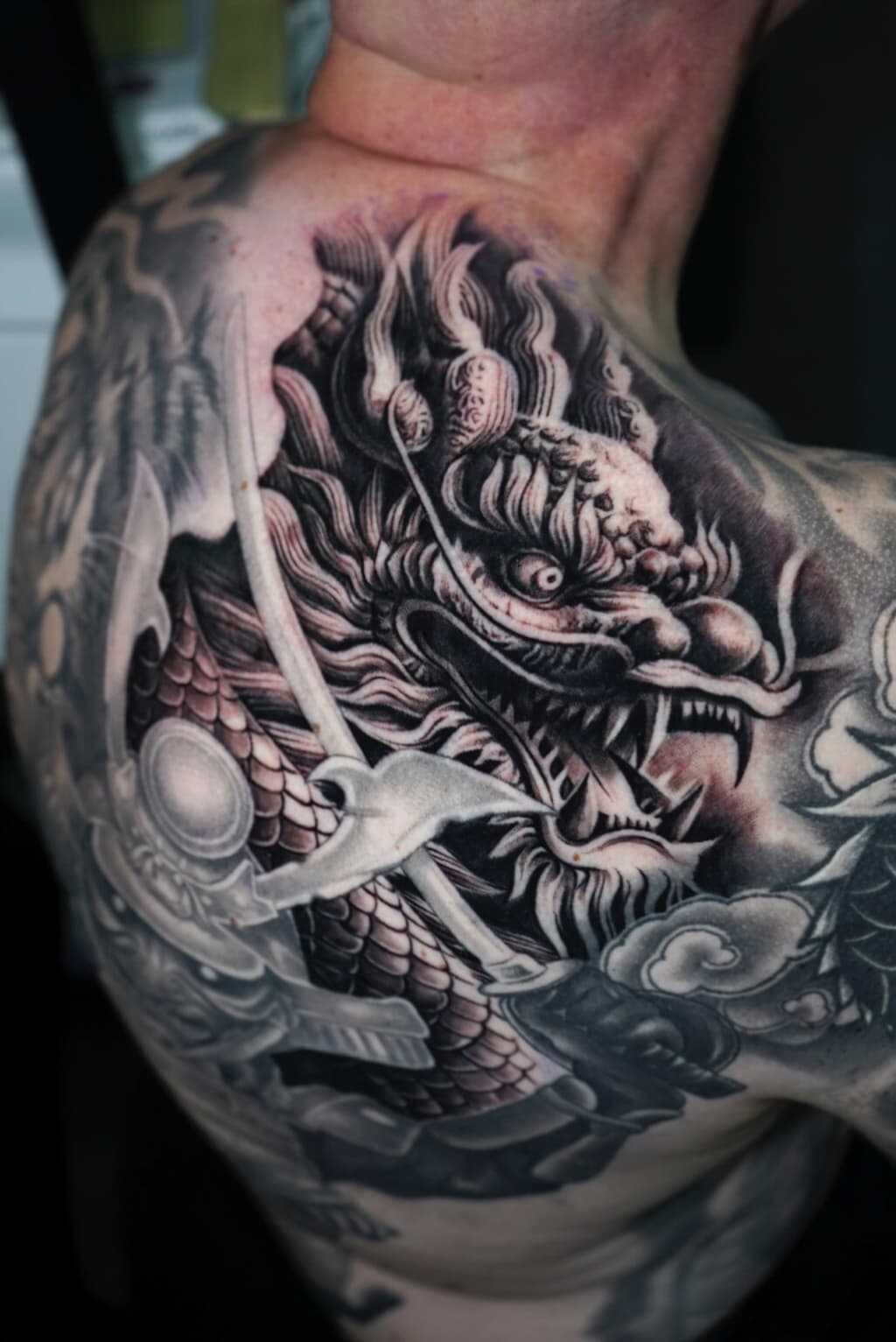
I got my first tattoo at nineteen. A tribal armband. In 2009. On Spring Break.
Yeah. That one.
It was the kind of decision you make after two margaritas on the River Walk, surrounded by friends who swear it looks sick. The artist didn't ask questions. I didn't have a reference image. Thirty minutes later I had a permanent souvenir of the worst aesthetic judgment of my life.
I've lived in San Antonio for almost eight years now, and I've spent a good chunk of that time thinking about ink—not regretting it, but studying it. Watching the city's tattoo culture shift, mature, and develop a personality that I don't think most outsiders expect. Because when people think Texas tattoos, they picture cowboys with barbed wire biceps and Lone Star flags. The reality? San Antonio's tattoo scene is one of the most diverse and technically skilled in the Southwest, and it took me six tattoos across four studios to figure out why.
The style everyone asks for first
American Traditional dominates here. Bold outlines, saturated color, limited shading—it's the style that built tattoo culture in this country, and San Antonio holds onto it hard. Walk into most shops on St. Mary's Strip or down in Southtown and you'll find at least two artists whose portfolios are stacked with eagles, roses, daggers, and pin-up girls.
I respect it. I also walked past it for years.
My second tattoo—a small compass on my wrist—was Traditional, and the artist nailed the linework. Clean, thick, confident. Five years later it still looks almost exactly the way it did on day one. That's the thing about this style: when it's done right, it ages better than almost anything else on your skin. The ink doesn't bleed outward the way fine detail work sometimes does. The bold lines hold their structure.
But Traditional wasn't what pulled me deeper into San Antonio's tattoo world.
Black and grey changed my mind
I didn't understand black and grey realism until I sat across from a guy at a barbecue in Stone Oak who had a portrait of his late grandmother covering most of his forearm. It looked like a photograph someone had pressed into his skin. The shading was smooth enough that I couldn't see where one tone ended and another began.
"Where'd you get that done?" I asked.
"Right here in SA. An artist from Vietnam—been winning awards all over the world."
That conversation sent me down a rabbit hole. I started following local artists on Instagram, attending the annual tattoo conventions that roll through town, and reading about techniques I'd never considered. Black and grey work requires a completely different skill set than Traditional. The artist builds depth through thousands of tiny tonal shifts, layering grey wash over grey wash until a flat surface looks three-dimensional.
San Antonio has an unusual concentration of artists who specialize in this. Part of it is the city's international population—artists from Southeast Asia, Latin America, and Eastern Europe have set up studios here, each bringing techniques rooted in different artistic traditions. The result is a black and grey scene that doesn't look like what you'd find in LA or Miami.
The style that caught me off guard
Two years ago, a friend dragged me to a convention at the Freeman Coliseum. I went expecting to watch some competitions and maybe grab a print. Instead, I ended up walking into a tattoo shop in San Antonio TX on Callaghan Road the following week, sitting for a consultation I hadn't planned on.
What got me was neo-traditional work. I'd always lumped it in with American Traditional—same bold lines, same old-school subject matter. Wrong. Neo-traditional takes that structural foundation and blows the color palette wide open. Richer gradients, more illustrative detail, subjects that go way beyond anchors and skulls. I saw a piece at the convention that combined a realistic hummingbird with art nouveau framing, and the level of precision in the color transitions was something I'd never seen in person.
My fifth tattoo ended up being a neo-traditional piece on my upper arm. A desert marigold—relevant if you know anything about San Antonio's connection to Día de los Muertos celebrations. The whole session took about four hours, and watching the artist build color layer by layer felt more like watching a painting come together than a tattoo.
Fine line is everywhere now, and I get why
If you've scrolled through any San Antonio tattoo hashtag recently, you've noticed the fine line explosion. Delicate single-needle work, minimal shading, tiny designs that sit on wrists and collarbones and behind ears.
Three years ago this style was almost impossible to find locally. Now it feels like every other portfolio features it. Part of that shift is demand—a lot of first-timers want something subtle, something that doesn't scream "I HAVE A TATTOO" across a conference room. Fine line fits that need.
But here's what most people don't realize: fine line is technically brutal. The margin for error with a single needle is almost zero. One shaky hand and a thin line becomes a thick blob. I talked to an artist in the Pearl District who said she turns away more fine line requests than she accepts because clients want placements that won't hold up—inner fingers, feet, areas with a lot of skin movement where those hair-thin lines will blur within a year or two.
My advice, after getting one fine line piece on my inner forearm that still looks sharp after fourteen months: placement matters more than design. Ask your artist where it'll age best, not where it'll look cutest on Instagram.
What San Antonio does differently
I've gotten tattooed in Austin, Houston, and once in Brooklyn. Every city has talent, obviously. But San Antonio has something the others don't: a cultural collision that shows up in the ink.
The city's Mexican-American heritage runs deep, and you see it everywhere in the tattoo scene. Chicano-style lettering. Religious iconography—La Virgen de Guadalupe, sacred hearts, praying hands rendered with a level of reverence that goes beyond aesthetics. Sugar skull work that actually understands the tradition it references instead of just copying a Pinterest board.
Then you've got the military influence. San Antonio is home to Joint Base San Antonio, one of the largest military installations in the country. That means a constant stream of young service members getting their first tattoos, plus veterans coming back for memorial pieces. I've watched an artist spend six hours on a piece honoring a soldier's fallen squad member, and the silence in the studio during that session was unlike anything I've experienced.
And lately, there's been a wave of international artists setting up shop here—drawn by lower overhead than coastal cities and a client base that's hungry for styles you can't find on every corner. Realism artists from Asia. Geometric specialists from South America. Blackwork experts from Europe. It's turned San Antonio into something of a quiet destination city for people willing to look beyond the obvious.
What I wish I'd known before my first one
Six tattoos in, here's what I'd tell the nineteen-year-old version of me standing on the River Walk with a margarita and bad judgment:
Don't pick a style because it's trending. Pick it because you've stared at examples for months and still aren't bored. Traditional and black and grey will outlast every micro-trend because they're built on foundations that account for how skin actually ages.
Find the artist before the shop. A studio's reputation matters, but the individual artist's portfolio is everything. Zoom in on healed photos, not just fresh work. Fresh tattoos look incredible. Healed tattoos tell the truth.
Budget more than you think. Most good artists in San Antonio charge between $80 and $200 an hour. My neo-traditional piece ran about $600 total for four hours of work plus the consultation. I've never regretted a dollar of it. I have deeply regretted the $120 tribal armband.
And talk to your artist. Not just about the design—about placement, about how your skin takes ink, about what'll happen in five years when that fine line starts softening. The best sessions I've had started with a thirty-minute conversation before anyone picked up a machine.
The tribal armband is still there
I haven't covered it up yet. Part laziness, part sentiment. It reminds me that taste evolves, that San Antonio's tattoo culture evolved alongside mine, and that the gap between a bad tattoo and a great one often comes down to caring enough to slow down and choose well.
Somewhere on Callaghan Road, an artist is building a piece right now that'll be on someone's skin for sixty years. Somewhere on St. Mary's, a first-timer is scrolling through flash sheets trying to pick something that feels right. And somewhere along the River Walk, a kid with a margarita is about to make a decision they'll think about every time they look at their arm.
I hope they choose better than I did. But honestly? Even the bad ones make for good stories.
About the Creator
Hyper Inkers
Hyper Inkers is the Best tattoo shop in San Antonio, Texas.
Keep reading
More stories from Hyper Inkers and writers in Journal and other communities.
Is It Okay to Ice a New Tattoo? Your Ultimate Guide to Safe Healing and Aftercare
Yes, it is generally okay to ice a new tattoo, and it can be highly effective to manage the immediate swelling and pain. However, the key is to do it correctly to avoid damaging your new ink and the sensitive skin around it. Applying a cold compress can provide significant relief during the initial uncomfortable stages of the healing process. This guide will provide essential information about the right way to ice your tattoo, including the benefits, potential risks to avoid, and step-by-step instructions for safe application. Following these tips can help promote beautiful healing and reduce the risk of complications.
By Hyper Inkers2 months ago in Styled
Think for Me
"How do you calculate the circumference of a circle? Submit your answer when ready." [Pause] "Excellent! Every student was able to call up the answer electronically very quickly. If I, as a robot had feelings, I would express pride. You may break for lunch. Return to this cyber room in 45 minutes."
By Julie Lacksonen2 days ago in Humans


Comments
There are no comments for this story
Be the first to respond and start the conversation.