
Mount Sumbing: An Imposing Active Stratovolcano in Central Java, Indonesia
Mount Sumbing, Central Java, Indonesia
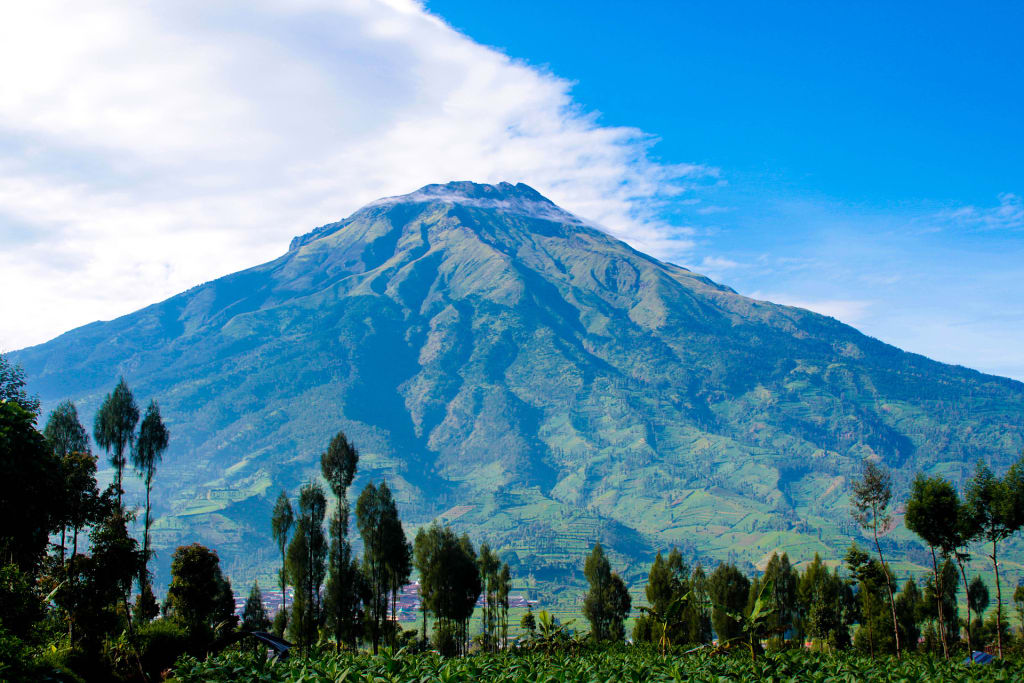
Mount Sumbing, an imposing active stratovolcano in Central Java, Indonesia, stands tall at 3,371 meters (11,059 feet) above sea level, making it the second-highest mountain in Central Java and the third-highest volcano in Indonesia. While its last major eruption was recorded in 1730, the presence of active fumaroles within its expansive crater serves as a reminder of its volcanic nature. For adventurous souls, a trek to its summit promises an unforgettable experience, offering breathtaking panoramic views, a glimpse into a unique volcanic landscape, and the tranquility of Java's highlands.
Conquering the Summit: Hiking Mount Sumbing
Hiking Mount Sumbing is a challenging yet highly rewarding endeavor. Several routes lead to the summit, with the most popular being the Garung route, starting from Garung village on the Kledung Pass. This route typically takes 6-8 hours for the ascent and 4-5 hours for the descent, making it a demanding day hike or a comfortable overnight camping trip.
Another increasingly popular route is the Nepal Van Java route from Kaliangkrik, Magelang. This trail is known for its picturesque journey through charming local villages, lush pine forests, and stunning volcanic landscapes, offering a perfect blend of natural beauty and cultural immersion.
Difficulty Level: Mount Sumbing is generally considered to have a moderate difficulty level. While suitable for experienced hikers, it can be quite challenging due to its steepness, long trails, and elevation gain. Proper physical fitness and preparation are essential. Some technical sections might be encountered, particularly if aiming for the true summit beyond the crater rim.
Key Features of the Hike:
Diverse Landscapes: The trails traverse through various terrains, including dense forests, open grasslands, and rocky sections.
Crater Exploration: Upon reaching the crater rim, hikers are rewarded with views of an 800m wide crater, which often features white rocks, steaming sulfur gases, bubbling water, and mud pools. Some tours offer the option to explore the crater floor, but caution is advised due to the fumaroles.
Savanna and Sand Sea: Not far from the crater, hikers can discover a beautiful savanna and a small "sea of sand," adding to the varied scenery.
Spectacular Sunrise: Many hikers aim for a pre-dawn ascent to witness the magnificent sunrise from the summit. On clear days, the golden light illuminates the surrounding valleys and distant peaks like Mount Sindoro, Mount Merapi, and Mount Merbabu.
Panoramic Vistas: From the summit, the views are truly expansive, encompassing not only other volcanoes but also the Progo, Serayu, and Bogowonto river basins flowing towards the Indian Ocean.
Essential Gear and Preparation:
For a safe and enjoyable trek, hikers should prepare adequately:
Footwear: Sturdy hiking shoes with good ankle support are crucial.
Clothing: Layers are recommended due to changing temperatures. Bring warm clothes, a windproof jacket, and rain gear (poncho/rain jacket/pants).
Lighting: A headlamp or flashlight is essential for night hikes.
Hydration and Nutrition: Carry sufficient food (snacks like chocolate, biscuits, bread) and plenty of water (at least 2-3 liters per person, as water sources on the mountain are limited).
First-Aid: A basic first-aid kit is always advisable.
Navigation: While guides are recommended, having a map or GPS can be helpful.
Trekking Poles: Hiking sticks or trekking poles can provide stability and reduce strain on descents.
Sleeping Bag: For overnight trips, a sleeping bag is necessary. Some tour operators provide standard sleeping bags, but a sub-zero one might be needed for colder nights.
Personal Items: Sunscreen, a hat, a camera, and cash are also important.
Important Tips:
Hire a Guide: Especially for those unfamiliar with the terrain or for overnight trips, hiring an experienced local guide is highly recommended for safety and navigation. Porters are also available to carry equipment.
Start Early: An early morning start (often around midnight for sunrise hikes) is crucial to avoid the heat and to catch the sunrise.
Pace Yourself: The ascent is steep, so maintain a steady pace and take regular breaks.
Check Weather: Be aware of weather conditions, as rain and cold can significantly impact the hike.
Don't Hike Alone: It's always safer to hike with a group.
Inform Others: Drop a line to someone about your plans..
Connectivity: Be aware that phone and internet coverage on the mountain can be limited due to its remote location.
Beyond the Hike: Nearby Attractions and Experiences
The Mount Sumbing region offers more than just trekking. Its proximity to other natural wonders and cultural sites makes it an ideal base for exploring Central Java:
Mount Sindoro: Sumbing's "twin peak," Mount Sindoro (3,150m), is often climbed in conjunction with Sumbing for those seeking a double challenge. It also offers magnificent panoramic views.
Dieng Plateau: A high-altitude volcanic plateau renowned for its ancient Hindu temples (like Arjuna Temple), stunning geothermal features (steaming vents, colorful sulfur springs), and serene crater lakes (like Menjer Lake).
Sikidang Crater: Located within the Dieng Plateau, this active volcanic crater is known for its bubbling mud pools and hot springs.
Borobudur Temple: A UNESCO World Heritage Site and one of the world's largest Buddhist temples, offering an incredible historical and architectural experience. It's typically a 2-3 hour drive from the Mount Sumbing area.
Mount Merapi and Mount Merbabu: Other prominent volcanoes in Central Java, often visible from Sumbing's summit and offering their own unique trekking experiences.
Local Villages: Immerse yourself in the local culture by visiting traditional villages, particularly the charming "Nepal Van Java" village at the foot of Sumbing.
White Water Rafting: The Elo River provides opportunities for exhilarating white water rafting.
Tea Plantations: The region is also known for its tea plantations, offering scenic views and a chance to learn about tea production.
Accommodation and Food
Accommodation options around Mount Sumbing range from budget-friendly guesthouses and homestays in local villages (like Garung or Kaliangkrik) to more comfortable hotels in nearby towns such as Magelang or Wonosobo. Some tour packages include camping at the summit or at designated campsites, offering a unique overnight experience under the stars.
Local cuisine in the Mount Sumbing area is generally delicious and affordable, with many traditional Indonesian dishes available at local restaurants. For organized tours, meals are often included in the package.
About the Creator
Keep reading
More stories from Restu Marlani and writers in Journal and other communities.
Discover the Wild Heart of Sumatra: A Journey to Way Kambas National Park
Nestled in the lowlands of Lampung province, southern Sumatra, Way Kambas National Park stands as a vital sanctuary for some of Indonesia's most endangered species. Far more than just a tourist attraction, Way Kambas is a testament to conservation efforts, offering a unique opportunity to witness majestic creatures in their natural or semi-natural habitats and learn about the critical work being done to protect them.
By Restu Marlani9 months ago in Journal
Author’s Advice
If you would’ve asked me 20 years ago did I know I’d become a writer and an author, I would’ve said “nope, ain’t happening”. As fate would have it I did become an author and I can honestly say I’m loving it so far. It really does feel good to be a writer. I’ve learned a lot on this journey and I feel like with even me being as new to this world as I am, there’s some wisdom I need to share with every other aspiring author.
By Joe Patterson3 days ago in Journal




Comments
There are no comments for this story
Be the first to respond and start the conversation.