
Mobile App Performance Optimization for Real-World Usage
A first-person reflection on why app performance only matters when life is already in motion

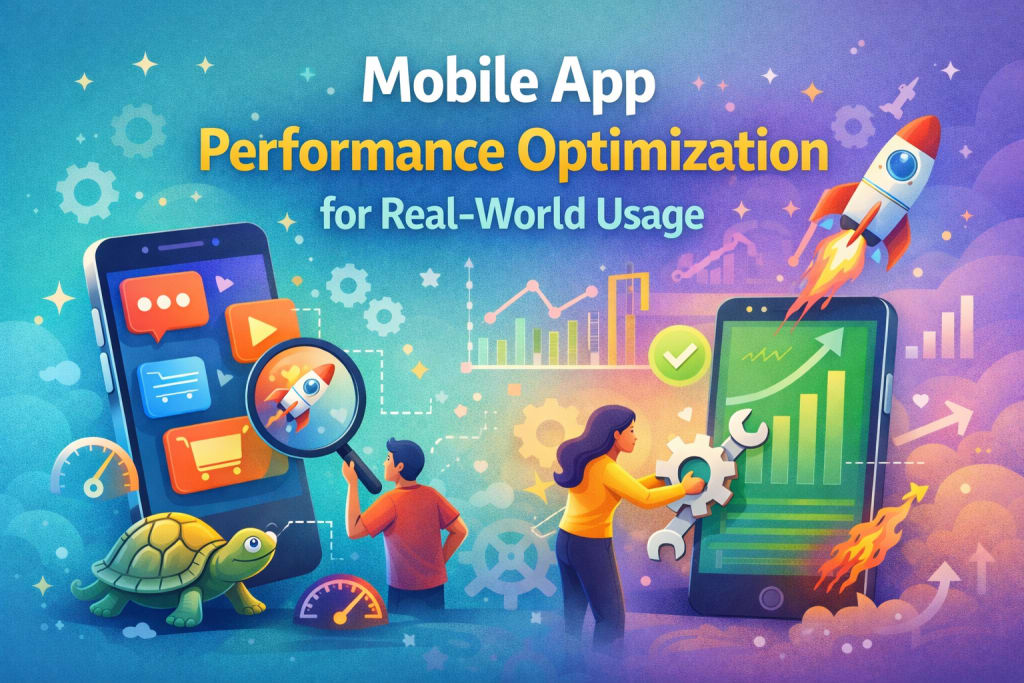
I noticed the problem while waiting for an elevator that refused to arrive. My phone buzzed with a notification, and I opened the app without thinking. The screen responded, but not cleanly. A half-second pause. A faint hitch in the animation. It wasn’t broken, yet my thumb hovered, unsure whether to tap again.
That hesitation stayed with me longer than the wait for the elevator. It reminded me that performance is not measured in charts when people are living their lives. It is measured in trust, built or lost in moments that feel almost too small to name.
Performance Lives Outside the Office
For years, I tested apps in quiet rooms with stable connections and full batteries. Everything behaved the way it was supposed to. I could convince myself the work was done.
Then real usage stepped in. Phones left desks and entered pockets, cars, kitchens, and crowded streets. Performance stopped being a controlled outcome and started behaving like a living thing, changing with context.
That shift forced me to accept something uncomfortable. An app that performs well only under ideal conditions is not truly fast. It is simply unchallenged.
Weight of Everyday Conditions
Real-world usage adds weight to everything. Networks fluctuate without warning. Batteries dip into power-saving modes. Background activity competes for attention in ways no simulator fully captures.
I began noticing how apps responded late in the day, when devices were tired and users were less patient. Small delays felt larger. Smooth animations felt unnecessary if they cost responsiveness.
Performance, I realized, is experienced at the edges. At low signal. At low power. At the end of a long day.
When Optimization Becomes Invisible
The best performance work disappears into the background. Nobody praises an app for not stuttering while they’re walking. They simply keep using it.
I’ve learned to listen for silence. When support tickets slow down. When reviews stop mentioning slowness. When nobody notices anything at all.
That silence is not absence. It is success.
Moment I Stopped Trusting Benchmarks Alone
There was a point when I realized benchmarks were comforting me more than helping users. Numbers looked good. Graphs stayed flat. Still, complaints trickled in.
One evening, I used the app the way users did. On cellular. With notifications firing. With music playing in the background. Performance shifted immediately.
That was the night I stopped believing that optimization ends when tools say so. It ends when lived experience feels right.
Real Users Do Not Wait Politely
People do not pause their lives for apps. They tap once, maybe twice, then move on. Performance that requires patience feels broken even when it technically works.
I think about this when optimizing flows now. Not how fast they run in isolation, but how forgiving they feel when interrupted. When someone switches apps mid-action. When they return hours later expecting continuity.
Optimization is as much about forgiveness as it is about speed.
Cost of Over-Preparation
There was a time when I believed doing more in advance always helped. Preload aggressively. Cache deeply. Prepare for every possible path.
In the real world, that eagerness backfires. Devices pay for work users never needed. Batteries drain. Memory fills. Performance suffers elsewhere.
Learning when not to prepare became as important as knowing how to prepare. Restraint began to feel like a form of respect.
Performance Changes How People Feel About Reliability
I’ve watched users forgive missing features if the app feels steady. I’ve watched them abandon feature-rich apps that hesitate at the wrong moment.
Reliability is emotional. It lives in whether someone reaches for an app without thinking. Performance optimization feeds that emotion quietly, over time.
Every smooth interaction deposits a little confidence. Every hitch withdraws it.
Why Context Matters More Than Raw Speed
Raw speed looks impressive in demos. Contextual speed survives real usage. An app that adapts to changing conditions feels alive in the right way.
I started optimizing not for peak performance, but for consistency. For predictability. For the feeling that nothing unexpected would happen when attention was already stretched thin.
That mindset changed priorities more than any tool ever did.
Carrying These Lessons Across Teams and Cities
Working with different teams and environments, including projects tied to mobile app development Denver expectations, showed me how universal these problems are. Devices change. Users change. Context always wins.
No region escapes real-world conditions. Performance work that ignores them eventually gets exposed.
I stopped asking whether something was fast enough. I started asking whether it still felt good when everything else went wrong.
Quiet Discipline of Ongoing Optimization
Optimization is never finished. It drifts as devices evolve and usage patterns shift. What felt light last year may feel heavy today.
I revisit performance the way I revisit old neighborhoods. Familiar, but changed. Each pass reveals something new.
That ongoing attention keeps apps honest.
Ending Where Real Usage Begins
That elevator finally arrived. I stepped inside, phone back in my pocket, moment already fading. Still, it shaped how I think about performance every day.
Real-world usage is not an edge case. It is the main case. Everything else is preparation.
When performance holds there, people never talk about it. They just keep moving.
About the Creator
Keep reading
More stories from Samantha Blake and writers in Journal and other communities.
How Zero Trust Security Is Changing Corporate IT?
For decades, corporate IT operated on a simple assumption: once inside the network, you were trusted. Firewalls guarded the perimeter. Virtual private networks extended that perimeter to remote employees. Security teams focused on keeping intruders out.
By Samantha Blake5 days ago in Journal


Comments
There are no comments for this story
Be the first to respond and start the conversation.