
Michael Mollod and the Engineering Mindset Behind Scalable Robotics Systems
How Practical Design Choices Shape Long-Lasting Automation

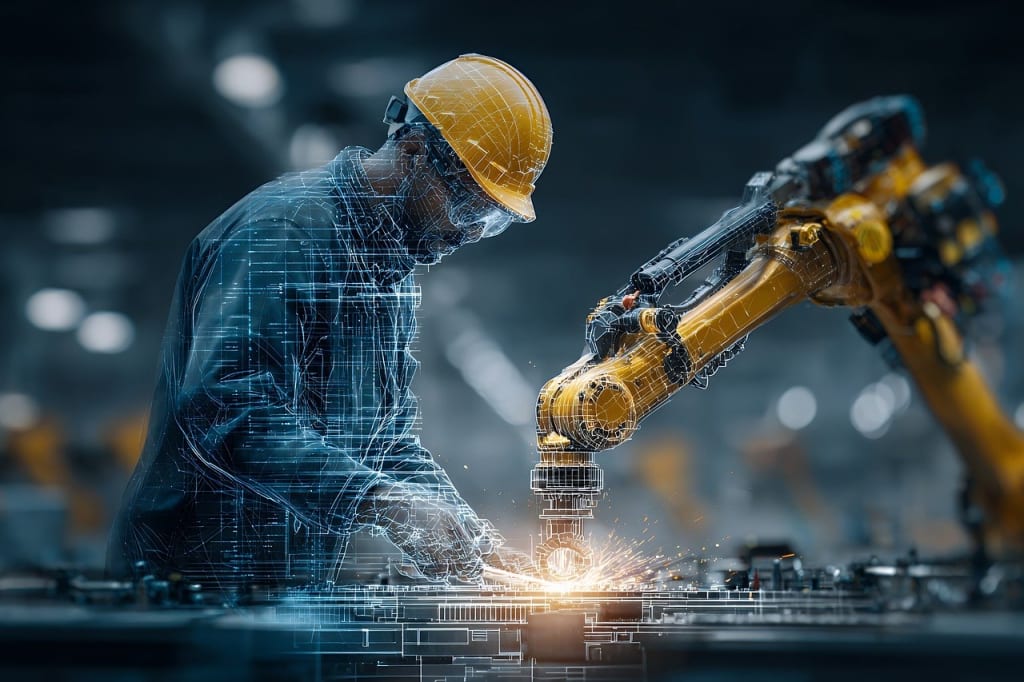
How Practical Design Choices Shape Long-Lasting Automation
Robotics Built for Dynamic Environments
Modern robotics operates in environments that are rarely predictable. Automation systems now function in warehouses with shifting layouts, factories with changing production demands, and shared spaces where humans and machines work side by side. These conditions require robots to adapt continuously rather than follow fixed routines.
Precision alone is no longer sufficient. Reliability, adaptability, and safety have become essential measures of performance. Robots must continue operating effectively even when conditions differ from initial assumptions. The engineering philosophy associated with Michael Mollod reflects this reality by emphasizing systems designed to remain dependable under real-world complexity.
Rather than optimizing solely for ideal conditions, modern robotics focuses on performance across a wide range of scenarios. This shift defines how durable automation is engineered today.
Designing Around Real-World Constraints
Every deployment environment introduces unavoidable constraints. Mechanical wear, sensor inaccuracies, temperature fluctuations, and unpredictable human behavior all influence robotic performance. Effective engineering begins by acknowledging these limitations instead of attempting to design around them.
Building for constraint means embedding tolerance into every layer of the system. Mechanical components must endure long-term fatigue. Sensors must operate reliably despite noise or interference. Software must detect anomalies early and respond appropriately.
This approach prioritizes long-term stability over short-term benchmarks. Systems designed with constraint in mind continue delivering value long after initial installation, reducing maintenance issues and unexpected downtime.
Systems Thinking as a Foundation
Robotics is not a single discipline. It is a convergence of mechanical engineering, electrical systems, perception, control software, and human interfaces. Optimizing one component in isolation often leads to failures during integration or deployment.
Mechanical design affects how sensors collect data and how control algorithms respond under load. Software architecture determines how systems recover from faults and scale across deployments. When these elements are developed together, systems become more resilient and easier to maintain.
A systems-level perspective has been central to the engineering approach of Michael Mollod, where success is measured by how well all components function together under operational conditions rather than in controlled testing environments.
Turning Perception Into Reliable Action
Sensors give robots awareness, but awareness alone does not produce useful behavior. Cameras, force sensors, and mapping systems generate large volumes of data that must be processed and acted upon in real time.
Modern control architectures integrate multiple data streams into cohesive environmental models. These models allow robots to adjust speed, motion paths, and applied force dynamically as conditions change. This responsiveness is essential in environments where objects and people move unpredictably.
Equally important is consistency. Robots must adapt without introducing instability or unsafe behavior. Achieving this balance requires extensive testing, careful parameter tuning, and validation across many scenarios.
Engineering for Human Presence
As robots increasingly operate near people, safety can no longer rely solely on physical barriers. Safety must be embedded directly into system behavior.
Force-limited motion, rapid contact detection, and predictable movement patterns allow humans to anticipate robot actions. Clear feedback systems help operators understand system status without specialized training.
In collaborative environments, Michael Mollod has emphasized that trust must be engineered intentionally. Perception systems that track human proximity and control loops that respond instantly to unexpected interaction allow robots to integrate smoothly into human workflows.
Reliability as an Ongoing Design Outcome
Reliability is not achieved at deployment and forgotten. It is an ongoing outcome of thoughtful design and continuous monitoring. Traditional maintenance schedules often fail to reflect actual system health.
Modern robotic systems monitor indicators such as motor torque, vibration, and response timing. Small deviations often signal wear or misalignment before failures occur. Integrating this insight into system operation allows maintenance to be planned proactively.
This predictive approach reduces downtime, extends equipment lifespan, and provides operators with greater visibility into system condition. Reliability becomes a measurable and manageable attribute rather than a reactive concern.
Integrating Learning With Deterministic Control
Machine learning has expanded what robots can recognize and predict, but integrating learning-based models into real-time control introduces complexity. Control systems must meet strict timing requirements and behave predictably in all conditions.
Learning models introduce variability that must be carefully constrained. Effective integration requires architectural boundaries that preserve safety while allowing adaptation. Extensive validation is essential to ensure that learning enhances performance without compromising reliability.
Bridging advanced learning techniques with production-ready control highlights the difference between experimental success and operational stability. This balance has been a recurring focus in the work associated with Michael Mollod.
Automation That Supports Human Strengths
Automation delivers the most value when it complements human abilities rather than replacing them entirely. Robots excel at repetitive, hazardous, and precision-intensive tasks. Humans bring judgment, creativity, and contextual understanding.
Designing systems that respect this balance improves both productivity and workplace satisfaction. Human-centered automation reduces physical strain and allows people to focus on supervision, optimization, and problem solving.
As robotics becomes more embedded in daily operations, this philosophy plays a critical role in adoption and long-term success.
Collaboration Beyond Engineering
Successful robotics projects require collaboration beyond technical teams. Engineers, operators, and leadership must align on goals, constraints, and expectations. Clear communication ensures automation serves real operational needs rather than theoretical targets.
Experience across design, prototyping, and deployment reinforces the importance of integrating technology into existing workflows and organizational culture. Robotics must fit into how people work, not force people to adapt to machines.
Looking Toward the Future of Robotics
The future of robotics points toward increased autonomy, closer human collaboration, and deeper integration with digital systems. Adaptability, safety, and reliability will continue to define effective automation.
Through a career grounded in systems thinking and real-world deployment, Michael Mollod represents an engineering mindset focused on building robotics that scale responsibly. His approach demonstrates how thoughtful design transforms automation into durable infrastructure that supports long-term progress across industries.
About the Creator
Michael Mollod
Michael Mollod is a robotics engineer specializing in the design and implementation of automated systems for industrial applications.
Keep reading
More stories from Michael Mollod and writers in Journal and other communities.
Michael Mollod and the Engineering Principles Behind Scalable Robotics
Robotics Designed for Continuous Change Robotics engineering now operates in environments defined by constant motion and evolving demands. Automation systems are no longer isolated from people or shielded from variability. They function in warehouses with changing layouts, factories with shifting production goals, and research settings that intentionally introduce uncertainty. This reality requires a new standard for how robots are designed and evaluated.
By Michael Mollod2 months ago in Journal
How ChatGPT Ads Are Reshaping Digital Marketing Budgets
The digital advertising landscape is evolving faster than ever, and one of the biggest recent shifts is the introduction of advertising within AI-driven platforms. Among these, ChatGPT stands out due to its massive global user base and its role in everyday research, decision-making, and productivity. As brands explore new ways to reach audiences, ChatGPT advertising is emerging as a powerful channel that is beginning to reshape how marketing budgets are planned, allocated, and optimized.
By Md Mehedi Hasan Rifad6 days ago in Journal



Comments
There are no comments for this story
Be the first to respond and start the conversation.