
Mediation vs. Litigation for Breach of Contract in Denver
Lawyer


When a contract is broken, tensions can rise quickly. Business relationships, real estate deals, and service agreements can all turn contentious when one party believes the other has failed to hold up their end of the bargain. If you're facing a breach of contract situation in Colorado, you may wonder whether you should take the issue to court or try to resolve it another way.
Two of the most common paths are mediation and litigation. Each has advantages and disadvantages, depending on your specific goals, timeline, and the nature of the dispute. A knowledgeable Denver breach of contract lawyer can help you decide which route makes the most sense for your situation.
What Is Mediation?
Mediation is a form of alternative dispute resolution (ADR) where the parties meet with a neutral third party (the mediator) to try to reach a voluntary agreement. Unlike a judge or arbitrator, a mediator does not decide the outcome. Instead, the mediator helps guide a productive conversation to find common ground and resolve the conflict outside of court.
Mediation is a popular option in Colorado civil disputes, especially when the parties want to preserve their business relationship, avoid public litigation, or save time and legal costs.
Pros of Mediation
Cost-effective: Mediation is generally much less expensive than a full court trial. There are fewer filing fees, shorter timelines, and often reduced attorney hours.
Faster resolution: Some contract disputes can be resolved in a single mediation session, while litigation can take months or even years.
Confidentiality: Mediation proceedings are private, unlike court cases which become part of the public record. This is valuable if sensitive financial or business information is involved.
Control over outcome: Because the parties must agree on the resolution, there's more flexibility in crafting creative or customized solutions that a court may not be able to offer.
Cons of Mediation
Non-binding: If the parties don’t reach an agreement, the dispute remains unresolved, and you may have to move to litigation anyway.
Requires cooperation: Mediation works best when both sides are willing to negotiate in good faith. If the other party is uncooperative or acting in bad faith, it may be a waste of time.
May not set a legal precedent: If you’re seeking to clarify a legal issue or need a formal ruling, mediation may not provide the clarity or enforceability that a court decision offers.
What Is Litigation?
Litigation is the process of resolving disputes through the court system. In a breach of contract case, this typically involves filing a lawsuit, presenting evidence, and asking a judge (or sometimes a jury) to decide who is right and what compensation or remedy is appropriate.
A seasoned Denver breach of contract lawyer can help you navigate the procedural and legal complexities involved in taking a case to court.
Pros of Litigation
Enforceable outcomes: Court judgments are legally binding and enforceable through various legal mechanisms, including garnishment, liens, or writs of execution.
Clear legal precedent: If there’s a dispute over how the contract should be interpreted, litigation can clarify the law and set a precedent that could help prevent future disputes.
Compulsory discovery: The litigation process allows for formal discovery, which can compel the other side to produce documents or answer questions under oath. This can be critical in uncovering hidden facts.
Public accountability: In some cases, a public verdict may be desirable to demonstrate wrongdoing, especially in business or consumer matters.
Cons of Litigation
Expense: Litigation can be costly due to court fees, expert witnesses, depositions, and attorney time.
Lengthy process: Even straightforward cases can take many months or years to reach trial or settlement.
Public exposure: Court documents are generally public, which means sensitive business or personal information could be accessible to others.
Less control over outcome: A judge or jury will decide the case, which means you could receive a decision you don’t agree with—and you’ll have limited ability to negotiate the terms.
How a Denver Breach of Contract Lawyer Can Help
Whether you’re considering mediation or preparing for court, having an experienced Denver breach of contract lawyer on your side is essential. Your attorney can assess the strength of your case, help you understand your options, and represent your best interests throughout the process.
In many cases, your lawyer will first attempt to resolve the issue through negotiation or mediation. If that fails, they can file a lawsuit and guide you through each stage of litigation, from filing the complaint to presenting your case in court.
Your attorney can also help evaluate:
Whether the contract was legally enforceable
Whether a breach actually occurred
The appropriate damages or remedies
Potential defenses raised by the other party
Choosing the Right Approach for Your Case
There is no one-size-fits-all answer to resolving a breach of contract dispute. Some situations call for a firm legal stance in court, while others can be resolved more quickly and amicably through mediation. Here are a few factors to consider when deciding between mediation and litigation:
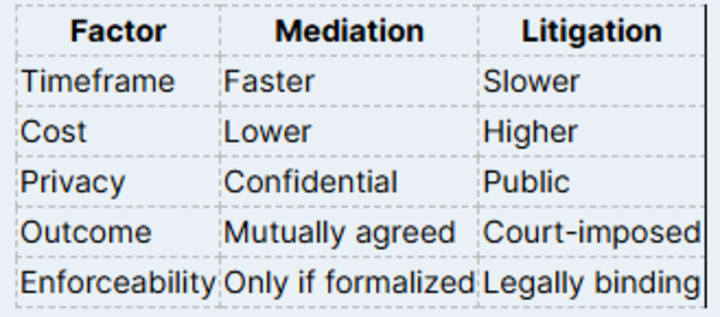
If you’re unsure which route to take, a consultation with a Denver breach of contract lawyer can give you the clarity and direction you need to confidently move forward.
Conclusion
A breach of contract can be frustrating, costly, and disruptive, especially if you're trying to protect a business or long-term investment. Whether you’re pursuing damages or defending against a claim, understanding the difference between mediation and litigation is a crucial first step.
By working with a knowledgeable Denver breach of contract lawyer, you can evaluate your options, protect your rights, and choose the strategy that best aligns with your goals, whether that means finding a private resolution through mediation or standing your ground in court.
About the Creator
Steven Ricky
I’m Steven Ricky, your go-to source for powerful, no-fluff insights. I break down complex topics into super clear, must-read blogs packed with gold—tips, trends, and truths you won’t find anywhere else. Follow for smart, next-level content.
Keep reading
More stories from Steven Ricky and writers in Journal and other communities.
Estate Planning for Blended Families in Las Vegas: Navigating Complex Dynamics
Blended families—those that include stepchildren, half-siblings, or second spouses—are increasingly common in Las Vegas and across the nation. While these families enrich lives, they also introduce unique estate planning challenges that can complicate family dynamics if not addressed proactively. As a Las Vegas estate planning lawyer, I've observed firsthand how careful planning can prevent future conflicts and protect each family member's interests. Here are key considerations and tips for navigating estate planning complexities unique to blended families in Las Vegas.
By Steven Ricky10 months ago in Journal
Author’s Advice
If you would’ve asked me 20 years ago did I know I’d become a writer and an author, I would’ve said “nope, ain’t happening”. As fate would have it I did become an author and I can honestly say I’m loving it so far. It really does feel good to be a writer. I’ve learned a lot on this journey and I feel like with even me being as new to this world as I am, there’s some wisdom I need to share with every other aspiring author.
By Joe Patterson3 days ago in Journal
Whey Protein Market Is Quietly Reshaping How the World Eats
The Quiet Revolution in Your Shaker Bottle There's something almost meditative about it. The gym is winding down, the last few weights clink back onto the rack, and someone reaches into their bag, unscrews a shaker bottle, and adds a scoop of powder. A few shakes later, a creamy drink appears — and their recovery has already begun.
By Harvey Specter2 days ago in Journal




Comments
There are no comments for this story
Be the first to respond and start the conversation.