
Mardi Himal Trek Altitude
What You Need to Know Before You Go


If you’re looking for a short, scenic, and thrilling trek in Nepal, the Mardi Himal trek should be on your list. What makes it even more exciting is the Mardi Himal trek altitude, which takes you all the way up to 4,500 meters in just a few days. This trail gives you up-close views of giant peaks like Machapuchare and Annapurna South, without the heavy crowds. But with high altitude comes thinner air, so understanding how it affects your body is just as important as packing your gear. The climb is real, the views are unreal — and knowing what to expect at higher altitudes will help you enjoy every step.
This trek is considered short and moderate compared to others like Everest Base Camp or Annapurna Circuit, but the elevation still climbs quickly in a few days. In this article, we’ll talk about the different altitudes along the trail, what to expect at higher levels, and how to prepare your body for the journey.
Starting Point – Kande or Dhampus (1,700–1,800 meters)
Most trekkers start the Mardi Himal Trek from a place called Kande, which sits at an altitude of around 1,700 meters. It’s only a 1 to 1.5-hour drive from Pokhara, so it’s easy to reach. Some people may also start from Dhampus, which is nearby and around the same height.
At this point, the air is still thick and warm, and there are no risks of altitude sickness. You’ll walk through forests and small villages, enjoying peaceful trails surrounded by green hills.
Forest Camp – 2,600 meters
After a full day of walking uphill from Kande, you reach Forest Camp, which lies at 2,600 meters. This is a quiet stop surrounded by tall trees and fresh air. It’s a good place to rest and adjust to the increasing altitude.
The temperature here starts to get cooler, especially in the mornings and evenings. Still, most people feel fine at this height. Your body is slowly getting used to the change in air pressure and oxygen levels.
Low Camp – 3,050 meters
Climbing up from Forest Camp, you reach Low Camp at 3,050 meters. This is where you start to feel the difference in altitude more clearly. The forest begins to thin out, and the views of Machapuchare (Fishtail Mountain) get closer and more beautiful.
At this height, some people might feel light headaches or tiredness, but it’s usually mild. Taking it slow, drinking water, and getting enough sleep helps a lot. If you feel fine, you’re ready to continue higher the next day.
High Camp – 3,580 meters
The trail from Low Camp to High Camp is not too long in distance, but the climb is steady. Once you reach High Camp at 3,580 meters, you’re now above the tree line. The landscape becomes more open with rocky paths and wide mountain views.
High Camp is where most trekkers spend the night before heading up to Mardi Himal Viewpoint or the base camp. At this point, your body is working harder to breathe, and it’s very important to rest well, eat properly, and keep yourself warm.
Some people may start feeling signs of altitude sickness here, like a headache, shortness of breath, or trouble sleeping. These are normal at this height, but you should watch your symptoms. If they get worse, it’s safer to rest or go down.
Mardi Himal Viewpoint and Base Camp – 4,200 to 4,500 meters
The highest point of the trek is either the Mardi Himal Viewpoint (4,200 meters) or the Mardi Himal Base Camp (4,500 meters). Some trekkers only go up to the viewpoint for sunrise, while others go all the way to the base camp for a closer look at the mountains.
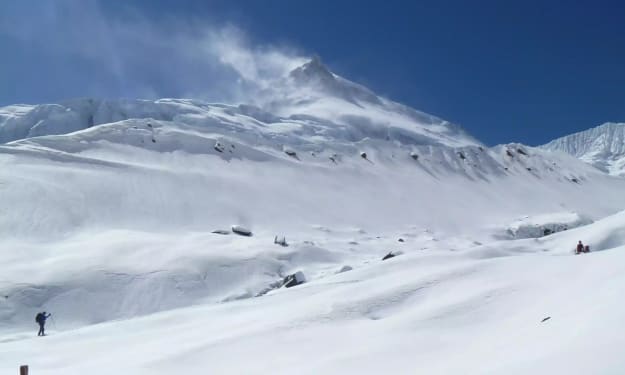
At these heights, the air is thin, the temperature is cold, and the walking gets tougher. But the reward is huge. You get a front-row view of Mardi Himal, Machapuchare, Annapurna South, and Hiunchuli. On a clear day, it’s one of the best viewpoints in the region.
Since this part of the trek is done as a day hike from High Camp, you don’t need to sleep at this altitude, which lowers the risk of altitude sickness. But you still need to walk slowly, rest often, and listen to your body.
How to Deal with the Altitude
Even though the Mardi Himal trek altitude is not as extreme as Everest, it still deserves respect. Here are some simple tips to stay safe and enjoy the experience:
Walk slowly: Never rush. Let your body adjust to the height naturally.
Drink water: Staying hydrated helps your body handle the thin air better.
Sleep well: Rest is important at every level.
Avoid alcohol: Drinking at high altitudes can make symptoms worse.
Watch for signs: Headache, dizziness, or trouble breathing should not be ignored. If you feel very unwell, go down to a lower altitude.
Why Altitude Is Part of the Adventure
Part of what makes the Mardi Himal trek special is how quickly you climb from warm green hills to cold alpine landscapes. In just a few days, you go from villages and forests to snowy ridges and mountain views. The change in altitude brings both challenge and beauty.
Understanding the Mardi Himal trek altitude helps you prepare better. When you know what to expect, you can enjoy the journey more and avoid health issues. This trek is a great choice for people who want a short but exciting mountain experience without the crowds found on other trails.
Final Thoughts
The Mardi Himal trek altitude starts from around 1,700 meters and goes up to 4,500 meters. It may sound like a big climb, but it’s done over a few days with plenty of time to adjust. The key is to take it slow, stay aware of how you feel, and enjoy the trail as it rises through forests, hills, and high ridges.
With the right mindset and preparation, the altitude won’t be a problem—it will be part of the adventure. And when you finally stand at the viewpoint or base camp, looking out at the Himalayas, you’ll know that every step was worth it.
About the Creator
Keep reading
More stories from Rose Jenkins and writers in Journal and other communities.
Tsum Valley Trek: A Journey into Nepal's Hidden Gem
The Tsum Valley Trek is one of Nepal’s most enchanting and off-the-beaten-path trekking routes. Situated in the Manaslu region, this hidden valley offers a mix of natural beauty, cultural experiences, and rich Tibetan Buddhist heritage. Often referred to as one of Nepal's best-kept secrets, the trek takes you through a remote and peaceful landscape, offering stunning views of Manaslu, Ganesh Himal, Buddha Himal, and other towering peaks. For those wondering, how long is the Tsum Valley Trek? — the trek typically takes 15-20 days, allowing trekkers to fully immerse themselves in the beauty of the region and the local culture. It’s an ideal choice for those seeking a more tranquil and less crowded experience in Nepal's Himalayas.
By Rose Jenkins10 months ago in Journal
Twitter founder Jack Dorsey fired 4,000 people over AI and issued a warning to the business world.
On Thursday, February 26, Jack Dorsey cofounder of Twitter and CEO of Block, one of the world's largest digital payments companies published an internal memo that went viral within hours. Block, the company that operates Square, Cash App, and its Bitcoin ecosystem, was laying off more than 4,000 people: almost half of its global workforce. The stated reason wasn't a crisis. It was artificial intelligence.
By Omar Rastelli2 days ago in Journal
The Politics of Playing Dress-Up
Well, to start off I'd like to say a happy world book day to all who celebrate. I know I haven't really posted anything on my socials about it but I'm not a jubilant kind of person. I lay low most of the time. Let's start off with a popular anecdote from the vaults...
By Annie Kapur5 days ago in Geeks


Comments
There are no comments for this story
Be the first to respond and start the conversation.