
Luxury Watch Market Is Entering a New Golden Age
How craftsmanship, investment thinking, and a new generation of collectors are driving a $114 billion industry

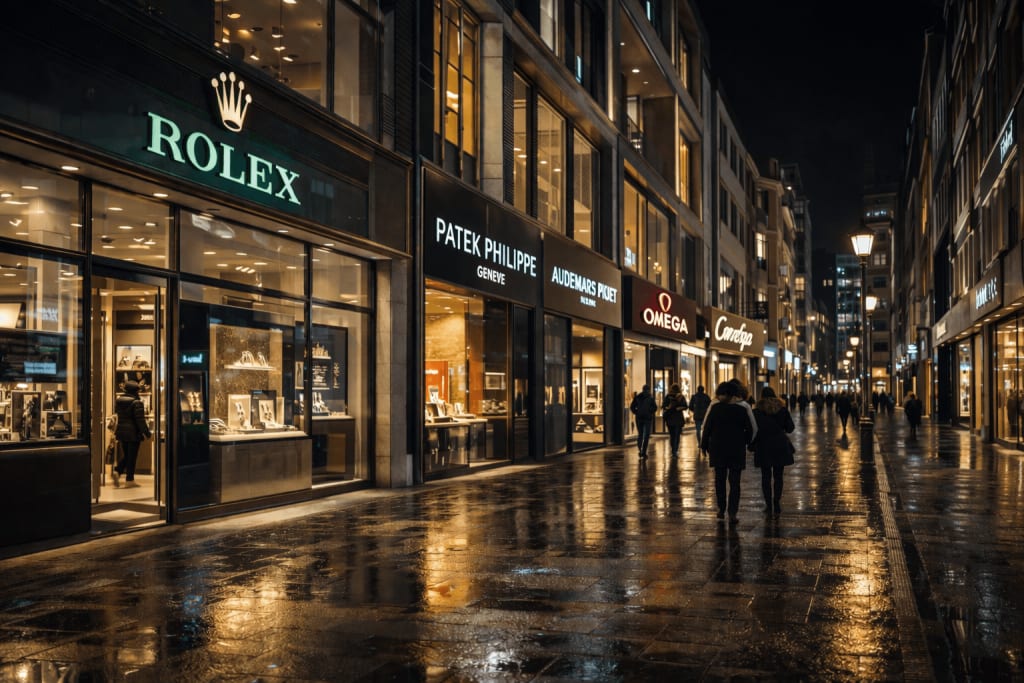
There is something quietly remarkable about a mechanical watch.
In a world where every phone, laptop, and kitchen appliance is connected to a network and updated automatically, a mechanical timepiece does exactly one thing. It tells the time — through hundreds of tiny components, assembled by hand, calibrated to fractions of a second, and designed to last longer than the person wearing it.
That kind of object should feel outdated. Instead, it has never been more desirable.
According to Mordor Intelligence, the global luxury watch market size was valued at USD 79.87 billion in 2025, growing to USD 84.77 billion in 2026 and projected to reach USD 114.19 billion by 2031 at a 6.14% CAGR. Behind those numbers is a story about craftsmanship, changing consumer values, and what people are increasingly choosing to spend serious money on, and why.
When a Watch Becomes an Asset
For most of history, buying a watch was a practical decision. You needed to know the time. You bought something reliable and wore it until it stopped working.
That relationship has changed fundamentally for luxury timepieces. A growing number of buyers today — particularly high-net-worth individuals and younger collectors — are thinking about watches the way previous generations thought about art or real estate. They are objects that hold value, and in some cases, grow it.
Record auction results have helped cement this perception. When a single Patek Philippe Grandmaster Chime sold for CHF 31 million, it was not just a transaction — it was a signal to the broader market about what rare, complex timepieces can be worth. Specialist investment funds and family offices have begun building watch collections alongside more traditional asset classes. Authentication technology has improved to the point where provenance and condition can be verified with far greater confidence than before.
Certified pre-owned programs, introduced by brands like Rolex and Richemont's Watchfinder platform, have added further credibility to secondary market purchases. Buyers who might have hesitated to spend significantly on a pre-owned watch now have guarantees, warranties, and brand-backed assurances that make the decision feel considerably safer.
The result is a market where the line between luxury purchase and investment decision has become genuinely blurry and for many buyers, that combination is precisely the appeal.
A New Generation of Watch Buyers
The traditional image of a luxury watch buyer — older, male, purchasing from a boutique after years of brand loyalty — is still part of the market. But it is no longer the whole picture.
Millennials and Gen Z consumers have entered the luxury watch space in meaningful numbers, and they have brought a different set of priorities with them. They discovered watches through social media rather than through family tradition or physical stores. They research movements, case materials, and production histories online before they ever walk into a boutique. They are interested in both the craft and the cultural story behind a particular model.
Social media has accelerated this shift considerably. When a well-known athlete or public figure is photographed wearing a specific watch, the effect on search activity and secondary market inquiries can be immediate and significant. Brands have responded by investing in digital content that showcases the technical complexity and heritage behind their products — not to replace the traditional boutique experience, but to reach audiences who begin their journey online.
Limited-edition releases have become a particularly effective tool in this environment. Scarcity drives attention on social media in ways that broad availability never could, and a watch that feels genuinely difficult to obtain carries a different kind of appeal to a generation that has grown up with instant access to almost everything.
The Materials Telling Their Own Story
One of the less visible but genuinely interesting developments in the luxury watch industry is what is happening with materials.
For most of the industry's history, watch cases were made from steel, gold, or platinum. Those materials remain central to the market. But over the past decade, brands have been pushing into new territory. IWC developed Ceratanium, combining the lightness of titanium with the hardness of ceramic. Audemars Piguet uses forged carbon to reduce weight while maintaining durability. Hublot introduced Magic Gold, developed specifically for its scratch resistance.
These are not simply engineering exercises. They reflect a genuine shift in what luxury watch buyers expect from the objects they wear daily. A watch that goes on your wrist at the gym, on a boat, or at a business meeting needs to perform across all of those contexts. Advanced materials make that possible without compromising the aesthetic standards that define the category.
Sustainability has entered this conversation too. Brands are increasingly aware that their material choices carry meaning for a consumer base that thinks carefully about environmental responsibility — even in the context of significant discretionary spending. The framing of new materials as both technically superior and more environmentally considered is a deliberate and increasingly common positioning in this market.
Vintage, Pre-Owned, and the Secondary Market
Perhaps the most structurally significant change in the luxury watch market over the past several years is the formalization of the secondary market.
Pre-owned luxury watches have always existed, traded through auction houses, private dealers, and informal networks. What is different now is the level of institutional involvement. Brands that once kept their distance from the pre-owned market — concerned about pricing, brand positioning, and counterfeiting — have moved decisively into it. Certified pre-owned programs now exist across several major brands, bringing the same trust infrastructure that applies to new watch purchases into the secondary market.
This matters for several reasons. It expands access — a buyer who cannot stretch to a new version of a particular model can now purchase a certified pre-owned version with brand-backed confidence. It also helps brands maintain some influence over how their products are valued and presented once they leave the primary market. And it addresses the counterfeiting problem that has long complicated the pre-owned space, with authentication technology making it considerably harder to misrepresent a watch's history or condition.
The vintage segment sits alongside this, driven by collectors seeking discontinued or limited-production models that simply cannot be purchased new. For these buyers, the appeal is partly historical — owning a piece of watchmaking history — and partly financial, given the performance of rare vintage pieces at auction.
Where the Market Is Growing
Asia-Pacific holds the largest share of the global luxury watch market, accounting for the majority of global revenue in 2025. China, Japan, Singapore, Hong Kong, and India are all significant contributors, driven by rising wealth, a growing collector community, and strong cross-border purchasing activity. The cultural weight placed on meaningful objects — and the social significance of a well-chosen timepiece — runs deep in several of these markets and continues to support strong demand.
South America is the fastest-growing region in the forecast period, projected to expand at the highest regional CAGR through 2031. An expanding affluent population, improving access to luxury retail, and growing brand presence in major urban centers are all contributing to this growth. Brazil, Chile, and Colombia are among the markets seeing the most notable activity, and global watch brands are paying attention.
Europe, North America, and the Middle East remain important and stable markets. Cities like Geneva, Paris, Milan, London, Dubai, and Riyadh continue to function as major hubs for luxury watch transactions, supported by tourism, established retail infrastructure, and concentrations of high-net-worth consumers. These regions may not be growing as quickly as Asia-Pacific or South America, but they provide the kind of consistent, high-value sales that anchor the global market.
How the Industry Competes
The luxury watch market is largely shaped by a small number of major groups, LVMH, Richemont, the Swatch Group, and Audemars Piguet, among them. These companies control significant portions of the supply chain, from movement manufacturing to retail, and their ability to operate across the full range from entry-level luxury to ultra-premium gives them considerable market influence.
Competition within this group plays out through brand management, product development, and how effectively each company reads and responds to shifting consumer preferences. Some brands lean into high-complication watches for serious collectors. Others emphasize sporting heritage or design-forward aesthetics for a broader audience. The strategic decisions being made now, which brands to invest in, which to phase out, and how to position in the pre-owned market will shape the competitive landscape for years ahead.
Independent and niche watchmakers occupy a different but genuine space in this market. They produce in smaller volumes, often sell directly to consumers, and build communities around exclusivity and craft in ways that larger groups find harder to replicate. The rise of online communities dedicated to watchmaking has actually strengthened the position of smaller independents, giving them direct access to the most engaged and knowledgeable segment of the buyer market.
A Closing Thought
A mechanical watch does not do anything that your phone cannot do more accurately and with considerably less effort. That has been true for decades, and it has not slowed the market down at all.
What a well-made watch does instead is carry meaning. It represents a decision to value craft, continuity, and the particular satisfaction of owning something made to last. For a growing number of people across different generations and geographies, that turns out to be worth quite a lot.
With the market on course to reach USD 114.19 billion by 2031, the luxury watch industry appears to be in the unusual position of growing stronger precisely because it has refused to become something faster, smarter, or more convenient.
Sometimes the most enduring things are the ones that stay exactly as they are.
About the Creator
Keep reading
More stories from Harvey Specter and writers in Journal and other communities.
Skin Care Products Market Is Redefining Modern Beauty
Something changed in how people talk about skincare. It used to be a fairly simple conversation. You washed your face, maybe applied a moisturizer, and moved on. The products on your shelf were whatever your mother used, or whatever was on sale at the pharmacy. Nobody spent much time reading the ingredient list.
By Harvey Specterabout 15 hours ago in Journal
Author’s Advice
If you would’ve asked me 20 years ago did I know I’d become a writer and an author, I would’ve said “nope, ain’t happening”. As fate would have it I did become an author and I can honestly say I’m loving it so far. It really does feel good to be a writer. I’ve learned a lot on this journey and I feel like with even me being as new to this world as I am, there’s some wisdom I need to share with every other aspiring author.
By Joe Patterson5 days ago in Journal
Protests Erupt in Cuba as Food and Energy Shortages Deepen
Rare anti-government protests have erupted across parts of Cuba as the island faces worsening shortages of food, fuel, and electricity. The demonstrations highlight the deep economic and humanitarian strain currently gripping the country and signal rising frustration among ordinary Cubans struggling with daily survival.
By Navigating the World2 days ago in Journal
The First Rainbow Baby
Pitter-patter, pitter-patter. The rain fell in rhythmic splatters, slowly slowing, but still constant. Mira rolled onto her side pulling the blanket tight against her ears, but still she could hear chitter-chatter and scurrying feet of the creatures that refused to sleep in the lower decks.
By A. J. Schoenfeld3 days ago in Fiction




Comments
There are no comments for this story
Be the first to respond and start the conversation.