
Loud and Quiet at the Same Time
The Library and the Acrylics


Shelving library books, and blending color into forms with acrylics can’t productively exist at the same time, but for me, they feed each other and allow me to recover from what each one conjures into being. They take turns passing the baton back and forth, in order to keep me in peaceful, buoyant motion as I travel through the sometimes insipid interim world to get from one to the other. I spend my days as a librarian and my nights as a painter. At night, I mix acrylics together in wild combinations to see what they might have to say as they emerge from paint layers and water. In the morning, I am lassoed away from the haze of the previous night’s creative venture, and away from my tangled bedsheets, into a library where its order is the life source of its function. The erratic waves of letting my mind fly through color is resolved as I walk into a world of structure. I find it funny that I was one of the messiest kids in the world, and I decided to become a professional organizer.
Each year I spend as an elementary school librarian, the urgency for books to return to their rightful locations loses importance. I have attempted to teach my students the structure of the library; picture books here, fiction in the back, and books never, ever left on the floor. I repeat silly rhymes, and beg them to use the “pull the book out like a bookmark next to the one you want to look at” method. We’ve done this demonstration multiple times. The library still ends up with intermixed genres, books under benches, and barrettes and glitter treasures beside the reading nook. After story time with neon-colored heroes and monsters with underwear on their heads, the chaos of book selection ensues. I check them out as seamlessly as I can until they line up and prance away, or joyously run, or trip on their shoelaces scattered like octopus arms. They are so elated, holding their books open as they attempt to multitask, walking and reading, back to their classrooms. I chuckle at the different types of child disasters that are unleashed upon the library, named by each class’ most haphazard child. The library has endured hurricane Judah, tsunami Everett, storm Angelina, etc.
Once they’ve cleared the library, it’s quiet. Then the meditation begins. I gather books, slide them into a perfect row on a cart, like dominos pressed against each other with a bookend. I take them to the shelves and slide the floppy rectangles and solid squares into place like tetris puzzle pieces. I press a flat hand behind the vertical line of books to evenly meet their bindings an inch away from the shelf edge. The quiet of the space generously lends itself to each whisper of a book’s sound; covers thunking against smooth metal, pages sighing as they close between their neighbors. Sometimes I take a step back and just look at the line up of stickers on the bindings. Alphabetical, fraction-numerical, perfectly horizontal, organized by subject and genre. This whole concept is parallel to the antiquated system that librarians have been using for centuries. I feel connected to the beginning of booktime. I fall in love with the order. As I’m moving through these motions, my mind recalls stories I’ve read, places bookmarks in my memory of the next book I’ll read, and my thoughts feel carefully placed alongside the catalog of the world’s literature, mostly in the fiction section.
When I was a kid, my mother used to play tricks on me to get me to clean my room. I was her messiest child and she tried subtle and not-so-subtle ways to let me know. “We’ll make this a competition!” she’d shout from her room as she facilitated a cleaning contest between my sisters and I to clean our room the fastest. I would eagerly close my door, and I know I immediately became distracted with notebooks and pencils. All I wanted to do was write stories and make things on paper that I liked in a world of so many things I disliked. I also realized that the prize of having a clean room at the end of the contest wasn’t worth it. She tried other strategies like reading Jillian Jigs by Phoebe Gilman to me, which was a story that playfully scolded a whimsical girl with rust colored hair for her perpetually messy room: Jillian Jigs! Jillian Jigs! Your room looks like it's been lived in by pigs! I can still hear it in my head as I make my bed in the morning.
When I was younger, I used to go into an art project without a seatbelt, jumping straight into the pallet, smearing ideas into colors at the exact instant they came to my mind. This left me with interesting results that sometimes made me proud, and sometimes added inventory to my closet. Such artistry! I thought. One can never know their true creativity if they try too hard and study the great notables of painting to ultimately become unoriginal. Planning is just an invitation to stunt creative flow.
As a librarian, I’ve learned to blend math and creativity into harmony. Now, I use a ruler and cerulean painter’s tape to measure straight lines against paper as I arrange my paint tubes in a ROYGBIV wall facing me. I line up paintbrushes in thin to thick, round to sharp. I get so invested in the composition of pre-painting, even though I can feel my ideas racing and pushing impatiently against the gates of my mind, rushing to become materialized. I have learned that my meticulous and orderly plan and preparation for the soft and comfortable landing of my creativity into the corporeal world will do my mind and existence justice.
Just as I stare with satisfaction at the books in their rightful Dewey decimal place, I stand back periodically to meditate on the progress of artwork. Being a librarian and the painter are like an inverse to the other. Library books tell stories of the untamed madness of authors and creatives contained within margins, page numbers, and bindings, only to be found when placed in the proper location for the world to uncover. Creating a painting is formed by a system within a mind that remains unnamed and can only be seen when placed within the confines of a canvas. With painting, I don’t think I ever really want to find the source of where it’s coming from. I find peace in the place where labels can’t exist, and I find peace in the place where the labels are at the heart of the search. It’s perfect, they are both so loud and so quiet at the same time.
About the Creator
Bel Beeson
I decided to be a librarian because I'd be surrounded by books and stories. This was one of my greatest ideas.
Keep reading
More stories from Bel Beeson and writers in Journal and other communities.
The Last Time I Checked
My name is Forest and I live between sidewalks, on a corner, in a city that I shouldn’t disclose. But it could be any city in the country. There is one of me everywhere you go. You’ve probably learned tricks to avert your eyes and keep your attention ahead. I used to be like that too. But now I’m just the man on the corner, amongst lipstick red and McDonalds yellow fast food wrappers and silver studded trash. I don’t do tricks like the chrome-colored San Francisco bush man, nor am I a spectacle like the New York man with waterfall dreadlocks. I’m easy to miss, but I do hold a secret.
By Bel Beeson5 years ago in Fiction
Global trade’s lifelines: 6 shipping lanes that keep the world economy moving
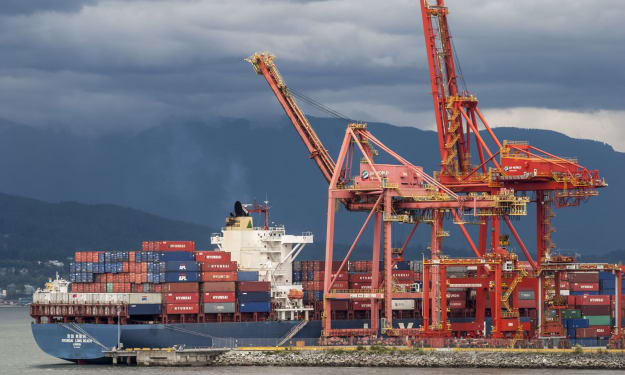
Maritime shipping lanes are the unsung lifelines of global trade. Roughly 90% of the world’s goods—from electronics and oil to food and raw materials—travel by sea, navigating a network of strategic shipping corridors that connect producers to consumers across continents. Disruptions along these routes can ripple across the global economy, impacting supply chains, energy prices, and trade flows. Here are six critical shipping lanes that underpin international commerce: 1. The Strait of Hormuz Located between Oman and Iran, the Strait of Hormuz is a narrow passage through which roughly 20% of the world’s oil supply passes. Tankers from Gulf nations rely on this corridor to transport crude to Europe, Asia, and the Americas. Heightened regional tensions can quickly drive up oil prices, as recent conflicts and military posturing have shown. 2. The Suez Canal The Suez Canal connects the Mediterranean Sea to the Red Sea, allowing ships to bypass the lengthy voyage around Africa’s Cape of Good Hope. The canal handles approximately 12% of global trade, making it one of the most strategically important maritime routes. The 2021 blockage by the container ship Ever Given demonstrated how a single incident can stall billions of dollars in goods. 3. The Strait of Malacca Between Malaysia and Indonesia, the Strait of Malacca serves as the main artery for ships traveling between the Indian Ocean and the Pacific. Around 25% of all traded goods pass through this narrow channel, including oil, electronics, and commodities. Its vulnerability to congestion or piracy has prompted constant monitoring and security initiatives. 4. The Panama Canal Connecting the Atlantic and Pacific Oceans, the Panama Canal facilitates the rapid movement of goods between Asia and the Americas. For decades, the canal has shortened transit times and reduced fuel costs for shipping companies. Recent expansions allow larger vessels to pass through, accommodating the growth of global containerized trade. 5. The English Channel One of the busiest shipping lanes in the world, the English Channel links the United Kingdom to continental Europe. Nearly 500 ships pass daily, carrying everything from raw materials to finished products. Its strategic position near Europe’s industrial and financial hubs makes it crucial for European commerce, especially during Brexit-related logistical shifts. 6. The Bab el-Mandeb Strait Connecting the Red Sea to the Gulf of Aden, the Bab el-Mandeb Strait sits between Djibouti and Yemen. About 4.8 million barrels of oil daily flow through this route, alongside other key commodities. Regional instability, piracy, and conflict in nearby areas have raised concerns over potential disruptions. Why These Routes Matter Global shipping lanes are not just pathways for goods—they are economic arteries that sustain industry, employment, and geopolitical influence. Even minor blockages can trigger cascading effects, delaying shipments, inflating prices, and disrupting production cycles. For instance, disruptions in the Suez Canal or Strait of Hormuz often lead to surging oil prices and logistical bottlenecks worldwide. Shipping companies, governments, and international organizations invest heavily in monitoring, securing, and maintaining these corridors. Advances in maritime technology, satellite navigation, and coordinated international patrols help mitigate risks such as piracy, geopolitical tensions, and accidents. Challenges Ahead Despite these safeguards, global shipping remains vulnerable. Rising geopolitical tensions, climate change, and evolving security threats could jeopardize these vital routes. Analysts warn that the reliance on a handful of narrow corridors makes the global economy susceptible to unforeseen shocks. Diversifying routes and improving maritime infrastructure are considered key strategies for resilience. The lifelines of global trade are more than just shipping lanes—they are critical components of the modern economy, linking markets, nations, and people. Protecting them ensures not only the smooth flow of goods but also global economic stability, energy security, and international cooperation. As trade volumes continue to grow and international tensions rise, these six corridors will remain under scrutiny, reminding the world just how interconnected and fragile the modern global supply chain truly is.
By Fiaz Ahmed 5 days ago in Journal
Complete Guide to Types Of Tank, Benefits, and Installation
Water tanks are essential for storing clean water for residential, commercial, agricultural, and industrial use. Whether for homes, buildings, farms, or factories, choosing the right water tank ensures a reliable water supply and long-term durability.
By Solution Boxes5 days ago in Journal


Comments
There are no comments for this story
Be the first to respond and start the conversation.