
Long-Form Content vs Short-Form Content
Compare long-form content and short-form content

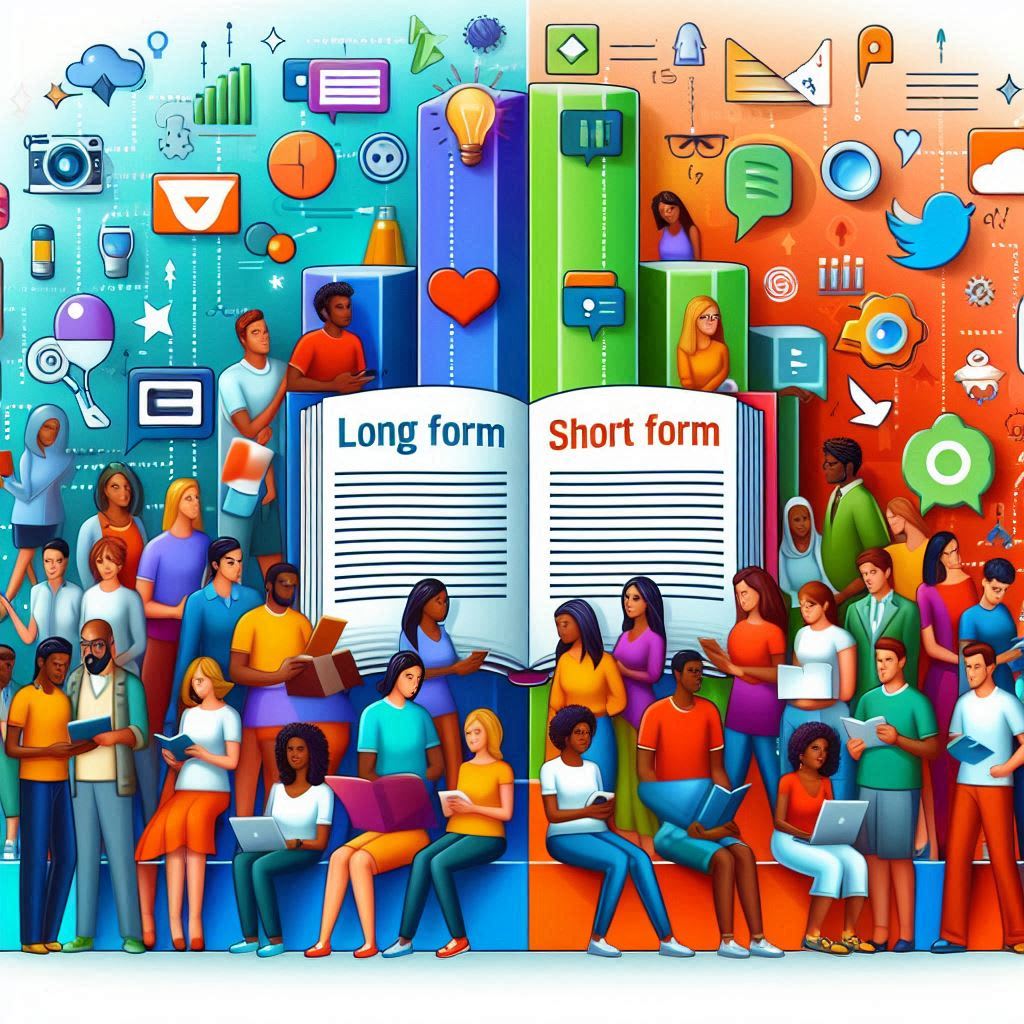
Content is the backbone of the digital landscape, and its effectiveness depends largely on its format. Two primary types of content—long-form and short-form—serve different purposes, engage different audiences, and require different approaches. Understanding the strengths, limitations, and applications of each is crucial for marketers, writers, businesses, and content creators.
Long-form content is any material that exceeds 1,200 words or more, such as blog posts, whitepapers, case studies, eBooks, and in-depth reports. It allows for comprehensive storytelling, detailed explanations, and deep audience engagement. This type of content is particularly effective for SEO, authority building, and complex topics that require nuance and depth. Businesses that rely on educating their audiences or offering expert insights often favor long-form content.
Short-form content, on the other hand, is concise and easily digestible. It includes social media posts, short videos, tweets, memes, and infographics, generally staying under 1,000 words or a few minutes in length. This type of content thrives on fast engagement, virality, and shareability, making it ideal for social media platforms and capturing the attention of users with shorter attention spans.
Both long-form and short-form content have distinct advantages and work best when used strategically. While short-form content hooks audiences quickly, long-form content nurtures and retains them. In today’s fast-paced digital era, where information consumption is diverse and fragmented, mastering both forms ensures maximum impact and adaptability.
This guide explores 50 in-depth features comparing these two formats, covering aspects like SEO performance, engagement, emotional impact, retention, adaptability, and marketing effectiveness. By the end, you’ll gain a comprehensive understanding of when and how to use each format to enhance your content strategy.
Length
The primary difference between long-form and short-form content is its length. Short-form content generally falls under 1,000 words, with articles, blog posts, or social media updates often staying around 300–700 words. Long-form content, on the other hand, exceeds 1,000 words, often stretching to 2,000–5,000 words for in-depth guides, case studies, or e-books. This distinction significantly impacts reader engagement, SEO, and the depth of information covered.
Short-form content is quick to consume and is ideal for readers with limited time or short attention spans. This makes it highly suitable for news updates, quick tips, and viral content. In contrast, long-form content allows for a deep dive into subjects, providing extensive explanations, examples, and references.
The choice between long and short formats depends on the target audience, platform, and purpose. Social media, for instance, thrives on short-form content, whereas blogs and e-books benefit from long-form depth. Businesses use long-form to establish authority in their industry, while short-form content is effective for quick communication and audience engagement.
In essence, long-form content offers greater value in terms of education, SEO rankings, and authority building, while short-form content captures immediate attention and suits fast-paced consumption. A balanced strategy using both forms can ensure engagement across multiple platforms and audience preferences, making content marketing more versatile and impactful.
Depth
Depth is a defining characteristic that differentiates long-form and short-form content. Long-form content allows for detailed exploration of a topic, covering various aspects such as history, examples, case studies, and expert opinions. Short-form content, however, sticks to key points, offering a brief overview without extensive explanations.
For instance, a short-form article on digital marketing may list five essential strategies like SEO, social media, email marketing, PPC, and content marketing. A long-form article would elaborate on each strategy, include industry statistics, provide actionable steps, and even cite expert insights, making it a comprehensive resource.
The depth of content affects audience retention, engagement, and credibility. Readers looking for quick answers may prefer short-form content, whereas those seeking in-depth knowledge prefer long-form articles. Educational institutions, research firms, and authoritative blogs rely on long-form content to establish expertise.
Search engines also favor in-depth content since comprehensive articles tend to answer more user queries, improving SEO rankings. This is why pillar content or skyscraper content—typically long-form—is often used to dominate search results.
However, long-form content requires more time to produce and demands a higher level of research, writing skills, and content structuring. In contrast, short-form content is easier to create and consume, making it ideal for social media posts, marketing emails, and quick blog updates.
A hybrid approach—using short-form for capturing attention and long-form for detailed explanations—helps brands maximize reach while maintaining authority.
Complexity
The complexity of content is largely determined by the length and depth of information presented. Short-form content is typically simple, to the point, and designed for quick consumption. It avoids complex ideas and jargon, making it accessible to a wide audience. Long-form content, on the other hand, embraces complexity by providing detailed analysis, industry insights, expert commentary, and deep research.
For instance, a short-form article on artificial intelligence (AI) might summarize its applications in marketing, healthcare, and finance in under 500 words. A long-form piece, however, would explore AI algorithms, machine learning techniques, ethical concerns, real-world case studies, and future trends, spanning 3,000–5,000 words.
Complexity in long-form content also means it requires strong structuring to maintain readability. Sections, subheadings, bullet points, and infographics help break down difficult concepts, making them digestible. Conversely, short-form content is structured for immediate impact, using simple language, bold statements, and often, visuals.
Readers seeking quick takeaways or daily updates prefer short-form content, while professionals, researchers, and serious learners turn to long-form for in-depth insights. The complexity of long-form also makes it more valuable for SEO, as Google favors content that provides comprehensive answers to user queries.
Choosing between simple short-form content and complex long-form content depends on the audience’s needs. If engagement and shareability are the goal, short-form works best. But if credibility, education, and authority are priorities, long-form content wins.
Engagement Time
Engagement time refers to how long users spend consuming content, which varies significantly between short-form and long-form formats. Short-form content, due to its brevity, demands only a few seconds to a couple of minutes of engagement. This is ideal for users who want quick answers, making it popular on social media platforms like Twitter, Instagram, and TikTok.
Conversely, long-form content requires a greater time commitment, often 5–15 minutes for an in-depth article or an hour for long-form videos and podcasts. Because of this, longer content has higher dwell time, a key metric for search engines when ranking pages.
However, increased engagement time isn’t always beneficial. If the content is too long or unstructured, readers might abandon it midway. To combat this, long-form articles incorporate visuals, summaries, and structured formatting to sustain attention. Short-form content, in contrast, aims to keep users engaged by delivering information quickly before they move to the next piece.
Audience preferences also play a role in engagement. Busy professionals may prefer short-form insights via email newsletters, while dedicated learners may opt for long-form deep dives.
A balanced content strategy considers both types. Short-form content grabs attention and funnels users toward long-form content, where engagement time increases. This creates a layered content strategy, keeping the audience engaged at different stages of their journey.
Purpose
The purpose of content varies between long-form and short-form based on intent and audience needs. Short-form content serves purposes such as quick engagement, entertainment, brand awareness, and viral marketing. It delivers immediate value, making it ideal for social media, news, product announcements, and quick tips.
Long-form content, on the other hand, is designed for education, thought leadership, deep exploration, and problem-solving. It allows for detailed storytelling, research-backed discussions, and in-depth industry insights.
For example, a short-form blog post on productivity might list five quick tips, while a long-form guide would explore productivity techniques, time management frameworks, case studies, and expert opinions.
From a marketing perspective, short-form content is best for brand recall, whereas long-form content is used for building trust and authority. Short-form is ideal for social media and email marketing, while long-form works well for blogs, whitepapers, and in-depth YouTube videos.
The choice between short and long-form depends on the target audience and business objectives. If the goal is to capture attention, short-form works best. If the goal is to educate and nurture leads, long-form is more effective. A well-rounded content strategy integrates both—using short-form content for quick touchpoints and long-form content for deeper engagement and credibility.
Search Ranking
Search engine ranking is a crucial factor in content visibility, and long-form content tends to perform better in Google search results compared to short-form content. The primary reason is that longer content provides more depth, covers multiple related keywords, and encourages higher engagement time.
Google’s E-E-A-T (Experience, Expertise, Authoritativeness, and Trustworthiness) framework favors content that offers value, answers user queries in detail, and has strong credibility. A 2,000+ word article naturally has more opportunities to include long-tail keywords, citations, structured headings, and internal linking, which improve ranking potential.
On the other hand, short-form content is often limited in keyword variety and depth, reducing its ability to rank for multiple queries. However, it can still rank well for highly specific, low-competition queries or trending topics where speed is more important than depth.
Another advantage of long-form content is its ability to attract backlinks, which significantly improve search ranking. Research shows that comprehensive, well-researched articles receive more shares and backlinks compared to shorter content.
That being said, search engines also prioritize user intent. If a user is looking for a quick definition or a simple answer, short-form content may rank higher in featured snippets or Google’s "People Also Ask" section.
For businesses, the best strategy is to combine both: short-form for immediate, trending topics and long-form for evergreen, high-ranking content that establishes authority over time.
Keyword Usage
Keyword strategy differs significantly between long-form and short-form content. Long-form content allows for the natural integration of primary, secondary, and long-tail keywords, making it SEO-friendly and more likely to rank for multiple search queries.
For example, an in-depth guide on digital marketing might include broad keywords like "SEO strategies" while also covering niche keywords such as "best local SEO techniques for small businesses". This enables long-form content to appear in diverse search results, increasing organic traffic.
Short-form content, on the other hand, has limited space for keyword usage. It typically focuses on one or two primary keywords, making it more targeted but less versatile. While short-form content can rank well for specific, low-competition queries, it rarely dominates highly competitive search terms.
Moreover, keyword density and placement matter in SEO. In long-form content, keywords can be naturally distributed across headings, subheadings, meta descriptions, and body text, enhancing readability and SEO performance. Short-form content, due to its brevity, risks keyword stuffing if too many terms are forced in, which can hurt rankings.
Another advantage of long-form content is its potential to rank for latent semantic indexing (LSI) keywords, which are related terms and phrases Google associates with a topic. This makes the content more relevant to a wider audience.
To maximize SEO benefits, brands should use long-form content for detailed keyword optimization while using short-form content for immediate keyword targeting in fast-moving industries.
Backlink Potential
Backlinks, or inbound links from other websites, are a major factor in Google’s ranking algorithm, and long-form content is more likely to attract high-quality backlinks than short-form content.
The primary reason for this is that long-form content provides in-depth insights, research, statistics, and original analysis, making it a valuable resource that other websites want to reference. For instance, an ultimate guide on email marketing strategies with case studies and expert insights will naturally attract backlinks from marketing blogs, industry reports, and business websites.
Short-form content, being brief and to the point, generally lacks the depth needed to serve as a reference-worthy resource. While it may still earn backlinks if it covers trending topics or unique insights, it typically doesn’t provide the level of authority and detail that encourages external linking.
Additionally, listicles, how-to guides, research-driven articles, and pillar content in the long-form category tend to get shared across multiple platforms, further increasing backlink opportunities. Content that includes original research, data, or expert opinions is especially effective at earning organic backlinks.
However, short-form content can support long-form content by linking internally, boosting the overall link structure of a website. A well-planned content strategy integrates both formats—with long-form attracting backlinks and short-form ensuring continuous engagement.
For websites looking to increase domain authority, investing in long-form, research-backed content is essential.
Bounce Rate
Bounce rate is the percentage of visitors who leave a webpage without taking any further action, such as clicking on another page or engaging with content. Short-form content tends to have a higher bounce rate, while long-form content encourages deeper engagement.
Since short-form content is designed for quick consumption, users often leave immediately after reading, especially if they’ve found the answer they were looking for. A 300-word news article, for instance, may satisfy the reader’s curiosity within seconds, leading them to exit the page quickly.
Long-form content, on the other hand, is structured to keep users engaged for extended periods. It often includes internal links, interactive elements, detailed analysis, and related content recommendations, reducing bounce rates.
For example, a 2,500-word guide on cryptocurrency investing may include sections on blockchain basics, investment strategies, security tips, and expert opinions, prompting readers to explore related topics or click on linked resources.
Google interprets low bounce rates as a sign of high-quality content, rewarding such pages with better rankings. To improve engagement, long-form content can use subheadings, bullet points, infographics, videos, and interactive elements to make information digestible and engaging.
That said, short-form content isn’t inherently bad for bounce rates if paired with strong CTAs, internal linking, and engaging visuals. A well-designed content funnel ensures that short-form grabs attention, while long-form retains and nurtures visitors for deeper brand interaction.
Dwell Time
Dwell time refers to how long a visitor stays on a webpage before returning to search results. It’s an important ranking factor, and long-form content naturally increases dwell time due to its depth and engagement strategies.
For example, a 4,000-word article on AI in healthcare will require 8-12 minutes of reading time, compared to a 300-word news snippet that takes less than a minute to skim. This longer engagement signals to Google’s algorithm that the content is valuable and satisfying user intent, boosting SEO rankings.
Short-form content, while great for capturing attention, often results in shorter dwell times, as users consume the information quickly and move on. However, this isn’t always a bad thing—if the content efficiently answers the user’s query, it still provides value.
To maximize dwell time in long-form content, creators use strategies like:
✔ Compelling introductions to hook readers.
✔ Well-structured sections to maintain readability.
✔ Multimedia elements (images, videos, infographics) to enhance engagement.
✔ Internal linking to encourage further exploration.
Short-form content can also increase dwell time by embedding interactive elements like polls, videos, or quick quizzes. However, it generally lacks the depth to retain users for extended periods compared to long-form.
For brands and websites prioritizing SEO performance, investing in long-form content is key to increasing dwell time and improving rankings.
Content Authority
Authority in content creation means establishing expertise, credibility, and trustworthiness in a particular niche. Long-form content inherently builds more authority compared to short-form content because it allows for in-depth analysis, extensive research, and comprehensive explanations.
A 3,000-word whitepaper on AI-driven medical diagnostics, for example, showcases detailed research, expert opinions, case studies, and data-backed insights, making it a valuable reference for professionals. Such content demonstrates thought leadership and positions the creator as an industry expert.
Short-form content, while informative, often lacks the depth needed to establish authority. A 500-word blog post can provide a summary or an opinion but may not deliver enough substance to position the writer as an expert. It is best suited for quick updates, introductory concepts, or trend-based discussions rather than authoritative knowledge.
However, short-form content can still contribute to authority when used strategically. Social media posts, infographics, and bite-sized insights can direct traffic to long-form cornerstone content, reinforcing expertise.
Another key factor is external validation. Long-form guides and research-driven pieces are more likely to be referenced, cited, and linked by industry professionals, further enhancing credibility. Google’s E-E-A-T principles (Experience, Expertise, Authoritativeness, and Trustworthiness) favor content that demonstrates authority through depth and references.
To establish lasting credibility, businesses and creators should prioritize long-form content while supplementing it with short-form content for engagement and outreach.
Social Media Engagement
Social media thrives on quick, engaging, and shareable content, making short-form content more suitable for platforms like Twitter, Instagram, and TikTok. A 100-word LinkedIn post, a 30-second reel, or a tweet with a viral statistic can generate immediate traction, as users prefer scroll-friendly, digestible content.
Long-form content, however, struggles with direct engagement on social media. A 3,000-word blog post isn’t likely to be shared in full on Facebook or Instagram, but snippets from it can be repurposed into short-form formats like carousels, threads, or summaries.
The algorithmic preference of social media platforms also favors short-form content, as users consume and react to it faster. Twitter threads, YouTube Shorts, and Instagram Stories outperform lengthy articles in terms of likes, shares, and comments.
However, long-form content can drive deeper discussions on professional networks like LinkedIn or Medium, where users seek insightful, industry-focused reads. A well-researched post about AI ethics in content creation might not get viral-level shares, but it can foster meaningful conversations and networking opportunities.
To balance both formats, brands should use short-form content to drive engagement and long-form content to build authority. For instance, a company can post a 30-second summary video of a blog post on Instagram, encouraging users to visit the website for full details.
A successful social media strategy blends attention-grabbing short content with high-value long content, ensuring both visibility and credibility.
Shareability
Shareability refers to how likely a piece of content is to be shared across digital platforms, and short-form content has a natural advantage in this area.
A concise, engaging infographic, a meme, a tweet, or a 15-second TikTok video can go viral within minutes. The shorter and more visually appealing the content, the easier it is for users to share without investing much time.
Long-form content, while informative and authoritative, is less likely to be shared instantly. A 4,000-word research report requires commitment to read and is not something users will casually pass along unless it offers exceptional insights.
However, long-form content can enhance shareability when broken into digestible parts. A pillar blog post can be converted into multiple short LinkedIn updates, Instagram slides, Twitter threads, and email snippets, increasing its likelihood of being shared.
Additionally, users share content for different reasons:
✔ Short-form: For entertainment, quick tips, memes, and viral trends.
✔ Long-form: For educational value, credibility, and in-depth knowledge.
To maximize shareability, content creators should apply a dual approach—crafting short-form snippets that drive traffic to long-form content. This way, the short content fuels engagement, while the long content sustains value and authority.
Ultimately, short-form content spreads faster, but long-form content builds lasting influence when positioned strategically.
Call-to-Action (CTA) Effectiveness
The effectiveness of a Call-to-Action (CTA)—whether prompting users to subscribe, buy, sign up, or learn more—depends on the content format.
Short-form content is highly effective for immediate CTAs. A brief social media post, ad, or email subject line with a strong CTA like "Sign Up Now" or "Get 50% Off Today" drives quick conversions. The brevity ensures that the user focuses solely on the CTA without distractions.
Long-form content, however, is better for building trust before presenting a CTA. A detailed product review, an educational blog post, or an industry report gradually guides the reader through the buying journey, making them more likely to convert by the end.
For example, a 1,500-word blog post on "The Best Laptops for Video Editing" can strategically place a CTA with affiliate links, leading readers to purchase after consuming the information. Unlike short-form content, which relies on immediate decisions, long-form content nurtures the audience, making CTAs feel more organic and persuasive.
To maximize CTA effectiveness:
✔ Use short-form CTAs for urgency-based conversions (flash sales, signups).
✔ Use long-form CTAs for high-value conversions (premium courses, subscriptions, expensive products).
A balanced content strategy ensures that short-form captures impulse buyers, while long-form builds deep engagement and trust, leading to higher-value conversions.
Lead Generation
Lead generation—the process of attracting and converting potential customers—differs significantly between long-form and short-form content.
Short-form content is excellent for capturing attention quickly and directing traffic to lead magnets. For example, a tweet promoting a free eBook or an Instagram post offering a webinar signup can generate instant leads with minimal friction.
However, long-form content generates higher-quality leads because it provides value and builds trust before asking for information. A 2,500-word whitepaper on "AI in Healthcare" offers deep insights, making readers more willing to share their contact details in exchange for the full document.
Businesses use long-form content to nurture leads through:
✔ In-depth blog posts with lead-capture forms.
✔ Case studies demonstrating successful results.
✔ Comprehensive eBooks and whitepapers behind a gated form.
On the other hand, short-form content plays a supporting role by driving traffic to lead-generating long-form resources. A company might use Facebook ads with a short-form pitch to lead users to a long-form landing page, where they submit their emails for more information.
Thus, while short-form generates quick leads, long-form converts those leads into paying customers by delivering substantial value and credibility. A well-rounded lead generation strategy should leverage both formats for maximum impact.
Search Engine Optimization (SEO) Performance
SEO performance is a key differentiator between long-form and short-form content. Google’s algorithm favors long-form content because it provides in-depth information, keyword variety, and higher engagement rates.
A 2,500-word blog post about “AI in Healthcare” can naturally include long-tail keywords, internal links, and structured data, making it more search-friendly than a 500-word summary. Long-form content also increases dwell time—a key ranking factor—since readers spend more time consuming detailed information.
Short-form content, while quick to produce, struggles with ranking for competitive keywords. A 300-word post may not have enough depth to satisfy search intent, leading to higher bounce rates. However, short-form content plays an important role in supporting SEO strategies through:
✔ Frequent updates (news, trends, announcements).
✔ Social signals (driving engagement on social media).
✔ Content teasers linking to long-form posts.
For example, a company might use a short LinkedIn article to summarize a detailed blog post, directing traffic to the long-form content.
Google’s E-E-A-T (Experience, Expertise, Authoritativeness, Trustworthiness) guidelines prioritize comprehensive and well-researched content, making long-form articles more valuable for SEO.
To maximize rankings, businesses should use a hybrid strategy—leveraging short-form content for visibility while ensuring long-form content anchors the SEO strategy for sustainable growth.
Content Depth and Detail
The primary distinction between long-form and short-form content lies in the depth and level of detail.
Long-form content is designed to explore topics comprehensively, providing research-backed insights, case studies, and data-driven explanations. A 3,000-word whitepaper on “AI’s Role in Future Employment” allows a deep dive into trends, statistics, and expert opinions, making it valuable for decision-makers and professionals.
Short-form content, on the other hand, prioritizes brevity over depth. A 300-word blog post or a 30-second TikTok video might highlight one key insight, but it lacks room for detailed analysis. Such content is ideal for quick takeaways but not for complex subjects.
However, short-form content has its strengths:
✔ Easier consumption for time-strapped audiences.
✔ Effective for summarizing long-form content.
✔ Higher engagement on social media.
For businesses, the optimal approach is to use short-form content as an entry point while reserving long-form content for in-depth knowledge sharing. For example, a company can release a one-minute Instagram Reel summarizing a detailed research paper, leading interested viewers to the full report.
Ultimately, content depth depends on audience needs—casual readers prefer short-form, while serious researchers and professionals rely on long-form content for valuable insights.
Audience Retention
Audience retention refers to how long users engage with a piece of content before losing interest.
Long-form content excels in audience retention when targeting an invested audience. A comprehensive guide on "E-commerce Trends in 2025" can keep professionals engaged for 5–10 minutes, providing detailed insights and actionable strategies. Readers who invest time in such content are more likely to develop loyalty and trust in the brand.
Short-form content, however, benefits from high initial engagement but low retention. A 30-second Instagram Reel or a 200-word blog post captures attention instantly, but the viewer quickly moves on.
However, short-form content can enhance retention by leading audiences into deeper engagement. A well-placed short teaser video might entice users to watch a full webinar, effectively increasing their time spent with the brand.
Retention strategies based on content type:
✔ For long-form: Use subheadings, bullet points, visuals, and storytelling to keep readers engaged.
✔ For short-form: Optimize for repeat views and series-based content (e.g., episodic Instagram stories).
A blended approach works best: short-form content hooks the audience, while long-form content nurtures deeper engagement. Brands should use both strategically to maximize audience retention across platforms.
Brand Perception
The type of content a brand produces influences how it is perceived by its audience.
Long-form content is associated with expertise, thought leadership, and reliability. A company that publishes detailed industry reports, whitepapers, and in-depth case studies is seen as a credible and authoritative source. For instance, a law firm posting 2,500-word legal analyses gains trust and credibility among clients.
Short-form content, on the other hand, is associated with trendiness, engagement, and quick value delivery. A brand that focuses on memes, reels, and punchy Twitter threads is often seen as relatable, modern, and fast-moving.
Brand perception based on content type:
✔ Long-form: Best for companies wanting to establish themselves as industry experts (e.g., tech firms, finance, healthcare).
✔ Short-form: Ideal for brands focusing on entertainment, viral marketing, and social engagement (e.g., fashion, lifestyle, gaming).
However, a hybrid approach strengthens brand perception. A SaaS company might use short-form explainer videos for casual users while publishing long-form case studies for business decision-makers.
To maintain a strong brand image, businesses should balance educational, engaging, and authoritative content, adapting formats to match their brand identity and audience expectations.
Repurposability
Repurposability refers to the ability to reuse and adapt content across different formats and platforms, and long-form content has a clear advantage in this aspect.
A 3,000-word blog post can be broken down into multiple short-form pieces, such as:
✔ Infographics summarizing key points.
✔ Short LinkedIn posts highlighting insights.
✔ Twitter threads discussing statistics.
✔ Instagram carousels with key takeaways.
✔ YouTube Shorts summarizing findings.
By contrast, short-form content has limited repurposability. A 15-second TikTok or a 200-word tweet might be engaging, but it doesn’t provide enough substance for extensive reuse.
However, short-form content can still be expanded into long-form pieces. A company might take a viral tweet about a market trend and turn it into a detailed blog post, adding context and depth.
The best strategy is to create long-form cornerstone content first, then extract multiple short-form derivatives to maximize visibility. This efficient content recycling ensures businesses get the most value from their content efforts.
In essence, long-form content is a foundational asset, while short-form content serves as a distribution mechanism, ensuring broader reach and engagement.
Information Density
Information density refers to the amount of valuable data, insights, and knowledge packed within content.
Long-form content is inherently more information-dense as it allows for detailed explanations, evidence, and case studies. A 4,000-word research paper on blockchain technology can explore use cases, technical intricacies, and future predictions—making it a valuable resource for professionals and researchers.
In contrast, short-form content prioritizes brevity and often sacrifices depth. A 200-word blog post about blockchain might only touch on basic definitions and surface-level trends, making it suitable for beginners but insufficient for expert audiences.
However, short-form content can still be highly information-dense if crafted well. A one-minute video breaking down blockchain concepts visually can communicate more effectively than a 1,000-word article full of jargon.
The key is audience alignment:
✔ Professionals seek in-depth, high-density content (long-form).
✔ Casual readers prefer bite-sized, easily digestible information (short-form).
For example, financial reports are long-form because they require extensive data, while financial news headlines are short-form for quick updates.
To optimize information density, brands should use a layered approach—offering concise takeaways in short-form content and in-depth insights in long-form formats. This strategy caters to different audience preferences while maximizing content effectiveness.
Credibility and Authority
The credibility of a brand or creator is heavily influenced by the type of content they produce.
Long-form content establishes authority by demonstrating expertise, research, and thought leadership. A 2,500-word whitepaper on cybersecurity threats showcases deep knowledge and experience, making the author a trusted industry voice. Similarly, academic journals, case studies, and data-backed reports strengthen an organization's reputation.
Short-form content, while engaging, rarely builds authority on its own. A 30-second Instagram Reel about cybersecurity tips may grab attention, but it lacks the depth needed to establish expertise. However, short-form content can amplify authority when used strategically—for example:
✔ A short LinkedIn post summarizing an in-depth research paper.
✔ A Twitter thread sharing key insights from a long-form study.
✔ A TikTok video highlighting key findings from an industry report.
The challenge with short-form content is oversimplification. When complex topics are compressed into a few seconds, misinformation risks increase. A misleading viral tweet could damage credibility if not backed by evidence.
For businesses and professionals, the ideal strategy is to use long-form content to build credibility and short-form content to reinforce it. This combination allows them to educate audiences while maintaining authority in their field.
Audience Engagement Levels
Engagement levels vary between long-form and short-form content based on how users interact with them.
Short-form content generally has higher engagement rates because it is quick, snackable, and optimized for social media. A 30-second TikTok dance trend or a meme on Twitter can attract thousands of likes, shares, and comments within minutes. The brevity encourages fast consumption and frequent interaction.
However, long-form content fosters deeper engagement. While it may not generate as many instant likes, it encourages:
✔ In-depth discussions and thoughtful comments (e.g., blog post comment sections).
✔ Longer time spent on a website (improving dwell time for SEO).
✔ Higher conversion rates (e.g., whitepapers leading to business leads).
A 5,000-word article on AI ethics may not go viral instantly but could spark lengthy discussions on LinkedIn or Reddit, leading to sustained engagement over weeks.
Engagement strategies based on content type:
✔ For short-form: Focus on instant reactions (polls, quizzes, GIFs).
✔ For long-form: Encourage meaningful conversations (Q&A sessions, detailed responses).
Brands should balance both by using short-form content for immediate engagement and long-form content for lasting impact.
Platform Suitability
Different platforms favor specific content lengths, making platform compatibility crucial when choosing between long-form and short-form content.
Short-form content thrives on social media platforms, where attention spans are limited.
✔ TikTok, Instagram Reels, and YouTube Shorts favor bite-sized videos (15–60 seconds).
✔ Twitter (X) and LinkedIn encourage brief, impactful posts (200–500 words).
✔ Facebook and Instagram Stories are designed for ephemeral, fast-paced updates.
In contrast, long-form content is best suited for platforms where users expect depth and detail:
✔ Blogs and websites allow for detailed articles, research papers, and case studies.
✔ YouTube (long-form videos) enables in-depth tutorials, documentaries, and interviews.
✔ LinkedIn Articles and Medium are great for professional long-form writing.
For example, an AI researcher might publish a 3,000-word report on Medium but share a 30-second summary on LinkedIn to drive traffic.
The best strategy is platform optimization—tailoring content format based on where it will be published. Brands should use short-form content for visibility and long-form content for credibility, ensuring a seamless user experience across platforms.
Emotional Connection with the Audience
Emotional engagement plays a crucial role in content success, and both long-form and short-form content evoke emotions differently.
Short-form content creates instant emotional responses.
✔ A powerful tweet can spark outrage, joy, or laughter in seconds.
✔ A viral meme can create an instant connection with audiences.
✔ A short, heartfelt video can make viewers cry within a minute.
This immediacy makes short-form content highly effective for emotional marketing campaigns, especially on social media. A 15-second video of a rescued dog finding a home can go viral instantly, generating strong emotional engagement.
On the other hand, long-form content builds deeper, lasting emotional connections by telling detailed stories.
✔ A 3,000-word blog post about a cancer survivor’s journey can evoke deep empathy.
✔ A long documentary on climate change can inspire activism and long-term commitment.
✔ A full-length novel or article can create strong character attachments.
While short-form content is best for quick emotional reactions, long-form content fosters lasting relationships with the audience. The ideal strategy is to use short-form content for emotional impact and long-form content for deeper storytelling.
For instance, a charity organization might post a short Instagram reel of children receiving aid, but follow up with a detailed blog post on how donations make a difference. This hybrid approach ensures both immediate impact and long-term engagement.
Time Investment for Creation
The time required to create content differs significantly between long-form and short-form formats.
Long-form content demands extensive effort, as it involves research, drafting, editing, and formatting. A 2,500-word research article may take days or weeks to compile, requiring:
✔ Fact-checking and citation of sources.
✔ Structuring ideas logically with detailed arguments.
✔ Incorporating images, infographics, and case studies.
In contrast, short-form content can be produced quickly, often within minutes or hours. A 200-word social media post or a 30-second video requires:
✔ Concise messaging without deep research.
✔ Simple visuals or catchy headlines.
✔ Minimal editing or structuring.
However, quality matters regardless of length. While short-form content can be rushed, viral trends and high-engagement posts require creative effort to ensure impact.
For businesses, the best approach is a balance:
✔ Invest time in long-form cornerstone content for authority.
✔ Use quick-turnaround short-form content for frequent engagement.
By repurposing long-form content into multiple short pieces, brands can maximize content efficiency while reducing overall workload.
Adaptability for Different Audiences
Different audience segments prefer different content formats, making adaptability a key factor.
Long-form content appeals to audiences seeking depth, including:
✔ Researchers and professionals looking for detailed analysis.
✔ Students and learners who need educational material.
✔ Business leaders and decision-makers requiring comprehensive reports.
For example, a 4,000-word guide on AI trends attracts industry experts and policymakers, offering them valuable insights.
On the other hand, short-form content resonates with casual audiences, such as:
✔ Millennials and Gen Z, who consume quick, visually appealing content.
✔ Social media users, who prefer instant information over deep dives.
✔ Busy professionals, who need bite-sized updates rather than lengthy reports.
A 30-second TikTok on AI trends may not provide depth but can hook an audience into exploring a longer blog post or webinar.
The best strategy is multi-format adaptability—businesses should create long-form content for depth and short-form content for reach, ensuring inclusivity for diverse audience preferences.
Content Lifecycle and Evergreen Value
The lifespan of content varies based on format, with long-form content often holding greater long-term value.
Long-form content is more evergreen, meaning it remains relevant and searchable for years.
✔ A 5,000-word SEO-optimized guide on “How to Start a Business” can rank on Google for years, continuously attracting traffic.
✔ Whitepapers, research articles, and case studies have long-term reference value for professionals.
In contrast, short-form content often has a shorter lifecycle, especially on social media.
✔ A viral tweet or Instagram Reel may gain traction quickly but become irrelevant in weeks.
✔ Trendy memes and news-based posts lose value as trends change.
However, short-form content can extend its lifecycle through repurposing:
✔ A tweet can be expanded into a blog post.
✔ A short Instagram video can be compiled into a YouTube series.
For brands, the best strategy is to create evergreen long-form content while using short-form content to refresh, repurpose, and promote it over time.
Content Virality and Shareability
Virality refers to how quickly and widely content spreads across the internet.
Short-form content has a much higher virality potential because it is easy to consume, quick to share, and optimized for social media.
✔ Memes, tweets, short videos, and listicles are highly shareable.
✔ TikTok challenges and Instagram Reels can amass millions of views in days.
For example, a 10-second funny video can go viral overnight, while a 5,000-word research paper rarely does.
However, long-form content can still achieve virality, though it usually spreads through:
✔ Thought leadership articles shared on LinkedIn or Reddit.
✔ In-depth research reports referenced in news articles.
✔ Long-form YouTube videos shared widely for educational value.
For example, a well-researched investigative article may not go viral instantly but can gain traction through media citations and professional discussions.
To maximize reach, brands should pair short-form virality with long-form credibility, ensuring content is engaging, informative, and widely distributed.
Cost of Production
The cost of producing content varies significantly based on length and complexity.
Long-form content requires higher production costs due to:
✔ Research and expert input (hiring writers, analysts, or subject-matter experts).
✔ Editing and design (proofreading, fact-checking, adding visuals).
✔ SEO and distribution efforts (promoting long-form blogs, hosting whitepapers).
For example, a 5,000-word research paper may require weeks of work and thousands of dollars in production costs.
Conversely, short-form content is cost-effective and faster to produce:
✔ A social media post or tweet costs nothing but can generate huge engagement.
✔ A simple infographic or meme can be created quickly using online tools.
✔ Short-form videos require minimal editing and lower production expenses.
However, high-quality short-form content (e.g., professional ad campaigns) can still be costly. A well-produced 60-second commercial may involve:
✔ Hiring actors, scriptwriters, and videographers.
✔ Professional editing, music licensing, and animations.
For businesses, cost optimization depends on goals:
✔ Use long-form content for sustainable, high-value engagement.
✔ Leverage short-form content for cost-effective, high-volume outreach.
A hybrid content strategy ensures maximum ROI by balancing cost, reach, and depth.
SEO Impact and Ranking Potential
Search engine optimization (SEO) plays a crucial role in content visibility, and long-form content generally performs better for ranking.
Long-form content is favored by Google because it provides:
✔ More keywords and contextual depth for search algorithms.
✔ Higher dwell time, as users spend more time reading.
✔ More opportunities for backlinks from other websites.
For instance, a 2,500-word blog post on "Best Digital Marketing Strategies" can include multiple subtopics, statistics, and expert insights, making it highly rank-worthy.
Conversely, short-form content struggles with SEO because:
✔ It lacks keyword depth and detailed explanations.
✔ Users quickly skim and leave, reducing dwell time.
✔ It rarely attracts backlinks, as it's not seen as a primary resource.
However, short-form content still impacts SEO indirectly by driving social engagement, increasing brand awareness, and generating traffic through shares on social media.
The best approach is to create long-form content as an SEO anchor while using short-form content to generate visibility and drive traffic. A brand can write a long-form guide on fitness while posting short Instagram reels summarizing key tips, directing viewers to the full article.
This hybrid model leverages SEO while capitalizing on social reach, ensuring long-term visibility and immediate engagement.
Role in Thought Leadership
Thought leadership is about establishing authority and credibility in an industry, and long-form content is the strongest tool for achieving this.
Long-form content builds expertise because:
✔ It allows for deep research and analysis.
✔ It provides solutions, case studies, and expert opinions.
✔ It positions the author as a knowledge leader.
For example, a 5,000-word whitepaper on artificial intelligence showcases an author's understanding of industry trends, making them a trusted voice in AI research. Similarly, books, in-depth reports, and detailed blog posts reinforce credibility.
On the other hand, short-form content is useful for brand awareness but lacks depth.
✔ A viral tweet can establish visibility but not authority.
✔ A short LinkedIn post can introduce an idea but needs a detailed article to back it up.
However, short-form content can complement thought leadership by acting as a gateway. Thought leaders often:
✔ Share short insights on social media to spark interest.
✔ Use short-form videos to introduce complex topics.
✔ Provide quick takes that drive audiences to long-form content.
For maximum impact, businesses and professionals should combine both formats—using long-form content for depth and short-form content for reach.
Attention Span and Retention
The modern digital audience has a short attention span, making content format a crucial factor in retention.
Short-form content caters to low-attention-span users, offering:
✔ Quick information consumption without effort.
✔ Visually engaging formats like reels and GIFs.
✔ Bite-sized insights that maintain engagement.
For instance, a 15-second TikTok video on productivity hacks grabs attention and conveys value instantly. Since audiences are used to scrolling quickly, short-form content is ideal for high-paced environments like social media.
However, long-form content builds higher retention for serious topics.
✔ It holds interest for readers seeking deep insights.
✔ It encourages prolonged engagement (e.g., YouTube documentaries).
✔ It fosters loyalty among readers who prefer in-depth exploration.
For example, a 3,000-word article on climate change solutions may not go viral like a tweet, but it keeps serious readers engaged for extended periods.
A strong content strategy should use short-form content for initial attention-grabbing and long-form content to retain dedicated readers/viewers. Combining both helps capture audiences with varying attention spans, ensuring wider reach and stronger impact.
Repurposing Potential
Content repurposing involves reusing content in multiple formats to extend its lifespan and reach.
Long-form content has greater repurposing potential because it contains multiple insights, data points, and subtopics. A 5,000-word industry report can be transformed into:
✔ Multiple blog posts focusing on different sections.
✔ Short LinkedIn posts summarizing key takeaways.
✔ Infographics highlighting statistics.
✔ A YouTube video discussing the findings.
This allows brands to maximize content value without creating everything from scratch.
On the other hand, short-form content is harder to repurpose because it is already condensed.
✔ A tweet cannot be broken down further.
✔ A 30-second Instagram Reel is difficult to expand.
✔ A meme loses its impact when altered.
However, short-form content can still be compiled into long-form formats:
✔ A series of tweets can become a full-length blog.
✔ Short videos can be combined into a longer documentary.
✔ Social media Q&A sessions can be compiled into an eBook.
By strategically repurposing content, businesses can maximize efficiency, increase audience reach, and maintain content freshness across multiple platforms.
Storytelling Depth
Storytelling is a powerful content tool, and long-form content allows for richer, more immersive narratives.
Long-form storytelling is ideal for:
✔ Character development in brand storytelling (e.g., Apple’s journey to innovation).
✔ Case studies with detailed problem-solving insights.
✔ Emotional storytelling that builds audience connections.
For example, a 5-minute YouTube documentary on a startup’s success fosters deep emotional engagement.
Short-form content, however, relies on condensed storytelling techniques, such as:
✔ Micro-stories in 30-second Instagram Reels.
✔ Twitter threads breaking down a complex topic.
✔ Short commercials using quick emotional hooks.
For instance, Nike’s “Just Do It” ad campaigns tell compelling stories in seconds, yet they still drive strong emotional responses.
A hybrid approach—introducing a short teaser and linking to a full story—ensures both wide reach and deep impact.
Audience Trust and Credibility
Long-form content builds deeper trust and authority compared to short-form content.
✔ Detailed analysis and expert insights establish credibility.
✔ High-value content (whitepapers, eBooks) signals expertise.
✔ Longer engagement time fosters audience loyalty.
For instance, a 3,000-word cybersecurity guide reassures readers of the author’s expertise, making them trustworthy industry voices.
Conversely, short-form content can struggle with credibility because:
✔ It often lacks depth and supporting evidence.
✔ Misinformation spreads easily in quick, viral posts.
✔ Over-simplification of complex topics can lead to skepticism.
A viral tweet about cybersecurity tips may grab attention, but audiences need long-form content for true learning and trust-building.
A smart strategy is to use short-form content to introduce credibility and long-form content to reinforce it—combining both ensures a balanced approach to audience trust.
Content Monetization Opportunities
Monetization potential varies significantly between long-form and short-form content.
✔ Long-form content provides high-value monetization avenues, such as:
✔ Affiliate marketing through blogs and guides.
✔ Subscription-based newsletters (Substack, Patreon).
✔ Ad revenue from long YouTube videos and podcasts.
For instance, a 4,000-word SEO-optimized blog on digital marketing tools can earn through sponsored links, affiliate commissions, and ads.
Conversely, short-form content is monetized through volume-based models, such as:
✔ TikTok and YouTube Shorts creator funds.
✔ Instagram-sponsored posts.
✔ Branded partnerships in viral trends.
A 15-second viral TikTok can earn from brand collaborations, but its revenue potential is lower per unit compared to long-form content.
A mixed strategy—leveraging long-form for passive income and short-form for quick earnings—ensures optimal monetization.
Engagement Metrics and Performance Tracking
Measuring content performance differs between long-form and short-form content.
✔ Long-form content is evaluated based on:
✔ Time on page (how long users stay engaged).
✔ Scroll depth (how much they read).
✔ Backlinks and shares (authority signals).
For example, a 2,500-word blog with high average read time indicates strong audience interest.
✔ Short-form content is measured through:
✔ Views and impressions (quick reach).
✔ Engagement rate (likes, shares, comments).
✔ Watch-through rate (how much of a video was seen).
A 30-second Instagram Reel may get 1 million views, but a low engagement rate suggests weak impact.
Both content types require different tracking approaches—long-form content focuses on deep engagement, while short-form measures virality and interaction speed.
Social Media Virality
Short-form content dominates social media virality due to its snackable, shareable nature.
✔ Quick to consume: A 15-second TikTok or one-liner tweet spreads faster than a 5,000-word article.
✔ Easy to share: Viral memes, Reels, and bite-sized clips require minimal effort to engage with.
✔ Algorithm-friendly: Platforms like Instagram, TikTok, and Twitter/X prioritize short, engaging content for broader reach.
For example, a viral 10-second meme can get millions of shares overnight, while a long-form blog may take months to gain traction.
Conversely, long-form content rarely goes viral but sustains long-term engagement:
✔ It gets shared within niche communities (e.g., LinkedIn reports).
✔ It earns backlinks and rankings over time.
✔ It fosters credibility rather than instant engagement.
A strong strategy is to use short-form content to drive virality while long-form content sustains authority and trust.
Emotional Impact and Engagement
The emotional resonance of content depends on format and delivery.
✔ Short-form content delivers instant emotional impact:
✔ A motivational 30-second video triggers inspiration.
✔ A tweet with a powerful quote evokes strong reactions.
✔ A meme or GIF generates humor instantly.
For instance, Nike’s short “Just Do It” ads create an immediate sense of motivation.
✔ Long-form content builds deeper emotional engagement:
✔ A documentary fosters a personal connection over time.
✔ A long blog post explores emotions with depth.
✔ A storytelling podcast immerses the audience.
For example, a TED Talk on overcoming adversity provides a richer emotional journey than a short motivational tweet.
Using both formats ensures instant emotional triggers (short-form) and lasting emotional bonds (long-form).
Mobile vs. Desktop Consumption
Consumption habits vary across devices, influencing content performance.
✔ Short-form content thrives on mobile:
✔ Vertical videos (TikTok, Instagram Reels) suit small screens.
✔ Quick posts match mobile users’ fast scrolling behavior.
✔ Instant gratification aligns with mobile browsing habits.
For instance, 90% of TikTok users consume content on their phones, making short-form ideal for mobile-first experiences.
✔ Long-form content is better suited for desktops:
✔ Long articles and reports require larger screens for readability.
✔ Detailed videos (e.g., documentaries) perform better on YouTube/TV.
✔ Desktop users spend more time on in-depth research.
For example, a 3,000-word research article is hard to read on mobile but ideal for desktop work environments.
A hybrid strategy ensures short-form content captures mobile users while long-form retains serious desktop audiences.
Accessibility and Inclusivity
Content must be accessible to diverse audiences, including those with disabilities.
✔ Short-form content enhances accessibility through:
✔ Captions and subtitles in TikTok and Instagram videos.
✔ Text-to-speech options for social media posts.
✔ Easy readability for users with limited attention spans.
For example, a visually impaired user can listen to an audio tweet instead of reading long texts.
✔ Long-form content provides inclusivity through:
✔ Detailed transcripts and blog formatting for screen readers.
✔ More context for non-native speakers and learners.
✔ In-depth explanations for diverse knowledge levels.
A long-form tutorial with step-by-step explanations ensures everyone understands a complex topic, unlike a fast-paced short video.
Combining short and long formats ensures broader accessibility, reaching a wider audience effectively.
Brand Identity and Thought Leadership
Long-form content establishes a brand’s authority and industry leadership, whereas short-form content builds brand recall and personality.
✔ Long-form content strengthens expertise by:
✔ Providing deep industry insights (whitepapers, reports).
✔ Showcasing problem-solving approaches.
✔ Attracting professionals and decision-makers.
For instance, a tech startup publishing a 5,000-word blockchain guide positions itself as an industry authority.
✔ Short-form content strengthens brand engagement by:
✔ Delivering bite-sized, memorable messaging.
✔ Leveraging humor and trends to humanize the brand.
✔ Boosting frequent audience interaction (Reels, tweets).
For example, Wendy’s Twitter strategy (funny, sarcastic replies) builds strong brand recall, even without in-depth content.
A hybrid approach—long-form for credibility and short-form for visibility—ensures a well-rounded brand identity.
Impact on Audience Decision-Making
The content length influences consumer decisions, with long-form content driving deep consideration and short-form content influencing impulse actions.
✔ Long-form content helps in high-involvement decisions:
✔ Detailed product reviews influence buyers.
✔ Comprehensive case studies build trust.
✔ Educational blogs nurture leads over time.
For example, a 4,000-word article comparing cameras helps photographers make an informed purchase.
✔ Short-form content influences quick decisions:
✔ A snappy ad convinces viewers in seconds.
✔ A tweet or Instagram post can drive immediate sales.
✔ TikTok trends spark instant FOMO (fear of missing out).
For instance, a 10-second “Limited Offer” ad can drive impulse purchases, but long-form content ensures sustained brand trust.
A balanced approach—short-form for quick conversions and long-form for sustained decision-making—maximizes marketing success.
Future Trends and Adaptability
Content formats evolve, and the future favors an integrated approach.
✔ Long-form content will continue growing due to:
✔ AI-powered content creation simplifying research.
✔ SEO favoring detailed, well-structured content.
✔ Podcast and video demand increasing long-form storytelling.
For instance, Google’s Helpful Content Update rewards detailed, high-value content over keyword stuffing.
✔ Short-form content will remain dominant due to:
✔ The rise of micro-videos (TikTok, Instagram Reels).
✔ AI-driven automation producing quick, engaging snippets.
✔ Shrinking attention spans favoring bite-sized content.
For example, TikTok’s algorithm-driven discovery keeps short-form content thriving, but long-form content is needed for deeper insights.
The future lies in an adaptable strategy—leveraging short-form for engagement and long-form for depth, ensuring maximum impact.
The battle between long-form and short-form content isn’t about choosing one over the other—it’s about understanding how to use them strategically and synergistically. Both formats serve distinct purposes, and the best content strategy integrates them to maximize reach, engagement, and effectiveness.
Long-form content builds authority, trust, and long-term value. It is indispensable for SEO ranking, thought leadership, and in-depth explanations. Brands looking to educate, influence, or establish credibility must invest in well-researched, comprehensive pieces. However, long-form content requires more effort to create and consume, making it less effective for quick engagement.
Short-form content, on the other hand, thrives on instant interaction and virality. Social media platforms prioritize bite-sized videos, tweets, and micro-blogs because they align with modern users’ fast-scrolling habits. This format is ideal for capturing attention, driving traffic, and sparking conversations. However, its fleeting nature means it rarely builds long-term brand authority or deep audience relationships.
The most effective approach is to use short-form content to attract and engage audiences, then guide them toward long-form content for deeper exploration. A viral tweet or TikTok video can generate interest, while a well-researched blog or video documentary can convert that interest into lasting trust.
As digital trends evolve, the future of content lies in adaptability. Brands, businesses, and creators must blend both formats to cater to diverse audience preferences. A successful content strategy isn’t about length—it’s about delivering the right message in the right format at the right time. By leveraging the strengths of both, you can create a well-rounded, high-impact content ecosystem that resonates with your audience.
About the Creator
Manik Roy
AI Writer | AI Photographer | AI Artist
Trickle Them Down, But Not Out
The thing about smart people is that they should know better, but alas, intelligence is not the same as wisdom. Not only do the mistakes of experts too short on vision—when they are not corrected—have the potential to do great and far-reaching damage, but they also undermine public confidence in the very notion of expertise. This is particularly so when expertise is wielded in defence of the rich and powerful as a cudgel against those laid low. As an academic, this lack of faith in “so-called experts” is painful to see as it plays out in the spread of dis-/misinformation, conspiracy theories, and anti-intellectualism writ large. But it is also an understandable impulse given the catastrophic failure of an economic ideology pushed by certain economic experts. Supply-side economics has shaped a broken system for the last half-century and has arguably done more to undermine the fabric of the American Dream than any policy framework of the past century.
By Cory Wright-Maley6 days ago in Humans




Comments
There are no comments for this story
Be the first to respond and start the conversation.