
LIBER AUREUS Libro d'Oro delle Famiglie Nobili e Notabili
New digital perspectives and success in Boston of the project drawn up by the Fondazione Archivio Storico Liber Aureus
On September 28, 2024, the LIBER AUREUS – Libro d’Oro delle Famiglie Nobili e Notabili 1784 continued its international launch with a major event at the historic Omni Parker House in Boston. Following the successful presentation in London, this second stage attracted an enthusiastic audience of historians, genealogists, digital archiving specialists, and aristocracy enthusiasts. The event marked a significant milestone in modernizing the preservation of Italian noble genealogies through digital means.
Professor Carlo Federico Valentini: A Visionary Scholar Spearheading the Project
One of the key figures behind the project is Professor Carlo Federico Valentini, president of the Fondazione Archivio Storico Liber Aureus and a highly respected medieval historian. During the event, Valentini captivated the audience with his eloquent and forward-thinking speech. "History must not only be preserved but also made accessible to all," he emphasized. "Through LIBER AUREUS, we are ensuring that noble genealogies not only survive but thrive in the digital age."
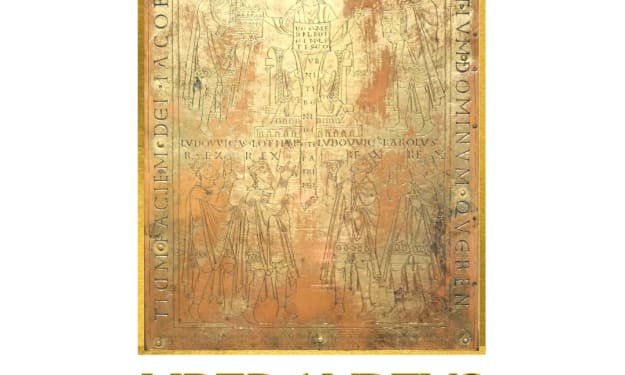
At 85 years old, Valentini stands as a bridge between past and present, guiding this ambitious digitalization project with wisdom gained from decades of experience. He has taught at some of the world's most prestigious institutions, including Cambridge, Oxford, and the Sorbonne. Valentini announced an exciting development: in addition to the free-access digital archive, three gold-bound physical copies of the LIBER AUREUS will be created, paying homage to the Liber Aureus of Prüm. These copies will be donated to the libraries of the universities where Valentini once taught, further cementing the project’s historical and academic value.
"This isn’t just an archive," Valentini noted. "It is a living, evolving document that will preserve the genealogies of noble families for generations to come." He also mentioned that limited edition physical copies will be available for purchase, allowing collectors and scholars to own a tangible piece of this groundbreaking project.
The Digital Transformation of Historical Preservation
LIBER AUREUS represents a significant leap forward in terms of accessibility and the preservation of history. Professor Anna Hopkins, an expert in genealogy, spoke passionately about the importance of this digital transition. "For the first time, these noble genealogies will be accessible to anyone, anywhere in the world, for free," she declared. "This democratizes access to historical data that was once reserved for a privileged few."
Hopkins also lauded the integration of the physical archive into prestigious academic libraries. She emphasized that the preservation of history doesn’t stop at digitization: "These physical copies, placed in historic libraries, will guarantee that LIBER AUREUS becomes part of an enduring academic tradition, maintaining its relevance both in the digital and physical world."
Anthony Mirabile: The Advantages of a Dynamic Archive
Another key speaker at the event was Dr. Anthony Mirabile, a digital archiving specialist, who addressed the limitations of traditional genealogical records. "Many genealogical books, privately authored and circulated in limited circles, are static and difficult to update," he explained. "By contrast, LIBER AUREUS offers a dynamic platform. The archive can be continually updated and expanded, ensuring that these noble genealogies are not confined to history but continue to grow."
Mirabile highlighted the practical benefits of the digital archive, noting that families will have the ability to add new documents, correct errors, and enhance their genealogical profiles as new information comes to light. "This is a living, breathing archive—something that traditional printed books can never offer," he said. "It’s a tool not just for today but for the future."
An Enthusiastic Reception Among Participants
The excitement surrounding the project was palpable among the attendees. During the elegant sit-down reception, several participants expressed their enthusiasm for LIBER AUREUS. John Peterson, a genealogy enthusiast from Boston, remarked, "This is a revolutionary project that brings centuries of history into the digital age. It’s making information accessible to people like me who are passionate about understanding noble lineages but don’t have access to expensive private archives."
Emily Thompson, a medieval history student, echoed this sentiment: "To have free and open access to these noble genealogies is incredible. As a researcher, this will be an invaluable resource for my work."
Michael Harris, a consultant in digital technology, praised the technical aspects of the archive: "The design of LIBER AUREUS is user-friendly, and the fact that it’s free and continuously updated makes it a standout resource. It bridges the gap between traditional historical research and modern technology."
The Significance of the Omni Parker House Venue
The choice of the Omni Parker House as the event venue also carries symbolic importance. Located in the heart of Boston, this historic hotel has been the site of numerous key moments in American history, making it the ideal location to host an event focused on preserving centuries of Italian noble genealogies. The connection between past and present was further underscored by the grandeur of the surroundings, which matched the importance of the project itself.
The Path Ahead: The Official Launch in Italy
As the LIBER AUREUS continues to gather international interest, attention now shifts to the official launch in Italy, scheduled for late 2024. This launch will serve as a major turning point in the project, solidifying LIBER AUREUS as a key resource for historians, genealogists, and anyone interested in noble genealogies.
The digital format, combined with prestigious physical copies, offers a unique opportunity to preserve the past while looking forward to the future. As Professor Valentini concluded in his closing remarks, "With LIBER AUREUS, we are not only preserving history but giving it a new life—a life that will endure both digitally and physically, for generations to come."
About the Creator
Keep reading
More stories from Michael Ray and writers in Journal and other communities.
Professor Carlo Federico Valentini
In the academic world, few names stand out with the same authority and dedication as Professor Carlo Federico Valentini. Born in Rome on March 15, 1939, Professor Valentini has spent over five decades devoted to the study of Medieval History and the preservation of the genealogical heritage of noble Italian families. His career is a testament to academic rigor and passion for historical preservation, with significant influence internationally, particularly during his long academic tenure in France and the United Kingdom.
By Michael Rayabout a year ago in Journal
Author’s Advice
If you would’ve asked me 20 years ago did I know I’d become a writer and an author, I would’ve said “nope, ain’t happening”. As fate would have it I did become an author and I can honestly say I’m loving it so far. It really does feel good to be a writer. I’ve learned a lot on this journey and I feel like with even me being as new to this world as I am, there’s some wisdom I need to share with every other aspiring author.
By Joe Patterson3 days ago in Journal
Is Trump considering a military draft? What Americans Should Know
For many Americans, the idea of a military draft feels like something from history textbooks—associated with World War II or the Vietnam War. But the system that would allow the United States to reinstate a draft still exists today. With rising global tensions and ongoing conflicts around the world, some people have begun asking an important question: Could the U.S. bring back the draft?
By Navigating the World4 days ago in Journal



Comments
There are no comments for this story
Be the first to respond and start the conversation.