
Legacy of The Dharma Objects
By Kelly Le
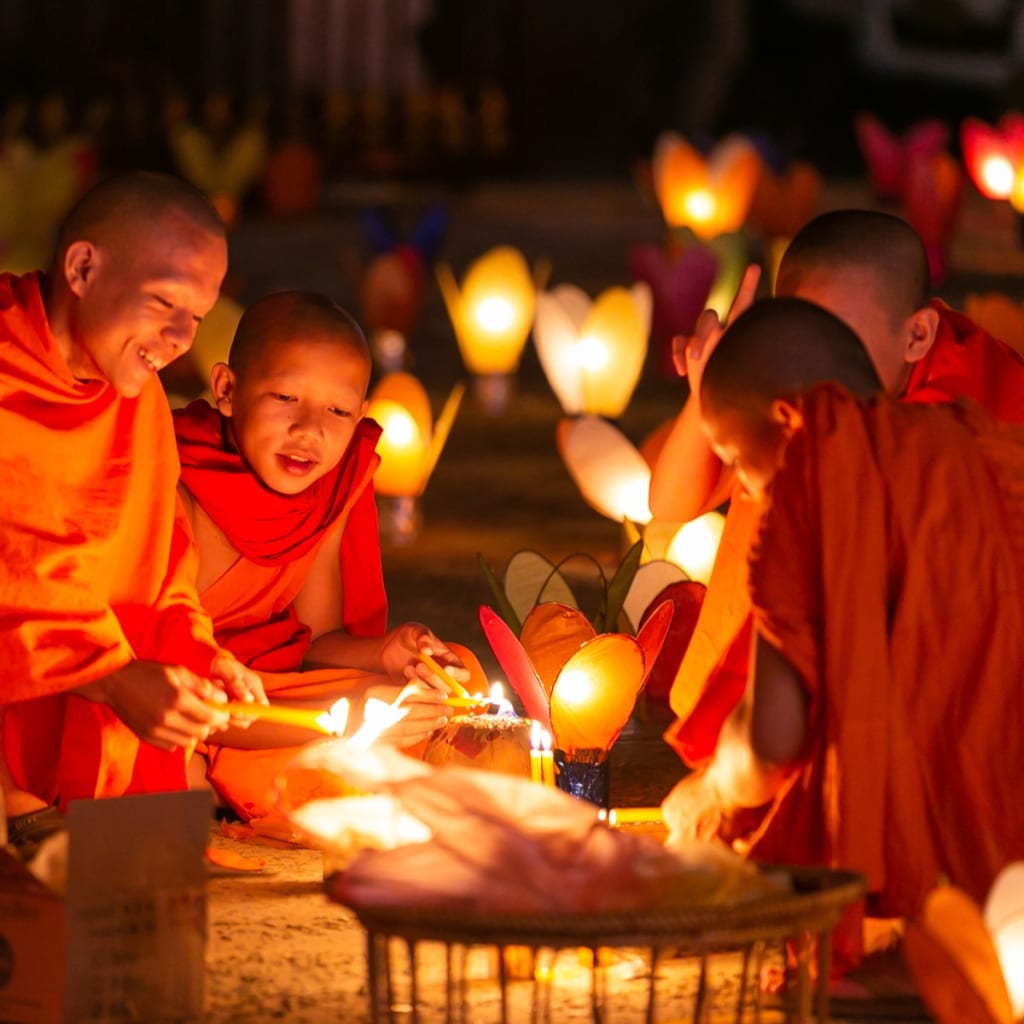
Connecting to our roots:
Being able to connect with our roots is important because, who we are today is the influence of our ancestors. Physical objects that are transmitted through our parents, grandparents and spiritual family are a way we can learn, experience and reflect the roots we have in us. Whether it is biologically or spiritually we all are connected. Dharma objects in my possession reflect the person I am today. The rice field robe, alms bowl, and practicing of the dharma sutra has significantly impacted my identity.
The Vow:
The rice field robe is a daily reminder for me to practice simplicity and to contribute. The robe comes in a yellow colour, the meaning of simplicity. In the past, this robe was made from scavenged pieces of fabric sewed together. Representing the idea of no ego and simplicity, reusing things that were unwanted. It is a legacy transmitted from the Buddha’s time and was inspired by the rice field portrayal. It reflects on the robe as square patches representing the rice field. The rice field holds the qualities of selflessness, contribution, cultivation and the main source to provide happiness and fulfill the essential needs to citizens. What the buddha wanted to transmit to his students was to practices these qualities as monastics. I grew up in the monastic life to practice and contribute my time and effort to people in need. Practicing to be selfless and compassion to all beings. Despite the effort I put out, wither it is a minor or major contribution, practicing to have no ego is important according to the buddha's teachings. This robe is a piece of legacy to remind and encourage my practice in each and every day.
Egolessness:
The transmission of the alms bowl is a practice of gratitude and egolessness. In the buddhas time and presently in several countries, alms is practiced on a daily basis. Basically alms is walking to each house in the village to ask for food. This is a practice to lessen our ego and giving gratitude to all sentient beings. Even though I don’t physically practice to alms, it is a great reminder for me to practice this significant lesson to not have criticism and ego characteristics. In the article, Wayne recalls what professor Watkins said, “But I could imagine that when she gets a little older, it might become meaningful to her that those artifacts are a way to connect back to us”(Wayne, p.2). This saying really connected to me because it emphasizes how physical objects can really connect us back to our lineage and spiritual roots. They remind me to always be grateful and appreciate the people and the beings that have somewhat contributed to my life.
Practices:
The possession of the Dharma Sutra book is to gain wisdom and develop compassion. The content in the dharma sutra is the heart of the buddha's teachings. We as a community of monks and nuns are required to chant and practice these essential teachings as students of the buddha. Practicing to develop wisdom and compassion is our only career. This physical book is important because it is the only physical source from the buddha's time that can effectively be transmitted word by word. In the earlier years, these teachings were first memorized and transmitted verbally. They were then written on leaves and eventually became solid books to transcend through generations. I personally value this piece of art because the content of practicing to be a better person. Besides that, the legacy of wisdom and compassion that was continued till this very day.
In conclusion, as a monastic, I truly value physical dharma objects as they have shaped the person I am today. The possession of the rice field robe, the alms bowl and the dharma sutra have significantly reflected to my life and shaped my identity. It has engage the practice to develop the characteristic of selflessness, gratitude, and be compassionate within me. These are the crucial qualities a monastic needs to personify. The intention to be able to help beings is my wish, and to continue the legacy of my spiritual family.
About the Creator
Dayna Frazer’s Impact on Creative Production and Storytelling
Creative production is no longer just about making things look good. Today, it’s about meaning, emotion, and connection. One creative producer who understands this deeply is Dayna Frazer. Through her thoughtful approach to visuals and storytelling, she has influenced how modern creators think about production, narrative, and purpose.
By Alexanderaarya3 days ago in Journal
Rachel Reviews: The Spiral Archive by Pieter Hendrik
It's difficult for me to know where to start with a review of this book as it was, for me, an entirely unique experience and one that I'll probably never have again. I don't want that to be interpreted as unenjoyable but it has left me scratching my head a little and ruminating on its content, its themes and its characters.
By Rachel Deeming6 days ago in BookClub



Comments
There are no comments for this story
Be the first to respond and start the conversation.