
Kris Gopalakrishnan’s itihaasa and the Power of Institutional Memory: Recording the Past to Build the Future
How the itihaasa project chaired by Kris Gopalakrishnan—offers a practical blueprint for building corporate knowledge systems that sharpen strategy and policy.

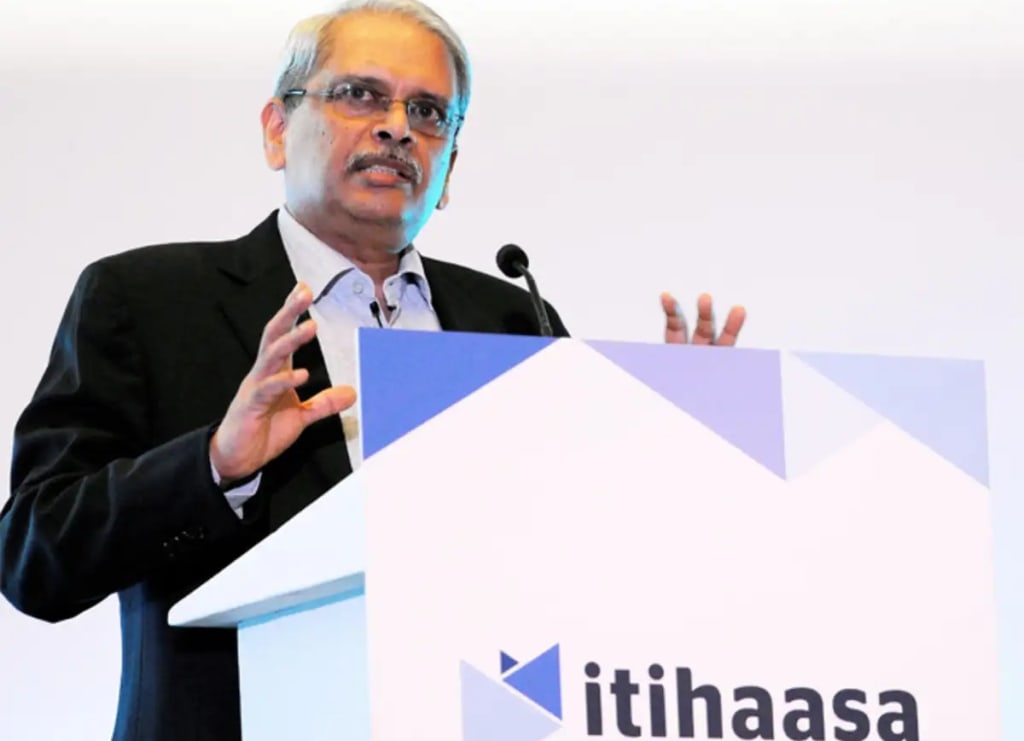
When leaders talk about “learning from history,” they rarely mean building a living system that makes history findable, quotable, and decision-ready. Kris Gopalakrishnan itihaasa changes that premise. The itihaasa app—conceived by the Infosys co-founder and chaired through the Itihaasa Research & Digital Foundation—chronicles the history of the Indian IT industry via hundreds of video interviews and artifacts, transforming memory into a strategic capability. In this guide, we examine how Kris Gopalakrishnan institutional memory thinking shows up inside itihaasa, what 60 years of Indian IT reveal about talent, markets, and IP, and how any enterprise can launch its own “mini-itihaasa” to speed execution and improve governance.
What is itihaasa and why it matters
Launched in April 2016, itihaasa documents milestones from the installation of India’s first modern computer in 1955 through the waves that shaped global IT, using ~600 short videos (about 37+ hours) with dozens of pioneers, and hundreds of photographs and articles. It is designed as a free mobile and web experience—a digital museum and oral-history archive for students, policymakers, and builders. Kris Gopalakrishnan serves as chairman of the foundation behind it.
Why it matters: Most companies treat institutional memory as an afterthought—PowerPoints on shared drives, scattered wikis, and “tribal knowledge” in people’s heads. itihaasa shows a different path: codify decisions, capture voices, and structure metadata so the right lesson can be surfaced at the right time. An archive becomes an asset when it’s searchable, contextual, and trusted. The itihaasa model does exactly that.
The strategic case for institutional memory
1) Faster execution by preventing déjà-vu mistakes
When a team can pull up a 5-minute clip of a veteran describing a failed go-to-market, or a brief on why a partnership model was abandoned, the decision half-life shortens. People debate less and implement more because they can cite precedent. Oral histories, annotated and timestamped, compress “hunt time” and reduce costly reruns of the same experiment. itihaasa exemplifies this with curated video chapters that map eras (mainframes → client/server → internet → mobile/cloud) to grounded, first-person insights.
2) Better governance through transparent reasoning trails
Boards and CXOs make better calls when they can see the rationale behind past pivots, M&A decisions, or technology bets. itihaasa captures who decided what and why, in the words of the actors themselves—an approach companies can mirror internally to strengthen auditability and trust.
3) Culture that outlasts leaders
Organizations churn; values shouldn’t. Recording founder intent, early customer stories, and “day-two decisions” preserves the why behind policies—frugality norms, open communication, or quality bars—so new managers don’t dilute the DNA. Kris Gopalakrishnan has long argued for consistent rules and respect-driven cultures; institutional memory operationalizes that belief.
What 60 years of Indian IT reveal (and how to apply it)
Drawing themes from itihaasa’s interviews and artifacts helps leaders pattern-match their own contexts.
Theme A: Talent pipelines compound—when you train systematically
One lesson that jumps out: India’s IT ascent rode on early, large-scale talent funnels, from university programs and finishing schools to company-run academies. This mirrors practices described widely in the Infosys era—structured training, campus intake, leader-as-mentor—that turned raw potential into delivery capacity. Institutional memory highlights what was taught, how cohorts were organized, and how leaders reinforced culture, offering a blueprint for today’s AI-era upskilling (LLM literacy, data governance, secure coding).
Action tip: Archive your L&D playbooks (syllabi, rubrics, cohort retros) with short video reflections from trainers and alumni. Make it searchable by skill, role, and business outcome.
Theme B: Global markets reward process, not merely genius
From the first exports push and Y2K remediation to today’s cloud platforms, the firms that scaled did so by building process moats—quality certifications, global delivery models, and predictable SLAs. itihaasa’s focus on pioneers like F. C. Kohli (TCS) and N. R. Narayana Murthy (Infosys) shows how standardization and governance became differentiators, not drags. For any company, documenting how process choices were made (and refined) keeps “operating wisdom” alive when teams rotate.
Action tip: Maintain a “process evolution log” a timeline of how you changed deployment, security, or customer-support processes, why, and with what results.
Theme C: IP and productization require patient capital—and patience with failure
India’s IT narrative began with services, but itihaasa tracks the slow, uneven shift toward IP and product businesses. The lesson is not “products good, services bad,” but that portfolio balance and IP stewardship matter. Recording failed prototypes, shelved patents, and sunset criteria gives future teams the courage to try again—with context.
Action tip: Capture “IP post-mortems” as 2-page briefs and 3-minute videos: initial hypothesis, build timeline, user feedback, why it stalled, and what would need to change.
Inside the itihaasa model (and what you should copy)
1) Oral histories first
The project prioritizes first-person accounts from dozens of pioneers—a design choice that animates milestones and preserves nuance you won’t find in spreadsheets. Those voices become citable objects: clips you can embed in learning sessions, board pre-reads, and product reviews.
2) Single source of truth, multiple entry points
itihaasa functions as a digital museum and searchable archive across mobile and web—meaning the same canonical asset can power a classroom, a policy brief, or a founder talk. This “one truth, many formats” principle is central to institutional memory systems.
3) Lightweight metadata, heavy utility
The app’s navigation by eras, companies, and people shows how practical metadata (time period, theme, role) can make discovery simple without over-engineering taxonomies. Don’t chase perfect ontologies; chase fast retrieval for real users.
A step-by-step plan to build your own “mini-itihaasa”
Use this 12-step blueprint to start within 90 days and improve continuously.
Step 1 — Set the mandate (Week 0–2)
Executive sponsor: CEO or COO signals priority; appoint a Knowledge & Archives owner in Strategy/HR.
Purpose: Speed decisions, preserve culture, and meet governance needs (board visibility, audit trails).
Step 2 — Define scope & themes (Week 0–3)
Pick 5–7 strategic threads (e.g., Market Entry Asia, Cloud Migration, AI Safety, M&A Learnings).
Limit to decisions, failures, pivots, and “why” notes—what people will search for later.
Step 3 — Choose your content “atoms” (Week 1–4)
- Short videos (3–7 min): execs, product leads, customers.
- One-page briefs: decision memos, post-mortems, policy rationales.
- Artifacts: roadmaps, PRDs, incident timelines, design docs.
Step 4 — Build a pragmatic taxonomy (Week 2–4)
Tag by time, function (Eng/Prod/Go-to-Market/People), theme, risk area (security, compliance).
Keep a controlled vocabulary; evolve quarterly.
Step 5 — Design a governance model (Week 2–4)
Editorial board (Strategy, HR, Legal, Security) reviews sensitive items.
Publishing SLA (e.g., new decision within 10 business days).
Redaction rules for PII, trade secrets, and ongoing litigation.
Step 6 — Pick the platform stack (Week 2–6)
- Capture: Zoom/Meet recordings; studio for key pieces.
- Transcription & search: ASR + text search; human QA for accuracy.
- Repository: A DAM/CMS (e.g., headless CMS + cloud object storage).
- Access: SSO + role-based permissions; audit logs.
- Delivery: Web portal + internal “learning playlists”; integrate with Slack/Teams.
Step 7 — Start with a seed collection (Week 4–8)
Record 20 cornerstone stories: the biggest wins, misses, and pivots of the last 5 years—told by the people who lived them.
Add supporting artifacts: emails (redacted), decks, metrics screenshots.
Step 8 — Make it findable (Week 6–9)
Build topic landing pages (e.g., “European Expansion”) with timelines, decision cards, and 3–5 clips.
Enable clip-level linking (timestamp URLs) to use inside docs and training.
Step 9 — Tie to rituals (Week 6–10)
Require a Decision Brief template for major calls; auto-ingest into the archive.
Run “History to Strategy” sessions quarterly: leaders review 3 past decisions before a new bet.
Step 10 — Measure & iterate (Week 8–12)
Track search queries, time-to-decision, repeated errors avoided, and onboarding time.
Survey users: “What decision did this help you make?”
Step 11 — Communicate value (ongoing)
Feature “This month we learned…” highlights in town halls.
Publish sanitized case notes for employer branding or policy advocacy.
Step 12 — Sustain it (ongoing)
Budget for archivist/editor roles.
Refresh metadata and deprecate stale entries.
Consider external segments (podcast, blog) once internal usage is strong.
Pro tip: Study the itihaasa pattern—oral histories + timelines + artifacts—and adapt it to your company’s context. Keep the unit of knowledge small, linkable, and testable in meetings.
Case snapshots inspired by itihaasa (and how to replicate them)
Snapshot 1 — “The first modern computer in India” (1955)
itihaasa’s arc begins with landmark installations in the 1950s, establishing how early infrastructure decisions seeded the next decades of capability. For companies, this is a reminder to capture your foundational bets—the first data platform, the initial cloud region choice, the earliest security model—and the arguments that won the day.
Snapshot 2 — “From services to exports: process over improvisation”
Interviews with pioneers explain how software exports took off when firms standardized delivery, invested in quality, and aligned incentives with reliability—not heroics. Your archive should similarly spotlight process evolutions and the metrics that moved because of them.
Snapshot 3 — “People systems as strategic assets”
Time and again, the story returns to talent systems—structured training, mentorship, and leadership pipelines—without which growth would have stalled. In your “mini-itihaasa,” film L&D retrospectives and manager roundtables on what works (and what didn’t), tagged by skills and roles.
The itihaasa advantage for policy, academia, and industry
- Policy: Oral histories and timelines help regulators see second-order effects of past policies (e.g., export incentives, telecom reforms), informing smarter frameworks for AI, data, and fintech today.
- Academia: A primary-source library accelerates research on Indian IT evolution, pioneer interviews, and organizational learning.
- Industry: Boards and operating leaders gain decisionable context a way to sanity-check big bets against historical patterns and avoid repeating avoidable errors.
Frequently asked questions (FAQs)
Q1. What exactly is the itihaasa app?
A free mobile and web project that chronicles the history of Indian IT via hundreds of interviews, photos, and articles—curated and searchable by eras, companies, and personalities. It’s chaired by Kris Gopalakrishnan through Itihaasa Research & Digital.
Q2. Who appears in itihaasa?
Dozens of pioneers from India’s IT journey—industry leaders, academics, and policymakers—speaking in short, topical clips that map milestones from mainframes to mobile/cloud.
Q3. How can a business make something similar?
Start with oral histories of your own leaders and customers; add decision briefs and artifacts; use a lightweight taxonomy; and publish through an internal portal with SSO. See the 12-step blueprint above.
Q4. Is this only for large enterprises?
No. A 200-person startup can begin with ten cornerstone decisions and fifteen short interviews. The key is consistency, not volume.
Q5. How do we handle confidentiality?
Create an editorial board with Legal and Security, use redaction, set role-based access, and maintain audit logs. Sensitive clips can be stored with restricted permissions and reviewed periodically.
Q6. What metrics show ROI?
Faster onboarding, fewer repeat mistakes, reduced time-to-decision on recurring issues, better board transparency, and higher employee retention (because people see purpose and continuity).
Common pitfalls (and how to avoid them)
- Over-engineering taxonomies: Start simple—time, function, theme. Evolve as usage grows.
- Recording without editing: Raw footage kills adoption. Produce short clips with meaningful titles and summaries.
- No publishing SLA: If decisions don’t make it into the archive within 10 business days, the system loses trust.
- Ignoring change management: Treat your archive like a product—announce releases, highlight new playlists, and train managers to search before deciding.
- Assuming AI solves it all: Use AI for transcription and tagging, but human editorial ensures accuracy and context.
Building blocks: your tech and workflow toolkit
- Capture: Streamlined recording with consent; a simple “talking-head + slides” setup is enough.
- Editing: Trim to 3–7 minutes; add lower-thirds (speaker & topic).
- Transcription & Search: Automatic speech-to-text; verify names/terms; enable timestamped search.
- Repository: Headless CMS + cloud storage; file naming standards; version control.
- Access & Governance: SSO, RBAC, watermarking for sensitive clips; review queue for Legal/Compliance.
- Surfacing: Internal site with topic pages, playlists by role, and Slack/Teams bots to fetch clips on command.
- Analytics: Track search queries and “assisted decisions” (self-reported when a clip influenced a call).
Turn history into a live strategic asset
The central insight from Kris Gopalakrishnan itihaasa is simple: history is executable code when it’s modular, searchable, and trusted. Done right, a digital archive is not a museum of trophies—it’s a toolbox. It helps you hire better, decide faster, govern smarter, and teach culture by showing, not telling. That’s the real promise of institutional memory.
Summing up......
Kris Gopalakrishnan’s itihaasa isn’t nostalgia—it’s operating leverage. By capturing decisions, failures, pivots, and the voices behind them, it accelerates execution and strengthens governance. The Indian IT journey—documented across decades—shows that systems beat slogans: robust talent pipelines, process moats, and patient IP building. Your organization can emulate this today with a lightweight archive, a simple taxonomy, and steady editorial discipline.
About the Creator
Chinmaya Singh
Chinmaya Singh is a professional blogger with 6+ years of experience, writing on entrepreneurship, business, and industry, helping readers gain insights into success and growth strategies.
Keep reading
More stories from Chinmaya Singh and writers in Journal and other communities.
Behind Ratul Puri’s Success as Chairman of Hindustan Power: Mega Projects, Big Ideas, and a Greener Future
In India’s rapidly evolving energy sector, few names stand out as distinctly as Ratul Puri. Known for his dynamic leadership as Chairman of Hindustan Power, Puri has carved a reputation for executing large-scale power projects, embracing clean energy solutions, and reimagining India’s energy landscape. His journey is a blend of entrepreneurial insight, bold decision-making, and a relentless commitment to sustainability.
By Chinmaya Singh5 months ago in Journal
The goals I did not achieve
Every writing goal I made for the year is a wash. It has been this way for a while, but I think it's important to be open about my failures and the reality of how life can get in the way. This is especially true considering the several times I have posted on Vocal about my writing goals, how I was changing my approach, and where I was hoping to be for the upcoming year. I will probably do that again in a couple months, but for now, it is time to acknowledge where I am today.
By Kay Husnick24 days ago in Journal
Why Florida Car Dealers Must Carry a Surety Bond
If you’re planning to open a used car dealership in Florida, one of the first compliance requirements you’ll encounter is the dealer surety bond. Many people assume this is just another formality in the licensing process, but it plays a much bigger role than most applicants realize.
By American US Insurance6 days ago in Journal




Comments
There are no comments for this story
Be the first to respond and start the conversation.