
Key Properties of Main Bearings in Marine Engines
Know the key properties of main bearings in marine engines, their materials, forces they handle, and how lubrication ensures smooth and efficient engine performance.

Introduction
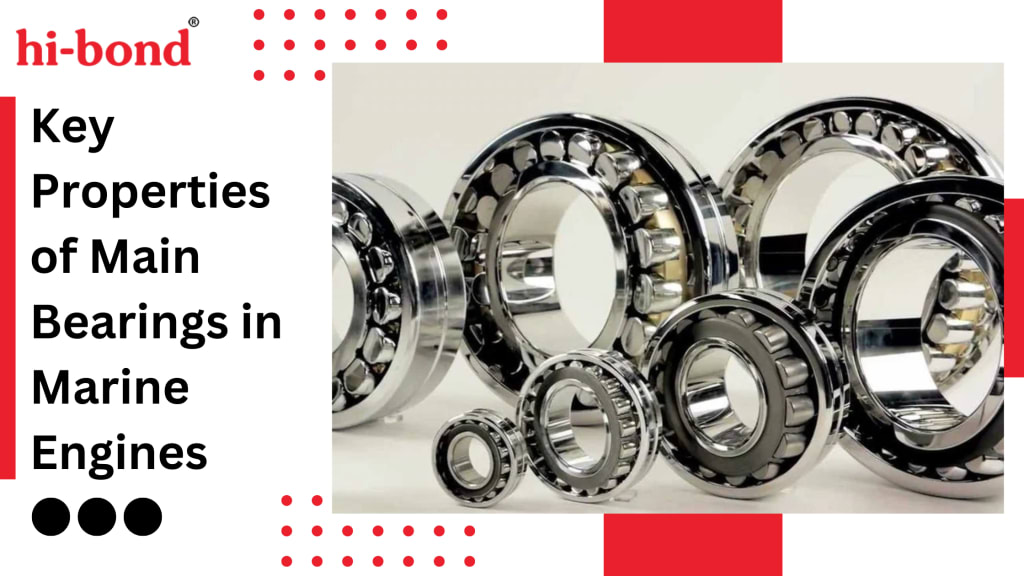
Main bearings are vital components in marine engines, ensuring the crankshaft rotates smoothly with minimal friction. These essential components reduce friction, support heavy loads, and contribute to the overall performance of the engine. A well-functioning main bearing from a reliable bearing manufacturer ensures reliability, fuel efficiency, and long service life for marine engines.
In this blog, we’ll explore the key properties of main bearings, their types, and why they are important for marine engineers and technicians.
What Are Main Bearings in Marine Engines?
Main bearings are designed to support the crankshaft and allow it to rotate freely with minimal resistance. They help convert sliding friction into rolling friction, allowing efficient power transmission to the ship’s propeller. Their durability and performance directly impact engine efficiency and reliability.
Without properly functioning main bearings, a marine engine would experience excessive friction, overheating, and potential failure.
Forces Handled By Main Bearings
In a marine engine, the crankshaft and other heavy rotating parts put a lot of stress on the main bearings. These bearings take on multiple forces to keep the engine running smoothly. Some of the key forces they handle include:
- Gas Pressure: Built up inside the liner, adding extra load on the bearings.
- Inertial Forces: Caused by the continuous back-and-forth motion of engine parts.
- Centrifugal Forces: Generated by the fast rotation of the crankshaft and other components.
- Friction: Created as the crankshaft moves against the bearing, worsened by engine vibrations.
Since these bearings deal with constant pressure and movement, they must be made of strong yet adaptable materials to support the crankshaft while adjusting to minor surface imperfections.
However, they don’t work alone—lubricating oil is essential. It reduces friction, carries the load, and protects against tiny abrasive particles that could cause wear. With proper lubrication, the bearings last longer and ensure smooth engine performance.
Key Properties of Main Bearings in Marine Engines
Main bearings in marine engines must withstand high loads, reduce friction, and ensure smooth engine operation. The key properties of these bearings depend on bearing material composition and structural design. To function effectively, main bearings must possess specific properties that enhance performance and longevity.
High Load-Bearing Capacity
Marine engines operate under immense pressure. The main bearings must withstand heavy loads without deformation or failure and ensure reliable performance.
Low Friction and Wear Resistance
Main bearings are designed with low-friction materials like white metal (Babbitt) or special alloys to prevent excessive heat and wear. This helps improve efficiency and extend their lifespan.
Corrosion and Heat Resistance
Marine environments expose bearings to moisture, heat, and corrosive elements. High-quality bearings are made from corrosion-resistant materials and can withstand extreme temperatures without degrading.
Proper Lubrication Support
Main bearings have oil grooves and channels to maintain consistent lubrication, reduce friction, and prevent overheating. This ensures smooth engine operation.
Durability and Strength
Main bearings must be strong enough to handle continuous loading without fatigue or plastic deformation. The right balance between hardness and flexibility prevents brittleness and enhances longevity.
Embeddability
A good bearing material can trap small debris without damaging the crankshaft, preventing potential engine failure. This property ensures smooth operation even in less-than-ideal conditions.
Friction Resistance and Energy Efficiency
Minimizing friction helps reduce energy loss and fuel consumption. Bearings must support the oil film that allows smooth crankshaft rotation while maintaining wear resistance.
Compatibility with Lubricants
The bearing material should not react with lubricating oil to maintain effective lubrication and prevent damage to engine components.
Thermal Stability
Marine engines run at high temperatures, so bearings must maintain their properties under heat to avoid failure.
Structural Composition
- White Metal Bearings: Tin matrix provides embeddability, antimony adds hardness, and copper ensures even distribution.
- Copper-Lead & Lead-Bronze Bearings: Strong copper-bronze matrix with lead overlays for smooth operation.
- Aluminum-Tin Bearings: Lightweight, high-strength aluminum matrix with tin overlays for better performance.
Types of Main Bearings Used in Marine Engines
Marine engines use different types of main bearings to ensure smooth operation, reduce friction, and support the crankshaft. These bearings fall into broader categories like plain bearings, hydrodynamic bearings, and anti-friction bearings, with specific types such as lead bronze, bi-metal, and tri-metal bearings used in large marine engines.
1. Plain Bearings
These are the most common type of main bearings in marine engines. They have a simple structure and rely on lubrication to reduce friction between moving parts.
2. Hydrodynamic Bearings
These bearings create a thin oil film between the bearing surface and the crankshaft. This oil layer helps reduce wear, minimize friction, and improve efficiency, making them ideal for large marine engines operating under heavy loads.
3. Anti-Friction Bearings
These bearings, which include rolling elements such as balls or rollers to reduce friction, are used in some high-performance marine engines. While less common in large marine engines, they are helpful in specific high-speed applications.
Specific Types of Main Bearings
1. Lead Bronze Bearings
These multi-layer bearings are strong and resistant to wear:
- Flash Layer: A thin coating of tin and lead protects the bearing from dust and corrosion when not in use.
- Nickel Barrier: It prevents corrosion and stops tin from spreading into the bearing metal.
- Lead Bronze Layer: The central part of the bearing that prevents seizing and ensures smooth movement.
- Steel Back: A sturdy base that supports all layers and stabilizes the bearing.
2. Bi-Metal Bearings
Built for high-load conditions, these bearings have:
- Aluminum-Tin Layer: A durable surface that withstands friction.
- Bonding Layer: An aluminum layer that secures the top coating to the bearing shell.
- Steel Back: Provides strength and maintains the bearing’s shape under pressure.
3. Tri-Metal Bearings
Tri-metal bearings having multiple layers are designed for heavy loads and long-term wear resistance
- Flash Layer: A protective mix of lead and tin to guard against dust and corrosion.
- Overlay: A thin (20-micron) white metal layer for smooth performance.
- Interlay: A 5-micron anti-corrosion barrier that protects the overlay.
- Lining: A 1mm-thick bronze and lead layer between the interlay and steel back.
- Steel Back: A solid foundation that provides strength and shape.
4. Copper-Lead and Aluminum-Tin Bearings
Copper-lead and aluminum-tin bearings can handle three times the load of white metal bearings, offering excellent wear resistance and durability. Aluminum-tin bearings provide good embeddability but need a hardened journal for best performance. Both types resist acid attacks and have superior fatigue strength compared to white metal bearings.
5. White Metal Bearings
White metal bearings absorb small particles and adjust to misalignments, reducing damage risks. They offer good thermal adaptability but are more prone to corrosion.
Each type of bearing plays a crucial role in marine engine performance, ensuring durability, reduced wear, and efficient power transmission.
Improve Your Engine Performance with Main Bearings from Reliable Manufacturer
Main bearings are critical to a marine engine’s performance and reliability. Choosing high-quality bearings with the right properties from reliable bearing manufacturers ensures efficient operation, reduced maintenance, and extended engine life.
Whether you’re a marine engineer or a technician, understanding these properties helps you in selecting and maintaining bearings for optimal results.
About the Creator
AcehGround: A Leading Voice for News in Aceh and Beyond
In Indonesia's northernmost province of Aceh, staying connected to local events, governance developments, cultural stories, and national issues remains essential for residents, businesses, and visitors. AcehGround has established itself as a prominent online news portal dedicated to providing up-to-date coverage across these areas. Operating primarily through its website, acehground.com, the platform focuses on delivering Berita Aceh—news from the region—while also incorporating national and international stories relevant to local audiences.
By Eliana Daisy6 days ago in Journal


Comments
There are no comments for this story
Be the first to respond and start the conversation.