
K-pop Star Moonbin’s Death Sparks Global Conversation About Mental Health and Industry Pressures
K-pop Star Moonbin’s Death Sparks Global Conversation About Mental Health and Industry Pressures

K-pop Star Moonbin’s Death Sparks Global Conversation About Mental Health and Industry Pressures
The South Korean entertainment world was shaken to its core on April 19, 2023, when Moonbin — a beloved member of the K-pop group ASTRO — was found dead at his apartment in Seoul’s Gangnam district. The 25-year-old singer, dancer, and actor had been one of the brightest young stars in K-pop, admired by fans for his charm, humility, and immense talent. His passing left fans across the world heartbroken and reignited serious discussions about the intense mental and emotional pressures faced by idols in South Korea’s highly competitive entertainment industry.

According to initial reports from the Seoul Gangnam Police Department, Moonbin was discovered by his manager after he failed to attend a scheduled rehearsal. The manager went to his residence to check on him and found him unresponsive. Police later confirmed that there were no signs of foul play at the scene, and they suspected suicide as the cause of death. Officials added that an autopsy might be conducted to determine the precise circumstances surrounding his passing.
While the authorities continued their investigation, Moonbin’s agency, Fantagio Entertainment, released a sorrowful statement confirming the tragedy. They described Moonbin as “a shining star who always shared his love and light with others” and requested fans to avoid speculation or the spread of misinformation during such a painful time. The company also arranged a private funeral service for family members, close friends, and fellow ASTRO members, respecting the family’s wish for privacy.

Moonbin had been a well-known figure even before his debut in ASTRO. As a child, he appeared in TV dramas and commercials, and his natural stage presence made him stand out early on. In 2016, he officially debuted with ASTRO, a six-member boy group formed by Fantagio. The group quickly gained popularity with their upbeat songs, synchronized choreography, and wholesome image. Moonbin, known for his powerful dance moves and soulful vocals, often played a central role in their performances. He was also part of the sub-unit Moonbin & Sanha, which showcased a more mature and artistic side of his musicality.
Yet, behind the glamour and success, many idols like Moonbin face relentless expectations and emotional struggles. K-pop artists are often under extreme pressure to maintain flawless public images while juggling exhausting schedules, rigorous training, and constant online scrutiny. Every appearance, performance, and even social media post is analyzed by fans and critics alike. This environment can leave little room for personal struggles or mistakes, and mental health issues are often overlooked due to stigma and the industry’s focus on perfection.

Moonbin’s death once again brought to light these painful realities. Fans and public figures took to social media to express grief and frustration, urging entertainment companies to prioritize the well-being of their artists. Many highlighted how K-pop’s demanding culture — with its long training hours, diet restrictions, and relentless competition — can take a serious toll on performers’ mental and emotional health.
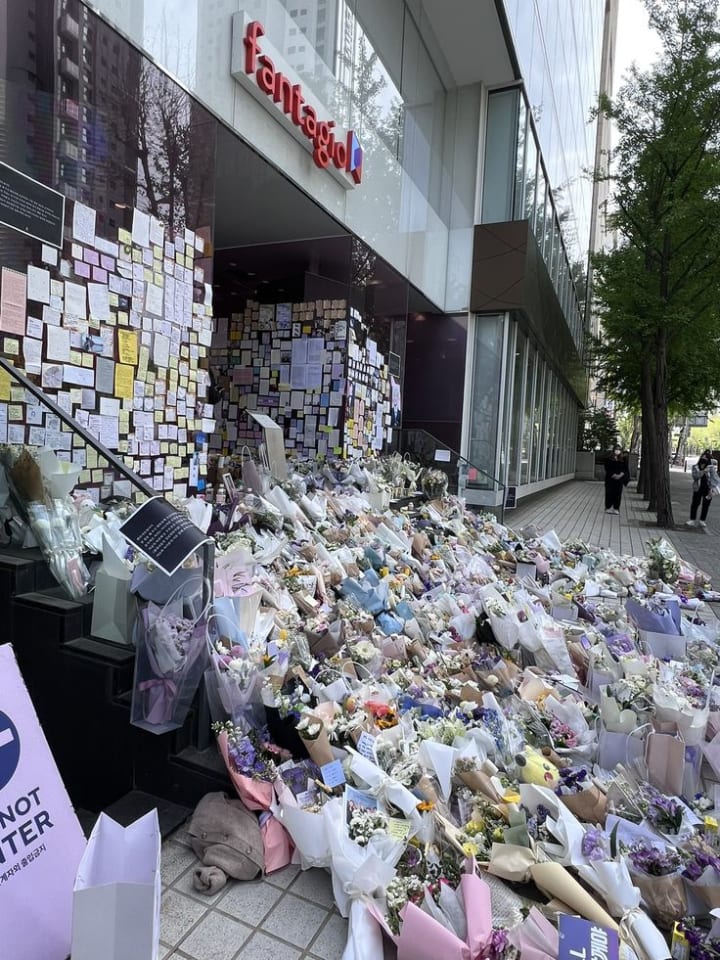
Memorials for Moonbin quickly appeared across Seoul, with fans gathering outside Fantagio’s building and at major landmarks to pay their respects. They left flowers, candles, letters, and photos, transforming public spaces into quiet tributes filled with messages of love and remembrance. Internationally, fans in cities like Tokyo, Los Angeles, and Manila also organized vigils, underscoring how deeply Moonbin had touched audiences around the world.
Mental health experts in South Korea used this moment to call for change. They stressed the urgent need for accessible counseling, reduced stigma around seeking help, and better emotional support systems within entertainment agencies. The tragedy sparked conversations about how the industry could evolve to protect its young stars — through mental health programs, rest periods, and open communication channels for those struggling in silence.
Moonbin’s passing follows a painful pattern in the Korean entertainment world, where several young artists have lost their lives to mental health struggles in recent years. Each case has prompted soul-searching within the industry and among fans, revealing a shared sense of grief and a growing call for compassion.

Though Moonbin is no longer with us, his legacy endures. He is remembered not just for his extraordinary talent, but for his warmth, kindness, and dedication to his craft. His passing serves as a reminder that fame and success do not shield one from emotional pain — and that empathy, awareness, and support are vital for everyone, regardless of their public image.
As fans continue to mourn, many hope that Moonbin’s story will inspire lasting change in the entertainment industry — a movement toward a culture that values the well-being of artists as much as their artistry. His light may have gone out too soon, but the message he leaves behind continues to shine brightly: behind every smile on stage, there is a human being who deserves care, understanding, and peace.
About the Creator
The goals I did not achieve
Every writing goal I made for the year is a wash. It has been this way for a while, but I think it's important to be open about my failures and the reality of how life can get in the way. This is especially true considering the several times I have posted on Vocal about my writing goals, how I was changing my approach, and where I was hoping to be for the upcoming year. I will probably do that again in a couple months, but for now, it is time to acknowledge where I am today.
By Kay Husnick23 days ago in Journal
What I Noticed When Light Stopped Feeling Sharp
I never would have described the light around me as a problem. It was bright enough. Clean. Modern. Exactly what you expect in a well designed indoor space. If someone had asked me whether the lighting felt uncomfortable, I probably would have said no.
By illumipure3 days ago in Journal




Comments
There are no comments for this story
Be the first to respond and start the conversation.