
Jimmy Carter: A Life of Service and Legacy
Jimmy Carter

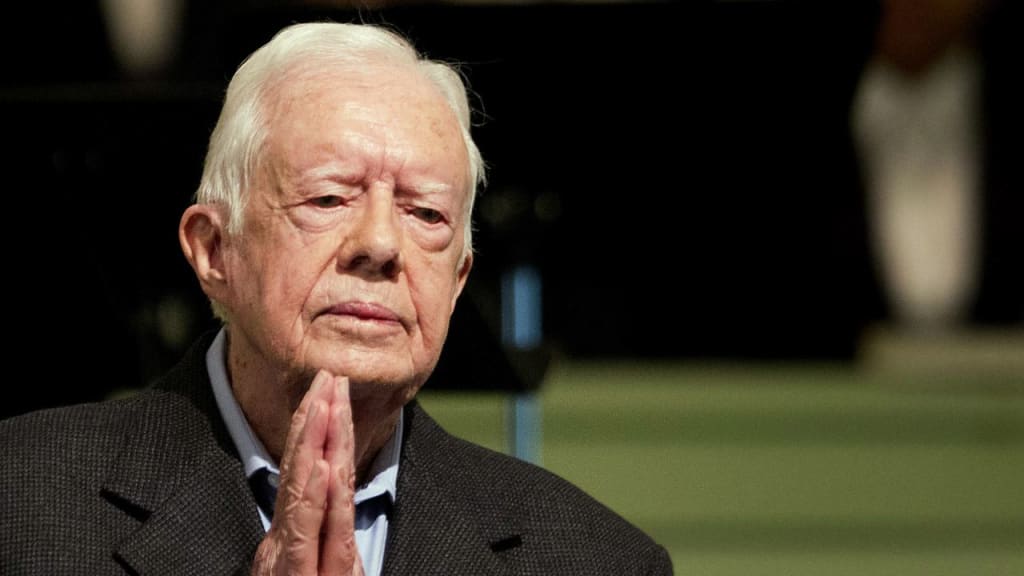
When history reflects on Jimmy Carter, it often sees a man of paradoxes: a peanut farmer who became president, a deeply religious leader who embraced diplomacy, and a politician whose post-presidency arguably eclipsed his time in the White House. But Carter is more than these contrasts. His life—a journey marked by resilience, humility, and an unyielding commitment to humanitarian causes—offers a compelling narrative of what it means to lead with both heart and integrity.
Early Life and Humble Beginnings
James Earl Carter Jr. was born on October 1, 1924, in the small town of Plains, Georgia. The eldest of four children, he grew up in a modest family deeply rooted in agriculture. His father, a businessman and farmer, instilled in him the values of hard work and perseverance, while his mother, a registered nurse, nurtured his sense of compassion and service.
Growing up during the Great Depression, Carter experienced firsthand the struggles of rural America. Despite these challenges, he excelled academically, showing early signs of the intellectual curiosity and discipline that would define his later achievements. After high school, he attended the U.S. Naval Academy, where he graduated near the top of his class in 1946. This marked the beginning of a promising career in the Navy, where he worked as a submariner and gained exposure to cutting-edge technology and leadership dynamics.
The Road to Politics
Carter’s trajectory shifted in 1953 when his father passed away. He resigned from the Navy to take over the family peanut farm, a decision that grounded him further in the values of his upbringing. Under his management, the farm flourished, and Carter began to engage more deeply with local and state issues. By the early 1960s, he had entered politics, serving in the Georgia State Senate and later as governor of Georgia.
As governor, Carter was ahead of his time, advocating for civil rights and challenging the status quo of segregation. His inaugural speech famously declared, “The time for racial discrimination is over,” setting a progressive tone that would define his political ethos. These bold stances, combined with his reputation for honesty and efficiency, propelled him onto the national stage.
The Presidency: Challenges and Triumphs
In 1976, Carter’s underdog campaign for the presidency captured the imagination of a nation weary of political scandals. Running as a Washington outsider, he promised to restore trust in government, emphasizing transparency and moral leadership. His message resonated, and he narrowly defeated incumbent Gerald Ford to become the 39th president of the United States.
Carter’s presidency was marked by significant challenges. Domestically, the energy crisis loomed large, with soaring oil prices and long gas lines testing the patience of the American public. Carter’s response—promoting conservation and renewable energy—was visionary but often politically unpopular. His “malaise speech,” though widely criticized, highlighted the need for a collective reassessment of American values and priorities.
On the international front, Carter’s tenure was defined by a mix of successes and setbacks. The crowning achievement was the Camp David Accords, a historic peace agreement between Egypt and Israel brokered after intense negotiations. This landmark deal earned Carter global praise and demonstrated his skill as a peacemaker. However, his presidency was also overshadowed by the Iran hostage crisis, a 444-day ordeal that strained U.S. morale and contributed to his defeat in the 1980 election.
A Second Act: Redefining Leadership
For many, leaving the White House might have marked the end of a public life. For Carter, it was a new beginning. Freed from the constraints of politics, he embarked on a second act that would redefine his legacy and influence.
In 1982, Carter and his wife, Rosalynn, founded the Carter Center, an organization dedicated to promoting human rights, advancing democracy, and improving global health. Under his leadership, the Center tackled some of the world’s most pressing challenges, from eradicating diseases like Guinea worm to monitoring elections in emerging democracies. Carter’s hands-on approach, often traveling to remote and conflict-ridden areas, underscored his unwavering commitment to service.
One of the Center’s most notable achievements has been its role in nearly eradicating Guinea worm disease. Through education and access to clean water, the disease’s prevalence dropped from millions of cases in the 1980s to just a handful today. This success exemplifies Carter’s belief in the power of grassroots action and collaboration.
A Nobel Laureate and Global Advocate
In 2002, Carter was awarded the Nobel Peace Prize, recognizing his decades-long efforts to foster peace and improve the human condition. The award celebrated not only his diplomatic achievements but also his post-presidential work, which had touched millions of lives worldwide.
Carter’s advocacy extended beyond the Carter Center. He became a prominent voice on issues like climate change, nuclear disarmament, and social justice. Despite his advancing age, he remained deeply engaged, often speaking out on matters of national and international importance. His moral clarity and willingness to tackle uncomfortable truths set him apart in an era of increasing political polarization.
The Man Behind the Legacy
What makes Jimmy Carter’s story so compelling is not just his accomplishments but the character behind them. Known for his humility and work ethic, he eschewed the trappings of wealth and power, choosing instead to live modestly in Plains. He was often seen teaching Sunday school at his local church, a testament to his deep faith and belief in community.
Carter’s personal life also reflected his values. His partnership with Rosalynn, whom he married in 1946, was a cornerstone of his life and work. Together, they championed causes ranging from mental health awareness to women’s rights, embodying the spirit of teamwork and mutual support.
A Lasting Legacy
As Jimmy Carter enters the twilight of his life, his legacy stands as a beacon of what it means to lead with purpose. His journey—from a peanut farmer in rural Georgia to a global humanitarian—is a testament to the transformative power of service and integrity.
Carter’s story reminds us that true leadership is not defined by titles or accolades but by the impact one leaves on the world. Whether building homes with Habitat for Humanity, brokering peace agreements, or eradicating diseases, Carter exemplified a life devoted to the greater good.
In an age often dominated by cynicism and division, Jimmy Carter’s life offers a powerful reminder: that with humility, compassion, and unwavering determination, one person can indeed make a difference.
About the Creator
Author’s Advice
If you would’ve asked me 20 years ago did I know I’d become a writer and an author, I would’ve said “nope, ain’t happening”. As fate would have it I did become an author and I can honestly say I’m loving it so far. It really does feel good to be a writer. I’ve learned a lot on this journey and I feel like with even me being as new to this world as I am, there’s some wisdom I need to share with every other aspiring author.
By Joe Patterson4 days ago in Journal
A Transparent Look at Vocal Challenges and Top Stories
Almost three years ago, we shared a resource article that served as a place for people to suggest new challenge prompts. We thought it would be a good idea to refresh that thread, and take the opportunity to answer a few common questions about top stories, how challenges are judged and how submissions are reviewed.
By Vocal Curation Team4 days ago in Resources




Comments
There are no comments for this story
Be the first to respond and start the conversation.