
Jesse Jackson: The Living Bridge Between Martin Luther King Jr. and Barack Obama
Full Analysis

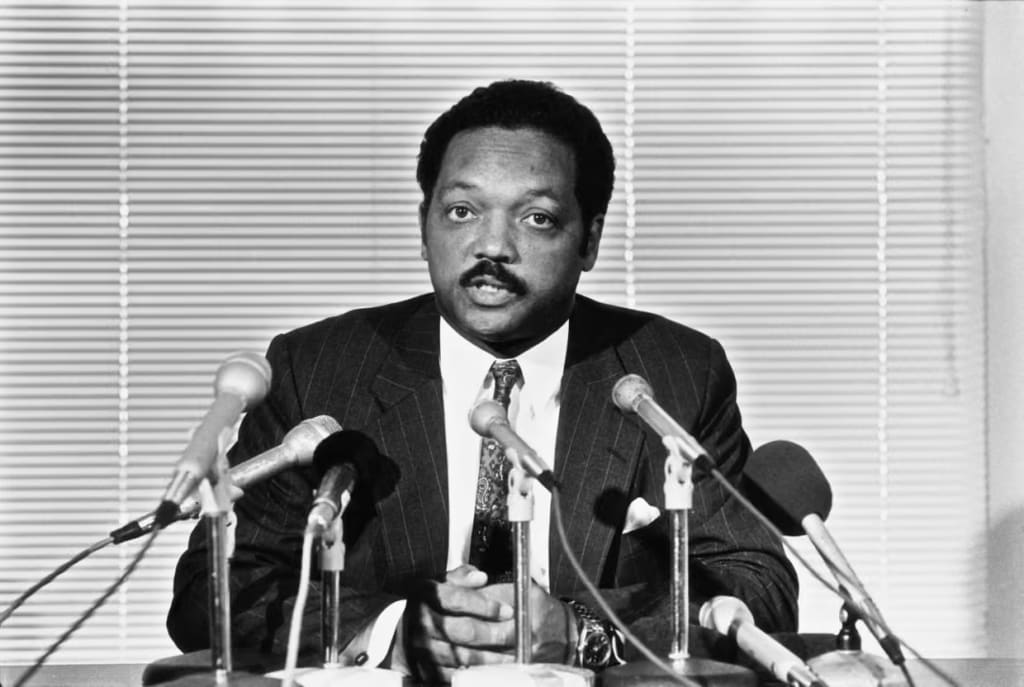
History rarely moves in sudden leaps. It moves through people—people who stand in the storm, absorb its fury, and quietly build bridges for others to cross. Jesse Jackson was one of those rare figures. He was not merely a witness to history; he was one of its architects.
From the tragic balcony of the Lorraine Motel in Memphis, where Martin Luther King Jr. fell to an assassin’s bullet, to the electrifying night in Chicago when Barack Obama became the first Black president of the United States, Jesse Jackson stood present at both the end of one era and the birth of another. His life was not just a timeline. It was a bridge—connecting struggle to victory, pain to possibility, and protest to power.
From Jim Crow’s Shadows to Civil Rights Frontlines
Jesse Jackson’s story began far from presidential conventions and global stages. Born in Greenville, South Carolina, in 1941, he entered a world shaped by segregation, discrimination, and invisible ceilings.
Imagine being a child and being told—without words—that your dreams had limits.
Jackson experienced this firsthand. He remembered being forced to sit at the back of buses and drink from separate water fountains. These were not just inconveniences; they were daily reminders of a system designed to suppress dignity.
But adversity does something powerful: it either breaks you or builds you.
For Jackson, it built a fire.
By 1960, he had already joined sit-ins protesting segregated facilities. And in 1965, he marched alongside Martin Luther King Jr. during the historic Selma-to-Montgomery marches—marches that would reshape America’s voting laws and redefine its conscience.
It was here that King saw something special in Jackson—not just passion, but leadership.
The Moment That Changed Everything
April 4, 1968.
The Lorraine Motel.
A single gunshot echoed across Memphis. Martin Luther King Jr. collapsed. And standing nearby was Jesse Jackson.
That moment did not just take a leader; it created one.
Jackson would later describe the memory as a wound that never fully healed. But instead of retreating into grief, he stepped forward into responsibility.
He understood something critical: movements do not die with their leaders. They evolve through those willing to carry the torch.
And Jesse Jackson picked it up.
Building Power Beyond Protest: Operation PUSH and the Rainbow Coalition
Jackson understood early that protests alone were not enough. Change required organization, strategy, and political influence.
In 1971, he founded Operation PUSH (People United to Save Humanity). Its mission was simple yet revolutionary: empower Black Americans economically, politically, and socially.
But Jackson was thinking bigger.
In 1984, he launched the Rainbow Coalition—a political movement designed to unite marginalized communities: Black Americans, Latinos, poor whites, workers, and the disenfranchised.
It was a radical idea at the time.
He believed political power should reflect the diversity of America—not just its elite.
Today, this idea is no longer radical. It is foundational.
The Presidential Runs That Changed American Politics Forever
In 1984, Jesse Jackson did something few thought possible: he ran for president of the United States.
To understand how revolutionary this was, you must understand the context. At that time, the idea of a Black president felt distant—almost impossible.
Yet Jackson ran anyway.
He didn’t win. But winning was not the only goal.
He ran again in 1988—and this time, he won 13 primaries and caucuses.
Think about that.
Millions of Americans voted for a Black presidential candidate at a time when racial divisions still deeply shaped politics.
Jackson himself said his mission was to “raise the lid of possibility.”
And he did.
He changed what Americans believed was possible.
Opening the Door for Barack Obama
Fast forward to November 4, 2008.
Chicago’s Grant Park was electric. Thousands gathered. The world watched.
Barack Obama had just been elected President of the United States.
And in the crowd stood Jesse Jackson.
He wasn’t speaking. He wasn’t campaigning.
He was crying.
Those tears were not just emotional. They were historical.
They represented decades of struggle. Decades of rejection. Decades of persistence.
Obama himself acknowledged Jackson’s influence, saying his campaign stood on the foundation Jackson built.
Without Jesse Jackson’s presidential runs, Obama’s victory may have taken much longer to become reality.
Jackson didn’t just run for president.
He made it believable.
Redefining the Democratic Party and American Politics
Jackson’s influence reshaped the Democratic Party permanently.
Before Jackson, civil rights were part of the party’s agenda.
After Jackson, they became central.
He pushed for
Voting rights expansion
Economic justice
Racial equality
Marriage equality
Anti-apartheid sanctions against South Africa
He also advocated for international justice, supporting Nelson Mandela’s fight against apartheid long before it became politically convenient.
Jackson saw politics not just as governance—but as moral responsibility.
The Ripple Effect: Leaders Who Walked Through the Doors He Opened
Jackson’s influence did not end with Obama.
It lives on in leaders like:
Kamala Harris — the first Black and South Asian Vice President
Raphael Warnock — Georgia’s first Black senator
Civil rights movements like Black Lives Matter
These leaders did not emerge in isolation.
They emerged because Jackson expanded the boundaries of political imagination.
He proved representation was not symbolic—it was transformative.
Why Jesse Jackson’s Legacy Matters More Than Ever
History often remembers presidents. But it is built by pioneers.
Jackson was not just a participant in American democracy. He expanded it.
He changed who could run.
He changed who could win.
He changed who could believe.
His life teaches a powerful lesson: progress does not happen overnight. It happens when individuals refuse to accept limitations imposed by society.
He turned pain into purpose.
He turned exclusion into empowerment.
He turned possibility into reality.
Final Reflection: The Bridge That Changed a Nation
Imagine America as a river divided by history.
On one side stood Martin Luther King Jr.—leading marches, inspiring hope.
On the other stood Barack Obama—leading the nation as president.
Between them stood Jesse Jackson.
A bridge.
Strong enough to carry the dreams of millions.
And because of that bridge, countless others have crossed—and countless more will follow.
Jesse Jackson did not just live through history.
He changed its direction forever.
About the Creator
Omasanjuwa Ogharandukun
I'm a passionate writer & blogger crafting inspiring stories from everyday life. Through vivid words and thoughtful insights, I spark conversations and ignite change—one post at a time.
Keep reading
More stories from Omasanjuwa Ogharandukun and writers in Journal and other communities.
Why Pam Bondi Allegedly Under Attack
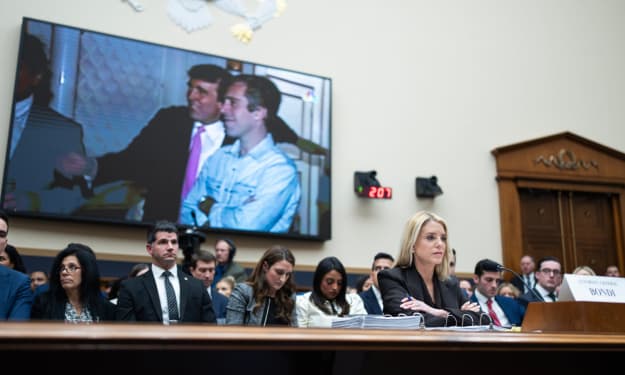
Attorney General Pam Bondi found herself in the hot seat this week, facing intense scrutiny from the House Judiciary Committee during a contentious hearing on the Justice Department's handling of the Jeffrey Epstein files. The session, held on Wednesday, February 11, 2026, quickly devolved into a fiery exchange, with Bondi clashing repeatedly with Democratic representatives over the transparency and thoroughness of the department's actions. This blog post delves into the key takeaways from the hearing, the accusations leveled against Bondi, and the ongoing demand for accountability in the wake of the Epstein scandal.
By Omasanjuwa Ogharandukun3 days ago in Journal



Comments
There are no comments for this story
Be the first to respond and start the conversation.