
Jealous Wives Quarrel
The Unity of Shah Naser al-Din Shah Qajar's Wives: Building a Palace and a Kingdom.

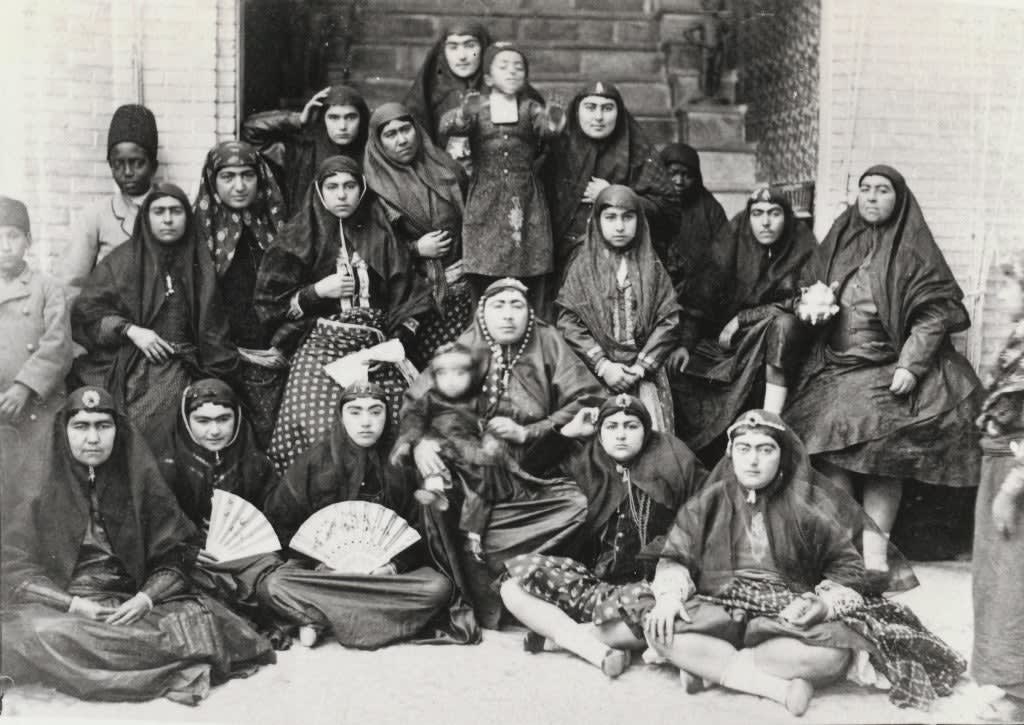
Once upon a time, in the land of Persia, there lived a powerful king named Shah Naser al-Din Shah Qajar. He was a just ruler who cared deeply for his people and worked tirelessly to make his country prosperous. But despite his many accomplishments, there was one area of his life in which he struggled: his relationships with his wives.
Shah Naser al-Din Shah Qajar was a polygamous man who had several wives. Each wife had her own palace and was attended by a retinue of servants and handmaidens. Despite their luxurious lifestyles, however, the wives often quarreled with each other and vied for the king's attention.
One day, as the king was walking through his palace gardens, he overheard two of his wives arguing. The first wife, Queen Mahd-e Olia, was the mother of his eldest son and heir to the throne. The second wife, Queen Esmat-dowleh, was known for her beauty and her quick temper.
"I don't understand why you're so angry," Queen Mahd-e Olia was saying. "You know that I'm the queen mother and that my son is next in line for the throne. You should be grateful that you're even allowed to be here."
"Grateful?" Queen Esmat-dowleh scoffed. "I don't need your permission to be here. I'm the king's favorite wife, and he loves me more than he loves you."
At this, the king stepped forward and said, "That's not true, Esmat-dowleh. I love all my wives equally, and I expect you to treat each other with respect."
But the queen was not satisfied. "You don't understand, my lord," she said. "Mahd-e Olia is always trying to undermine me and turn you against me. I can't stand it anymore."
The king sighed. He knew that his wives' jealousy and infighting was a constant source of stress for him and for his kingdom. He decided that he needed to take action to restore order to his household.
So he summoned all his wives to his throne room and spoke to them sternly. "I am the king of Persia," he said. "I have many duties and responsibilities, and I cannot allow myself to be distracted by your petty squabbles. From now on, I expect you to treat each other with respect and to work together for the good of our kingdom."
The wives nodded obediently, but the king knew that his words alone would not be enough. He needed to find a way to unite his wives and make them see that they were all important to him.
So he devised a plan. He invited all his wives to a grand feast in his honor, where he would announce a new project that would require their cooperation. The project was a magnificent palace that would be built in the heart of the capital city. Each wife would be given a role in its construction, and they would work together to make it the most beautiful palace in all of Persia.
At first, the wives were skeptical. They were used to competing with each other, not working together. But as they began to discuss the project, they realized that they shared a common goal: to make their king proud and to create something that would be a symbol of their love for him.
And so they set to work. Queen Mahd-e Olia oversaw the design of the palace, while Queen Esmat-dowleh supervised the construction. The other wives took on various tasks, from painting to landscaping to decorating. As they worked, they began to form bonds of friendship and respect. They saw that each of them had unique talents and strengths, and that together they were a formidable force.
Months passed, and the palace began to take shape. It was unlike anything that had ever been seen before in Persia - a testament to the skill and creativity of the king's wives. They worked long hours, often staying up late into the night to make sure that every detail was perfect.
And as they worked, the king watched with pride. He saw that his wives were no longer fighting with each other, but were instead working together as a team. He knew that their newfound unity would benefit not only his household but his entire kingdom.
Finally, the day of the palace's grand opening arrived. The king's wives had invited all the most important people in Persia to attend, including members of the royal court, foreign dignitaries, and wealthy merchants. As they entered the palace, they were awed by its beauty and elegance.
And when the king appeared, dressed in his finest robes and surrounded by his wives, there was a great cheer. The people of Persia knew that their king was a wise and just ruler, and they respected him even more for his ability to unite his wives and build such a magnificent palace.
As the feast began, the king sat at the head of the table, flanked by his wives. They were all smiling and laughing, enjoying the fruits of their labor. And the king knew that his kingdom was stronger because of their unity.
In the years that followed, the king's wives continued to work together, using their talents and abilities to benefit the people of Persia. They founded schools and hospitals, commissioned great works of art, and worked tirelessly to improve the lives of their subjects.
And as the king looked back on his life, he knew that his greatest accomplishment was not his wealth or power but the unity of his household. He had shown that even in a world of jealousy and competition, it was possible to build something beautiful and enduring through cooperation and love. And his legacy lived on, inspiring generations of Persians to work together for the greater good.
About the Creator
Keep reading
More stories from Vijay Periannan and writers in Journal and other communities.
Exploring the Mysteries of Consciousness: A Scientific Inquiry into the Afterlife
For centuries, people have been fascinated by the concept of life after death. It is a subject that has been explored in art, literature, and religion for as long as humans have been capable of pondering the mysteries of the universe. But despite all of the theories and beliefs, no one has ever been able to definitively prove or disprove the existence of an afterlife.
By Vijay Periannan3 years ago in Humans
Why Comfort Was Not the Same as Relief
For a long time, I thought comfort was enough. If the chair was soft, the temperature moderate, the lighting bright enough to see clearly, I considered the space comfortable. I wasn’t in pain. I wasn’t shivering or squinting. Nothing felt obviously wrong.
By illumipure6 days ago in Journal
A More Human Vocal
When we launched Vocal nearly a decade ago, the world was a very different place. LLMs did not exist, and stories were created one at a time by people sitting down to write, revise, and share something personal. Many of our assumptions about publishing, trust, and participation were built for a world where effort and output were inseparable.
By Justin @ Vocalabout 10 hours ago in Resources



Comments
There are no comments for this story
Be the first to respond and start the conversation.