
Building an app from scratch can lead you to explore a lot of tempting new technologies. Many frameworks out there make you think that if your infrastructure doesn't match the latest trends, your company is at risk of falling behind. This idea creates confusion around modernizing your apps and often prevents meaningful discussions on the topic.
However, applications are just one piece of a much larger system that includes networks, hardware, software, and data storage. Setting out to modernize your Java app is not a simple task. It requires rethinking your infrastructure, training users, and understanding how the change will affect your business.
Even with the rise of new tech, Java is still a dominant framework for building enterprise-grade applications. It is used in websites, mobile apps, and backend development. It is still a reliable choice for enterprise apps, with a strong developer community and modern frameworks that make it easier to build microservices or standalone apps.
Java's portability is another strength. Because most Java apps can run across different platforms, it means you can move them from one system to another without problems.
Modernizing your infrastructure doesn't have to be a complete rebuild. It can be a smooth, step-by-step process that fits your unique needs. In this blog post, we'll discuss a Java migration and modernization strategy, exploring:
- How you can transform your legacy applications.
- A brief overview of related services.
- Java performance optimization guide for your modernized applications.
- Java development best practices for making the modernization process smoother.
- Tools to simplify the development process.
- Effective strategies for maintaining your modernized applications.
What is Java modernization?
Modernization in IT is a broad concept, but in practical terms, it often revolves around increasing speed, agility, and efficiency within an organization. Many IT leaders associate it with automating processes to accelerate change, making the business more adaptable to evolving needs. While Java cloud migration and transitioning to a microservices architecture are frequently seen as key steps, the focus on automation is central to the idea of modernization.
For many teams, this means implementing or improving continuous integration/continuous delivery (CI/CD) pipelines to streamline development and deployment processes. However, the interpretation of modernization can vary.
For some, the focus is on moving applications to the cloud or redesigning them as API-driven microservices. For others, it might be a slower process, such as "lift and shift" migrations, where the main application stays the same but is transitioned to a more modern infrastructure.
The key takeaway is that Java application modernization is not a one-size-fits-all strategy—it's about making improvements that align with business goals, enhancing agility, and enabling faster, more efficient processes.
Why Consider Java Application Modernization
There are some practical concerns that push businesses to modernize their infrastructure, among which security enhancement is a prime concern. With the arrival of AI, the security threat has risen multifold. Therefore, it has become essential for businesses to protect their sensitive data with modern tools. In addition, to this, automation is another crucial element
For many organizations, the push to modernize is driven by some practical concerns, with security standing out as a top priority. As businesses continue to face growing security threats, modernizing applications becomes essential to protect sensitive data and maintain trust. Beyond security, automation is seen as a critical element of modernization, enabling organizations to speed up processes, reduce manual work, and accelerate their ability to adapt to market changes.
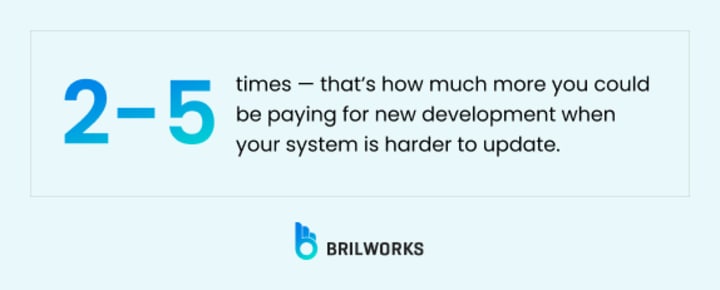
Another important factor driving modernization is the human cost of maintaining outdated systems. Sticking to legacy technology can lead to inefficiencies, increased downtime, and a slower response to customer needs. Teams recognize that failing to modernize can not only hinder growth but also place additional strain on developers and operations, ultimately impacting productivity and morale.
In this context, modernization becomes not just a technical upgrade but a strategic necessity to ensure long-term success, improve security, and maintain a competitive edge.
Key concepts and technologies for modernization
Application modernization involves a mix of technologies and approaches that work together to improve how your applications perform, scale, and integrate with the business. Some of these technologies are essential for every modernization effort, while others are more relevant in specific contexts.
1. Cloud-native approaches
These enable the development of scalable applications that work seamlessly across dynamic cloud environments, whether private, public, or hybrid. Adopting cloud-native practices allows for quicker development, deployment, and scaling, making it easier to respond to shifting business and market needs.
2. Microservices
This approach breaks down applications into smaller, independent services, each focusing on a specific function. These services work together to replicate the tasks of a traditional monolithic application but are more flexible, scalable, and reusable. Java microservices development is often a natural fit for cloud-native modernization initiatives.
Click here to continue reading.
About the Creator
Vikas Singh
Vikas is the Chief Technology Officer (CTO) at Brilworks, leads the company's tech innovations with extensive experience in software development. He drives the team to deliver impactful digital solutions globally.
Keep reading
More stories from Vikas Singh and writers in Journal and other communities.
Java App Maintenance: How to Ensure Longevity and Performance
Once your application is developed and launched, the next important step is maintenance. This stage is all about keeping your app running smoothly and making sure it stays up-to-date. Maintenance includes tasks like checking how well the app is performing, updating the libraries and technologies it uses, and managing the app’s overall lifecycle. In simple terms, it’s about keeping the app healthy and useful for a long time.
By Vikas Singhabout a year ago in Journal
Daily Liturgy: January 20, 2026 – Tuesday of the Second Week in Ordinary Time
Today’s readings invite us to reflect on God’s extraordinary insight into human hearts and the gentle ways He calls us to serve Him. In the first reading from 1 Samuel, the prophet Samuel is sent to anoint the future king of Israel. When he sees Jesse’s sons, he is impressed by their outward appearances, but the Lord reminds him, “The Lord looks at the heart.” Samuel anoints David, the youngest son, a humble shepherd, chosen not for what the world sees but for what God perceives within. This reading teaches that God often works through the seemingly ordinary, calling forth greatness in ways that defy human expectation. The psalm echoes this theme, celebrating the faithfulness and guidance God grants to His chosen servants, reminding us that God’s perspective is always higher, wiser, and deeper than our own.
By Sound and Spirit5 days ago in Journal
The Path to Salvation
The late autumn evening air filled the monk's lungs, but it wasn't the season that chilled his bones. The heavy-handed presence of evil he had sensed upon entering the woods surrounding this mountain village had not bothered to conceal itself from him.
By Made in DNA4 days ago in Fiction


Comments
There are no comments for this story
Be the first to respond and start the conversation.