
Japan Green Hydrogen Market: Size, Trends, and Growth Outlook 2026-2034
How Clean Energy Innovation Is Shaping Japan’s Hydrogen Future
Market Overview
As Japan accelerates its transition toward a low-carbon economy, green hydrogen is emerging as a critical pillar of the country’s long-term energy strategy. Produced using renewable electricity rather than fossil fuels, green hydrogen offers a way to decarbonize sectors that are difficult to electrify, including heavy industry, transportation, and power generation.
In 2025, the Japan green hydrogen market was valued at approximately USD 108.7 million, reflecting early-stage deployment and pilot-scale adoption. While still relatively small compared to traditional energy markets, green hydrogen is gaining momentum as Japan looks for reliable alternatives to imported fossil fuels and seeks to reduce greenhouse gas emissions.
Looking ahead, the market is expected to expand rapidly and reach around USD 848.7 million by 2034. This strong growth trajectory highlights the increasing role of hydrogen in Japan’s energy mix, supported by renewable energy expansion, technological progress, and long-term decarbonization goals. Green hydrogen is steadily moving from concept and demonstration projects toward broader commercial relevance.
Why Green Hydrogen Matters for Japan
- Energy Security and Diversification
Japan imports a large share of its energy, making energy security a long-standing concern. Green hydrogen provides an opportunity to diversify energy sources and reduce dependence on fossil fuel imports. By producing hydrogen domestically using renewable power, Japan can strengthen supply resilience while supporting clean energy objectives.
- Decarbonizing Hard-to-Abate Sectors
Certain industries, such as steelmaking, chemicals, shipping, and heavy transport, are challenging to decarbonize through electrification alone. Green hydrogen offers a viable pathway to reduce emissions in these sectors by replacing carbon-intensive fuels and feedstocks.
- Supporting Long-Term Climate Goals
Green hydrogen aligns closely with Japan’s broader climate and sustainability ambitions. As renewable capacity grows, hydrogen can act as a storage medium, helping balance intermittent solar and wind generation while supporting stable energy supply.
Role of Technology in Market Development
- Advances in Electrolysis Systems
Electrolyzers, which split water into hydrogen and oxygen using electricity, are at the heart of green hydrogen production. Improvements in efficiency, durability, and scale are helping reduce production costs. As electrolyzer technology matures, green hydrogen is becoming more competitive with conventional hydrogen sources.
- Integration with Renewable Energy
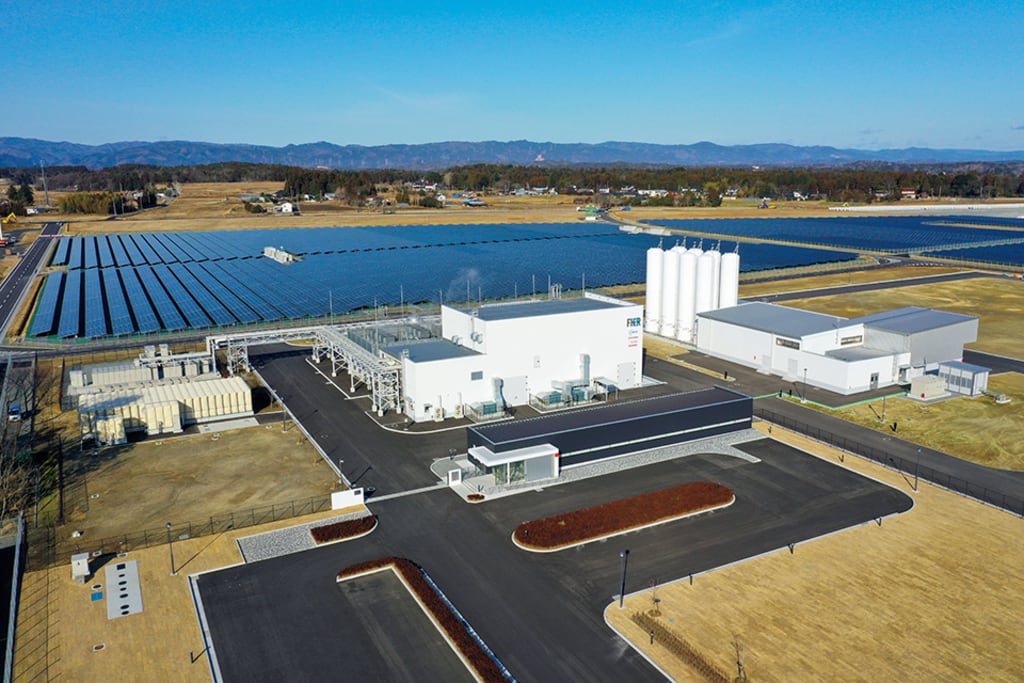
Green hydrogen projects are increasingly being developed alongside solar and wind installations. This integration allows excess renewable electricity to be converted into hydrogen, reducing curtailment and improving overall system efficiency.
- Storage and Transportation Solutions
Innovations in hydrogen storage and transport are supporting market growth. Technologies such as compressed hydrogen, liquid hydrogen, and chemical carriers are being explored to enable safe and efficient distribution across industrial and mobility applications.
Japan Green Hydrogen Industry Trends and Drivers
- Expansion of Renewable Energy Capacity
Japan continues to invest in renewable energy, particularly solar and offshore wind. As renewable generation increases, green hydrogen becomes a practical solution for utilizing surplus power and stabilizing the energy system.
- Industrial and Mobility Applications
Industries are increasingly testing hydrogen-based solutions for energy-intensive processes, while hydrogen fuel is also being explored for commercial vehicles, buses, and logistics fleets. These applications are helping create early demand for green hydrogen.
- Public and Private Sector Collaboration
Collaboration between energy companies, technology providers, research institutions, and policymakers is accelerating project development. Demonstration initiatives and partnerships are laying the groundwork for future commercial deployment.
Japan Green Hydrogen Market Segmentation
Analysis by Technology:
- Proton Exchange Membrane Electrolyzer
- Alkaline Electrolyzer
- Others
Analysis by Application:
- Power Generation
- Transport
- Others
Analysis by Distribution Channel:
- Pipeline
- Cargo
By Region
- Kanto
- Kansai / Kinki
- Chubu
- Kyushu–Okinawa
- Tohoku
- Chugoku
- Hokkaido
- Shikoku
Competitive Landscape
The Japan green hydrogen market includes energy producers, equipment manufacturers, engineering firms, and emerging clean-energy startups. Competition is shaped by technology capability, project execution experience, and integration across the hydrogen value chain. Companies that combine renewable generation, hydrogen production, and end-use solutions are better positioned to scale operations.
Research partnerships and pilot projects remain important competitive tools, allowing participants to refine technologies and build operational expertise ahead of large-scale deployment.
Market Outlook
The Japan green hydrogen market is transitioning from early experimentation toward structured growth. While cost competitiveness remains a challenge, continued innovation, renewable energy expansion, and long-term policy alignment are expected to improve commercial viability over time.
As Japan works toward a cleaner and more resilient energy system, green hydrogen is set to play an increasingly strategic role. Its ability to support decarbonization, enhance energy security, and complement renewable power positions it as a key component of Japan’s future energy landscape.
About the Creator
~ Fired ~
— Ai Intrusion ~ Are you Next ~ Is Ai Evolution after your job? — Few workplaces haven't been affected. Ai is in supermarkets, at doctors' offices, and even monitoring farms. I just can't think of anything this machine is not getting into, can you? For instance: Education ~ Law and Tech jobs will one day have a major influence or be taken over by these inanimate machines, with accuracy and vigor. From mechanics' diagnoses to a wide variety of everyday jobs, including fast food workers, with this input having the ability to cut their unnecessary work hours. I'm certain all of us have been touched by this with our short stories and colorful headings, have you? Even comments are very questionable 'Non-Robot' insertions.
By Jay Kantor2 days ago in Journal
Why Longevity Matters in Wellness: Insights From a 9-Year Industry Journey
Over the past few years, the wellness industry has gained significant traction. Consumers still want convenience and quick results, but expectations are changing. Today, many buyers are thinking beyond immediate outcomes and asking how a product or service will support them over time—not just in the first few weeks. After nearly a decade in the wellness space, certain patterns have become impossible to ignore.
By Diandra Hakea day ago in Journal



Comments
There are no comments for this story
Be the first to respond and start the conversation.