
🟩 Jacinda Ardern’s Emotional Tribute After New Zealand Mosque Attack
A Nation Mourns: Prime Minister Ardern’s Compassionate Response to Traged.

Responding to Hate with Humanity: Global Lessons from Christchurch and Pakistan
On March 15, 2019, a horrific act of violence unfolded in Christchurch, New Zealand. A gunman attacked two mosques during Friday prayers, murdering 50 Muslims in cold blood. The world stood still in shock and grief as news spread of this calculated act of Islamophobic terror. The victims had gathered for prayer, peace, and community—and instead became targets of hate.
Just a week before this tragedy, on March 8, 2019, another violent incident occurred in Pakistan. Renowned Islamic scholar Mufti Taqi Usmani narrowly survived an assassination attempt in Karachi. Gunmen opened fire on his convoy in broad daylight, killing two people and injuring others. Though he escaped with minor injuries, the attempt to take the life of a leading religious figure sent shockwaves through the nation.
While different in scale and location, both incidents revealed a disturbing global trend: the increasing vulnerability of religious communities to targeted violence. But just as importantly, the responses to these events—particularly from leadership—highlighted the potential for humanity, unity, and change in the face of tragedy.
🟦 Jacinda Ardern: A Global Symbol of Compassion
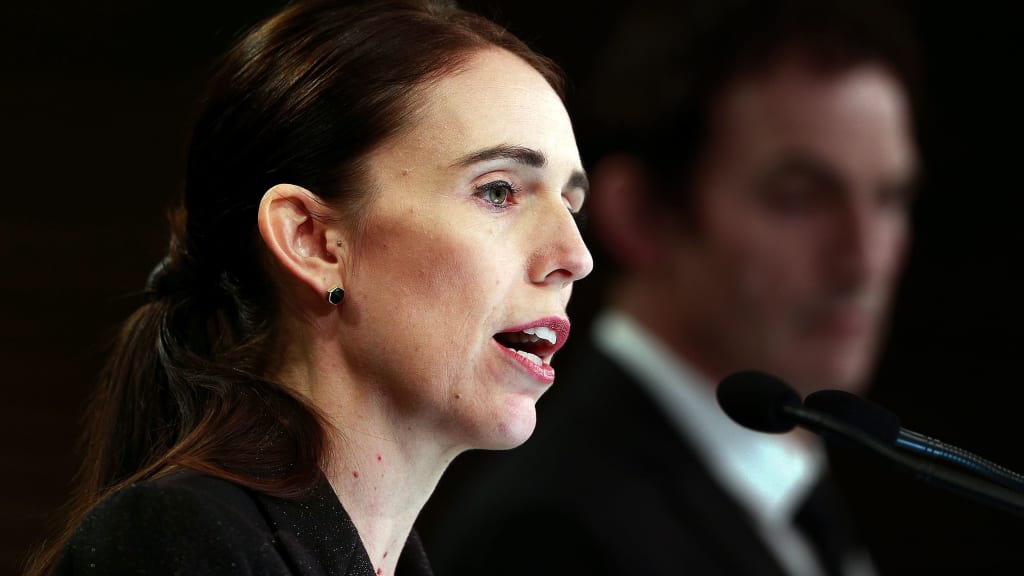
In the wake of the Christchurch mosque attacks, New Zealand’s Prime Minister Jacinda Ardern emerged as a symbol of empathy and leadership. She stood in solidarity with the Muslim community, donning a hijab and attending the national prayer gathering at Hagley Park just one week later. As she stepped onto the platform to speak, she began with the Islamic greeting: “As-salaam Alaikum.” Her words were more than symbolic; they were a sincere expression of shared sorrow and unity.
> “They were New Zealanders. They are us. And because they are us, we, as a nation, we mourn them.”
Ardern's eyes brimmed with tears as she spoke. Her voice cracked with emotion while reading the names of the victims. It was not a rehearsed political performance—it was real, raw, and deeply moving. She didn’t just offer condolences; she embraced the community’s pain as her own. Her approach set a powerful example of leadership that prioritizes compassion over rhetoric, action over inaction.
Her speech went viral worldwide, hailed as a model for how leaders should respond to acts of hate. She made it clear that New Zealand would not tolerate religious bigotry or extremism:
> “An assault on the freedom of any one of us who practices their religion is not welcome here. Violence and extremism in all forms are not welcome here.”
This powerful message resonated far beyond New Zealand. In countries like Pakistan, citizens watched Ardern's emotional stand and compared it with how some Muslim-majority countries have often responded weakly to attacks on their own religious communities. Her sincerity was viewed as a lesson in both humility and strength.
🟨 Strengthening Protection for Religious Communities
Both the Christchurch tragedy and the attempt on Mufti Usmani’s life exposed major security gaps in protecting religious figures and places of worship. In Pakistan, the attack prompted immediate policy action. The Sindh Police increased security for top Ulamah (Islamic scholars), offering them dedicated security guards and establishing patrols in vulnerable areas. Scholars across the country called for better protection and surveillance, especially during religious gatherings and sermons.
Meanwhile, New Zealand took a series of bold legislative steps. Within weeks of the Christchurch shooting, Ardern’s government banned semi-automatic weapons and high-capacity magazines—the kind used in the mosque attacks. This move, though politically risky, was broadly supported and reflected Ardern’s commitment to preventing similar tragedies.
Beyond domestic policy, she co-led the Christchurch Call to Action, a global initiative to combat online extremism. The summit brought together world leaders and tech companies to address the spread of terrorist content and hate speech online. It was a call not just for words, but for global cooperation and action.
🟩 Conclusion: Turning Tragedy into Reform
The attempted murder of Mufti Taqi Usmani in Pakistan and the Christchurch mosque massacre in New Zealand are painful reminders of the destructive power of religious hatred. These attacks, though carried out on opposite sides of the world, share a common root: intolerance and extremism. However, they also shine a light on how leadership can shape the response—not only through security measures but through compassion and unity.
Prime Minister Jacinda Ardern’s heartfelt response was more than just political correctness—it was leadership rooted in empathy. Her hijab, her tears, and her unwavering commitment to justice made a profound global impact. Her actions reminded the world that mourning is not enough; real change requires courage and decisive action.
Pakistan’s response to the attack on Mufti Usmani, while different in tone, also reflected an urgency to protect religious voices and prevent future violence. By providing additional security and raising awareness, the country took steps toward preserving its religious and social fabric.
Together, these moments of tragedy and response offer a shared message: hate must be countered with humanity, violence with unity, and division with solidarity. The true test of leadership is not in times of peace, but in the face of loss and fear. And in those moments, as shown by Ardern and others, empathy can be as powerful as any policy.
About the Creator
Saad
I’m Saad. I’m a passionate writer who loves exploring trending news topics, sharing insights, and keeping readers updated on what’s happening around the world.
The goals I did not achieve
Every writing goal I made for the year is a wash. It has been this way for a while, but I think it's important to be open about my failures and the reality of how life can get in the way. This is especially true considering the several times I have posted on Vocal about my writing goals, how I was changing my approach, and where I was hoping to be for the upcoming year. I will probably do that again in a couple months, but for now, it is time to acknowledge where I am today.
By Kay Husnick23 days ago in Journal



Comments
There are no comments for this story
Be the first to respond and start the conversation.