
Italy Calls for Suspension of Carbon Price in Major Attack on EU Climate Policy
Rome’s push to freeze carbon pricing exposes deep divisions within the European Union over balancing climate ambition with economic stability and industrial competitiveness.
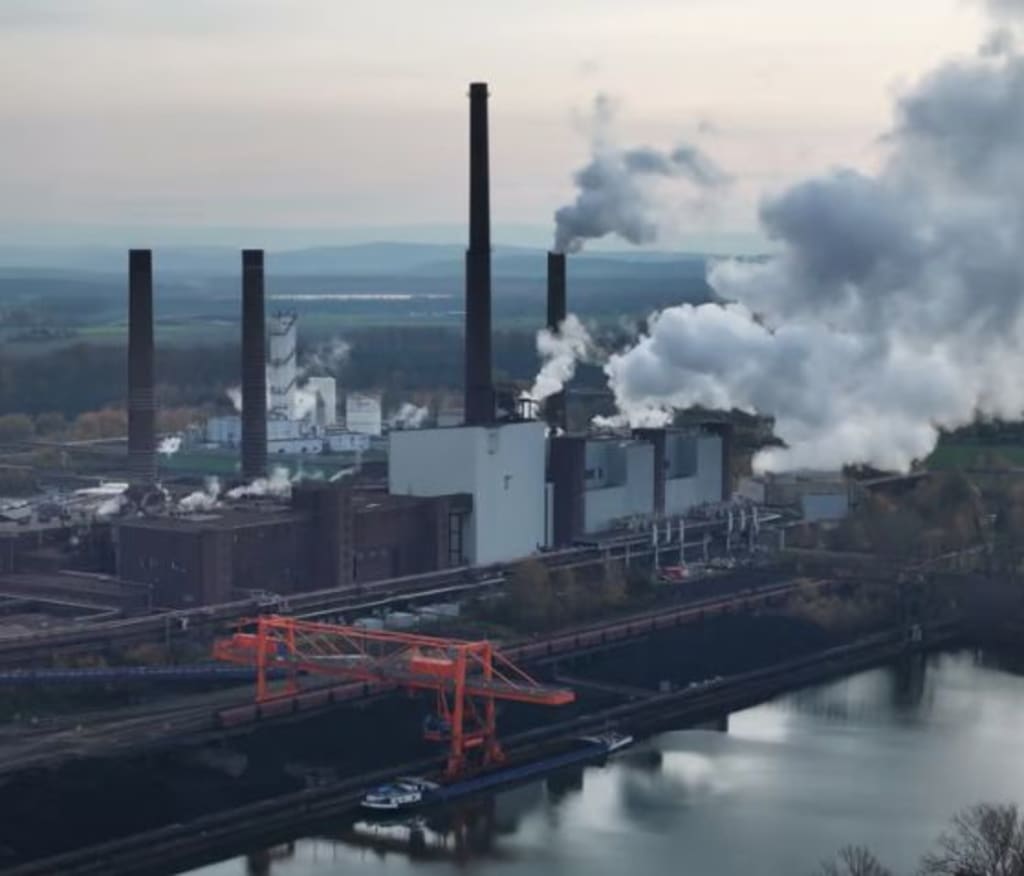
The call, backed by the government of Prime Minister Giorgia Meloni, argues that Europe’s carbon market — designed to reduce emissions by putting a price on pollution — is contributing to higher production costs for businesses already grappling with inflation and geopolitical uncertainty. Italy’s stance signals a broader tension within the EU: balancing aggressive climate targets with economic stability.
A Turning Point in Europe’s Climate Debate
At the heart of the dispute is the EU’s carbon pricing system, which requires companies in sectors such as manufacturing, power generation, and aviation to pay for the carbon dioxide they emit. The mechanism is widely regarded as one of the world’s most ambitious tools for cutting greenhouse gas emissions.
Italy’s proposal does not necessarily reject climate action. Instead, officials argue that the timing of strict carbon pricing may be problematic. Energy-intensive industries — including steel, cement, and chemicals — warn that rising carbon costs could push production outside Europe, a phenomenon known as “carbon leakage.”
Italian policymakers say a pause would allow businesses to adapt while the bloc invests more heavily in clean technologies and energy infrastructure. Supporters claim this approach would preserve jobs and prevent economic disruption without abandoning long-term climate goals.
Economic Pressures Driving the Push
The push for suspension comes as European economies face a complicated mix of slow growth, persistent inflation, and energy price volatility. While carbon pricing is intended to incentivize cleaner alternatives, critics argue that it can function like an additional tax during periods of economic stress.
Italy has been particularly vocal about protecting small and medium-sized enterprises, which form the backbone of its economy. Many of these firms lack the capital to rapidly transition to low-carbon technologies, making them vulnerable to rising compliance costs.
Business groups across southern and eastern Europe have echoed these concerns. They argue that without financial support or flexibility, carbon pricing risks deepening regional inequality within the EU — with wealthier countries better positioned to absorb the transition.
Tensions With EU Leadership
Italy’s stance places it on a collision course with the European Commission, which has championed carbon pricing as a cornerstone of Europe’s climate strategy. Under the leadership of Commission President Ursula von der Leyen, the EU has committed to cutting emissions dramatically by 2030 and reaching climate neutrality by 2050.
Commission officials argue that weakening the carbon market could undermine investor confidence and slow the shift toward renewable energy. They maintain that predictable carbon pricing is essential for encouraging companies to innovate and reduce emissions.
From Brussels’ perspective, suspending the system — even temporarily — risks sending a signal that climate policy can be reversed under political pressure. That concern reflects a broader fear that momentum behind Europe’s green transition could fragment if member states begin pursuing national exceptions.
Political Dimensions Across Europe
Italy is not alone in questioning aspects of the EU’s climate agenda. Several governments have raised concerns about the social cost of environmental policies, particularly as voters grapple with rising living expenses.
Across Europe, climate measures have increasingly become political flashpoints. Farmers, transport workers, and industrial employees have staged protests in various countries, arguing that environmental regulations threaten livelihoods.
This dynamic has forced policymakers to navigate a delicate balance: maintaining ambitious climate targets while ensuring public support. Italy’s proposal highlights how economic realities can reshape environmental debates, especially when policies affect energy bills and employment.
Environmental Advocates Push Back
Climate groups have reacted sharply to Italy’s call, warning that delaying carbon pricing could slow emissions reductions at a critical moment. Scientists emphasize that the next decade is crucial for limiting global warming, making policy consistency vital.
Environmental advocates argue that instead of suspending carbon pricing, governments should strengthen support mechanisms — such as subsidies for clean technology, retraining programs for workers, and protections for vulnerable households.
They also point out that carbon pricing revenue can be reinvested into green infrastructure, helping offset its economic impact. From this perspective, reform rather than suspension is the more effective path.
Industry’s Mixed Response
Industry reaction has been divided. Energy-intensive sectors largely welcome Italy’s proposal, seeing it as a necessary pause to remain competitive globally. Some executives warn that without relief, companies may shift operations to regions with weaker environmental regulations.
However, businesses already investing heavily in renewable energy and low-carbon innovation worry that policy uncertainty could disrupt long-term planning. For these firms, stable carbon pricing provides clarity and encourages continued investment.
This divide illustrates the broader transformation underway in Europe’s economy: traditional industries seeking protection while emerging green sectors push for stronger policy signals.
What Happens Next?
Italy’s call is unlikely to result in an immediate suspension of carbon pricing, as changes require agreement across EU institutions and member states. Nevertheless, the proposal has opened an important debate about how Europe manages the economic side of climate transition.
Negotiations in the coming months will likely focus on adjustments rather than a full pause — including price stabilization mechanisms, targeted exemptions, or increased financial support for industries and households.
The outcome could shape not only Europe’s climate trajectory but also its industrial strategy. If policymakers succeed in balancing environmental ambition with economic resilience, the EU may strengthen its global leadership in climate policy. If not, divisions could widen.
A Defining Moment for Climate Policy
Italy’s challenge underscores a fundamental question facing governments worldwide: how fast can economies decarbonize without triggering political and economic backlash?
The debate is less about whether climate action should continue and more about how it should be implemented. Carbon pricing remains a powerful tool, but its success depends on public trust, economic fairness, and policy stability.
As Europe navigates this tension, Italy’s intervention may prove pivotal. It has forced leaders to confront the practical realities of climate transition — reminding policymakers that environmental ambition must be matched by strategies that keep businesses competitive and citizens on board.
Whether the result is reform, compromise, or deeper conflict, the discussion marks a significant moment in the evolution of European climate policy — one that could influence global approaches to balancing sustainability and economic growth
About the Creator
~ Fired ~
— Ai Intrusion ~ Are you Next ~ Is Ai Evolution after your job? — Few workplaces haven't been affected. Ai is in supermarkets, at doctors' offices, and even monitoring farms. I just can't think of anything this machine is not getting into, can you? For instance: Education ~ Law and Tech jobs will one day have a major influence or be taken over by these inanimate machines, with accuracy and vigor. From mechanics' diagnoses to a wide variety of everyday jobs, including fast food workers, with this input having the ability to cut their unnecessary work hours. I'm certain all of us have been touched by this with our short stories and colorful headings, have you? Even comments are very questionable 'Non-Robot' insertions.
By Jay Kantor27 days ago in Journal
Protecting Others: When Doctors Must Share Private Patient Information
The Ethical Dilemma in Patient Confidentiality Patient confidentiality is a cornerstone of medical practice, yet it is not absolute. Doctors often face scenarios where the imperative to protect life or prevent harm clashes with the duty to maintain privacy. Ethical codes mandate that physicians respect patient autonomy, yet they also obligate practitioners to intervene when silence could result in injury or death. This tension requires a delicate calibration between moral responsibility and professional discretion. The clinician must assess not only the content of the private information but also the context, weighing potential consequences against the principles of beneficence and non maleficence.
By Fida Hassain5 days ago in Journal
When the Shelter Closes
Across the street from my house, a man slept under a tree, his dog by his side. My first, naive thought: he must be traveling through. But he kept coming back, often sleeping there during the day. Then it hit me—that person might not have a home.
By Bride of Sound2 days ago in Humans


Comments
There are no comments for this story
Be the first to respond and start the conversation.